
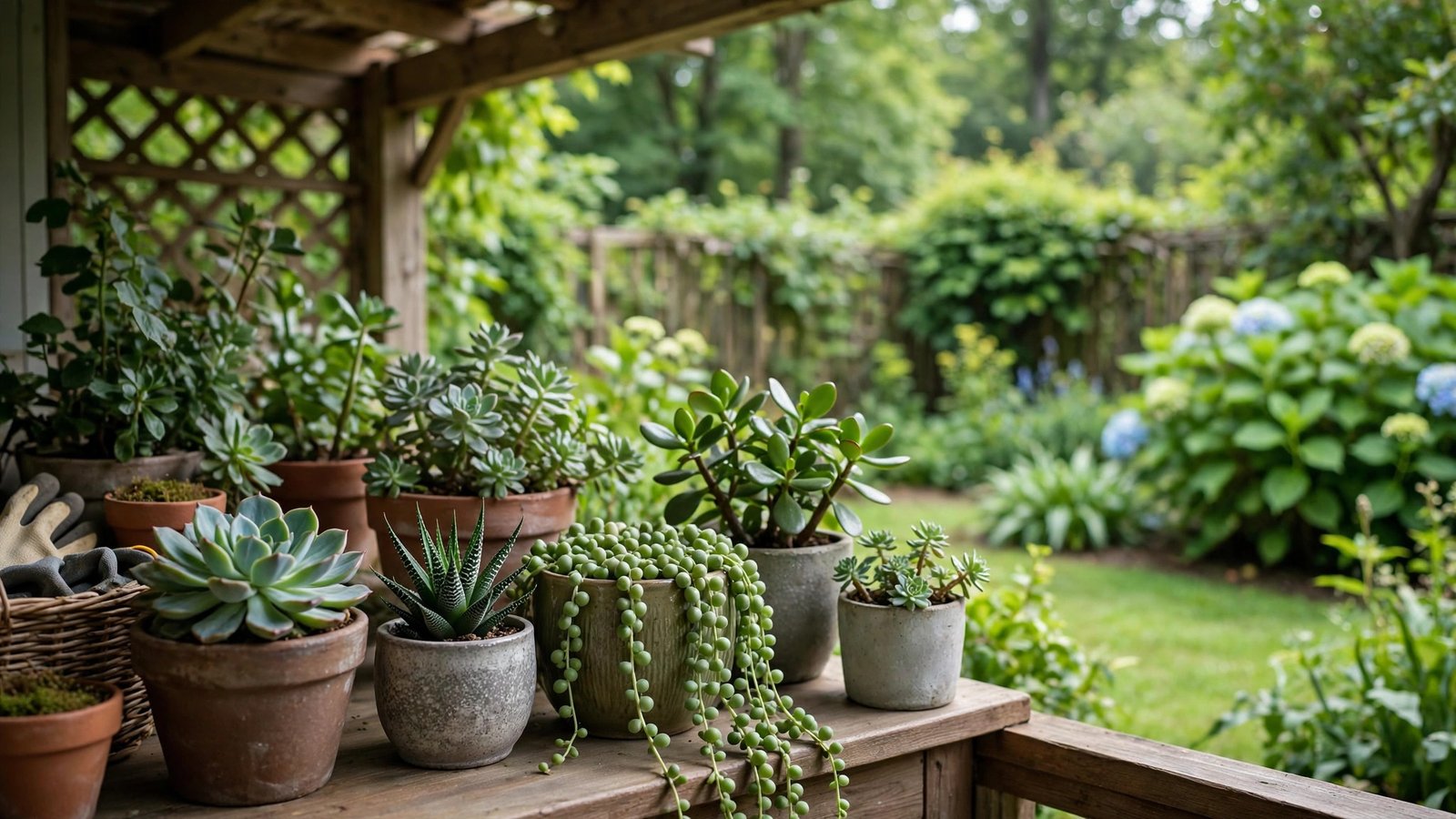
Succulents evolved for deserts — blazing sun, bone-dry air, and rain that arrives months apart. So when summer brings weeks of 90 percent humidity, still air, and afternoon thunderstorms, these desert plants face conditions they were never designed to handle. The result is predictable: soft, translucent leaves, blackening stems, and plants that seem to melt overnight. But humidity does not have to be a death sentence. Succulent lovers in Florida, the Gulf Coast, and the humid Midwest keep thriving collections every summer by changing three things: the soil, the airflow, and the watering discipline. Here is how to make your succulents humidity-proof.
Why Humidity Kills Succulents (It Is Not the Moisture in the Air)
Here is the counterintuitive truth: humid air alone rarely kills succulents. The killer is what humidity does to the soil and the plant’s ability to dry out. In arid conditions, water evaporates from soil and leaf surfaces quickly, and the plant’s roots get the wet-dry cycle they need. In humid, still air, evaporation slows to a crawl — soil stays damp for days after watering, water sits in leaf crevices, and the roots sit in prolonged wetness. That is when rot organisms (fungi like Phytophthora and Pythium) thrive. The plant’s fleshy leaves, designed to store water for droughts, become liabilities: excess internal moisture plus warm temperatures equals cellular breakdown. You will see the classic signs — leaves turning yellow, translucent, and jelly-like, often starting with the lower leaves, and stems going soft and black from the base up. Understanding this mechanism points straight at the fixes: everything is about helping water leave the plant’s environment faster.
The Soil Fix: Go Grittier Than You Think
Standard potting soil is a humidity death trap for succulents — it holds water for days. In humid climates, your mix should be at least 50 percent inorganic grit, and many successful humid-climate growers go to 70 percent or more. A proven recipe: equal parts quality cactus/succulent mix, perlite or pumice, and coarse grit like chicken grit, turface, or crushed granite. The mix should feel crunchy and drain almost instantly when you water — if water pools on top for more than a few seconds, add more grit. Top-dress with a layer of gravel or coarse sand, which keeps the base of the plant dry and prevents soil from splashing onto leaves. Use terracotta pots, never glazed ceramic or plastic: terracotta breathes, wicking moisture out through its walls, which measurably speeds drying. Make sure every pot has drainage holes — no exceptions — and never let pots sit in saucers of water. Repotting an existing collection into grittier mix before summer arrives is the single highest-impact change you can make. Clemson Cooperative Extension’s guide to indoor cacti and succulents covers soil and container fundamentals, and the RHS cacti and succulent growing guide has more on gritty mixes for humid climates.
Airflow Is Non-Negotiable
In the desert, constant wind dries everything. On a humid patio, still air lets moisture linger on leaves and soil for hours — exactly what rot needs. Manufacture the breeze. Outdoors, space pots well apart rather than clustering them, elevate them on shelves or stands so air circulates underneath, and position them where they catch natural breezes. A small outdoor-rated fan running during the most humid stretches works remarkably well; even gentle air movement dramatically speeds surface drying. Indoors, crack windows, run a ceiling fan, or place a small fan near (not directly blasting) the plants. Prune dead lower leaves promptly — they trap moisture against the stem and harbor fungus. If you grow succulents crowded on a windowsill, thin them out for summer; the Instagram-worthy dense arrangement is a rot incubator in July. Good airflow also discourages mealybugs and fungus gnats, the pests that love humid succulent collections.
Watering Rules for Humid Climates
Forget every watering schedule you have read — in humid summers, water only when the plant tells you to. Wait until the soil is completely dry all the way through the pot (use a wooden skewer pushed to the bottom; it should come out clean and dry) AND the plant shows mild thirst signs: slightly soft or wrinkled lower leaves. Then water deeply until it drains freely, and empty the saucer immediately. In peak humidity, many succulents need water only every two to three weeks, and some not at all during the muggiest stretches — they are built to wait. Water in the morning so any splashed moisture evaporates during the day, and water the soil, never the rosette — water sitting in leaf axils is a rot invitation. When in doubt, skip it: a slightly wrinkled succulent recovers in hours after watering, while a rotted one is gone. Reduce or stop fertilizing in the most humid months; soft, fast growth from fertilizer is far more rot-prone than slow, firm growth.
Placement and Rain Protection
Summer rain is the wildcard. A week of daily thunderstorms can undo perfect soil and watering discipline, saturating pots faster than they can drain. Give succulents a covered spot — under a porch overhang, a clear patio cover, or a simple shelf with a roof — where they get bright light but you control the water. Morning sun with afternoon shade is ideal in hot, humid regions: it provides the light they need without the brutal midday heat that cooks wet roots. If plants must stay in the open, tilt pots slightly so rain runs off rather than pooling, and after heavy rain, tip out any saucers and consider moving the most rot-prone varieties (echeverias, lithops) under cover until things dry out. Watch the forecast during tropical systems and move the collection under cover preemptively — one hurricane weekend has ended many collections. Bring the lessons of summer into fall: as humidity drops, you can relax the regime, but keep the gritty soil year-round.
Humid summers kill succulents through prolonged soil wetness, not moist air. Fight back with extra-gritty fast-draining soil, terracotta pots, strong airflow, and strict bottom-up watering discipline — water only when the soil is fully dry and leaves wrinkle slightly, and shelter pots from repeated summer downpours.
Conclusion
Keeping succulents alive through a humid summer is entirely doable once you stop fighting humidity and start managing moisture. Repot into gritty, fast-draining mix in breathable terracotta, maximize airflow around and under every pot, water only on the plant’s schedule (not yours), and give the collection shelter from relentless rain. The plants will look a little less plump than their desert-climate cousins, and that is fine — firm and slightly lean beats lush and rotted every time. For more container-growing advice, browse our gardening guides, meet the team, or ask us your succulent questions.
Frequently Asked Questions
Can succulents survive 90 percent humidity?
Yes, with the right setup. The humidity itself is not the problem — it is slow soil drying. Gritty fast-draining soil, terracotta pots, strong airflow, and infrequent deep watering let succulents thrive even in Gulf Coast summers. Thousands of collectors in Florida and Louisiana prove it is possible.
Why are my succulent leaves turning translucent and mushy?
That is classic overwatering/rot: cells bursting from excess internal moisture, usually with roots sitting too wet. Stop watering immediately, unpot to check the roots, cut away anything black and mushy, and repot in dry gritty mix. If the stem is still firm, the plant can often recover.
Should I mist my succulents in summer?
No — misting is one of the worst things you can do in humidity. It wets leaf surfaces that then cannot dry, inviting rot and fungal spots. Succulents take water through their roots; always water the soil directly and keep the leaves dry.
How often should I water succulents in a humid summer?
There is no fixed schedule — water only when the soil is completely dry through the pot and the plant shows mild thirst (slightly soft lower leaves). In peak humidity this often means every two to three weeks or less. A wooden skewer to the bottom of the pot is the most reliable dryness check.
Is perlite or pumice better for succulent soil?
Both work well. Pumice is heavier (pots do not tip as easily), does not float to the surface when watering, and lasts indefinitely; perlite is cheaper and widely available. Many growers use either at 50 percent or more of the mix in humid climates with excellent results.
Leave a Reply