
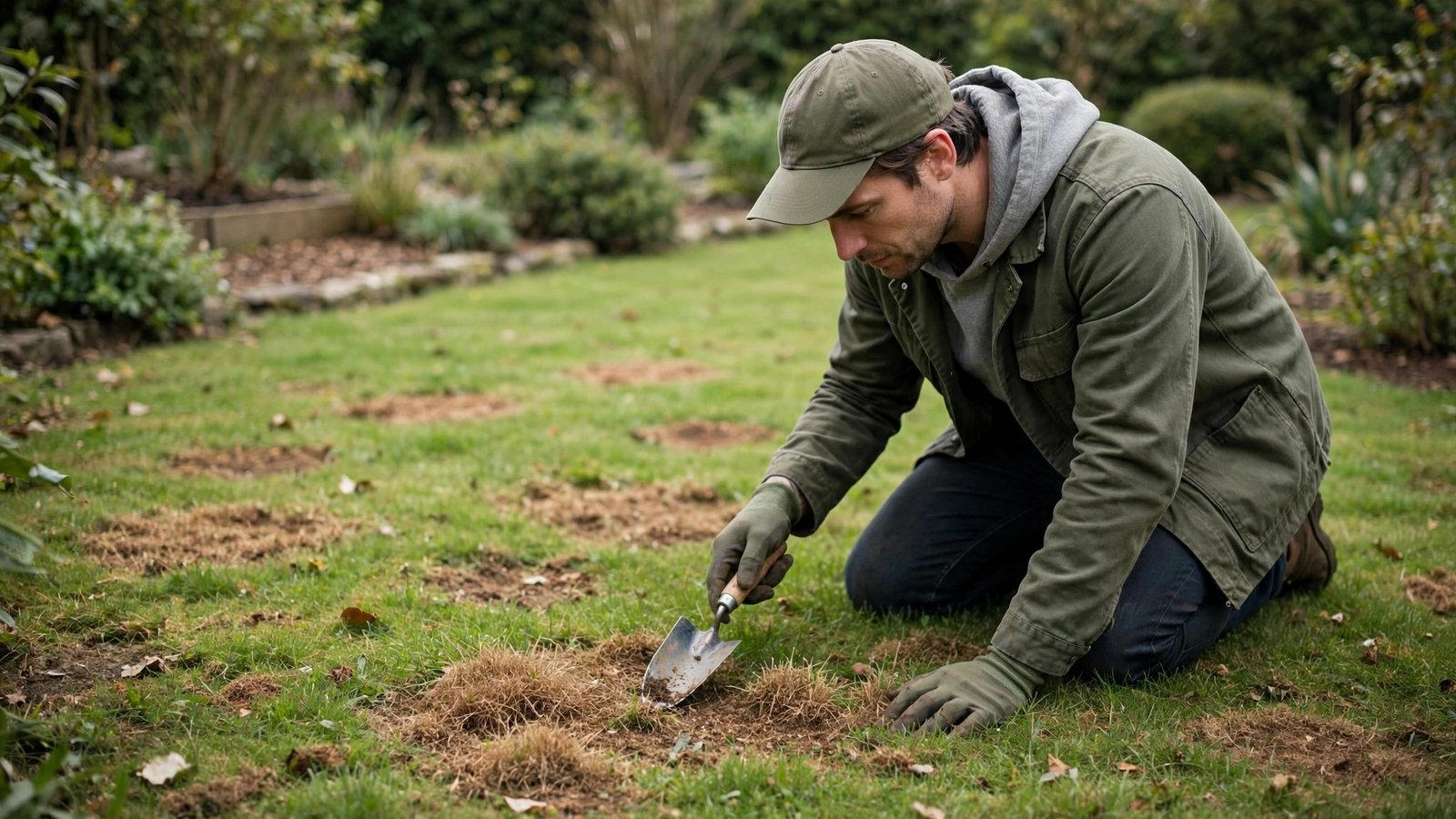
August is when grub damage explodes across American lawns. One week the grass looks fine; the next, irregular brown patches appear, the turf feels spongy underfoot, and — the classic horror-movie moment — you can peel back sections of lawn like a loose carpet because the roots are gone. Those are white grubs, the larvae of Japanese beetles, June bugs, and European chafers, feeding ravenously on grass roots just below the surface. The good news: August is actually a workable time to fight back, because the young grubs are small, near the surface, and vulnerable. But the window is specific, the product choice matters, and the lawn needs repair afterward. Here is exactly what to do, in order.
Confirm It Is Actually Grubs: The Tug Test
Before spending a dollar on grub control, verify the diagnosis — brown patches in August can also be drought, fungal disease, or heat dormancy, and treating the wrong problem wastes money. Walk to the edge of a brown patch, grab a handful of grass, and tug firmly. If the turf pulls up easily with no roots attached, and you see white, C-shaped grubs about the size of a thumbnail in the top two inches of soil, you have grubs. Count them in a one-square-foot area: more than about six to ten grubs per square foot in a healthy lawn (or three to five in a stressed one) justifies treatment. Also look for secondary evidence — skunks, raccoons, or birds tearing up the lawn at night are hunting grubs, and their digging is often the first sign homeowners notice. If the grass does not pull up and no grubs are visible, you are likely looking at drought stress or disease instead, which need entirely different fixes. The University of Minnesota Extension’s white grub guide details identification and threshold counts for treatment decisions.
Why August Means Curative — Not Preventive — Products
This distinction is where most homeowners go wrong. Preventive grub products (containing chlorantraniliprole, the active ingredient in GrubEx) must be applied in spring or early summer, well before eggs hatch, because they work by sitting in the soil waiting for young larvae. Applied in August, they do almost nothing against the grubs already feeding. What you need now is a curative insecticide — one that kills grubs on contact — with active ingredients like trichlorfon (sold as Dylox) or carbaryl. These work fast, often within days, but they have a shorter residual effect, which is fine because the current generation is the target. Read the label carefully and apply exactly as directed; more is not better and can harm beneficial insects and pollinators. Water the product in with about half an inch of irrigation immediately after application unless the label says otherwise — the insecticide must reach the root zone where grubs feed, not sit on the leaf blades.
Consider Nematodes for a Biological Option
If you prefer to avoid synthetic insecticides, beneficial nematodes — microscopic roundworms that parasitize grubs — are a legitimate August option when conditions are right. The effective species against white grubs is Heterorhabditis bacteriophora. Nematodes are living organisms, so success depends on handling: buy fresh stock from a reputable supplier, apply in the evening or on a cloudy day since UV light kills them, and water the lawn thoroughly before and after application because nematodes need moist soil to move and hunt. Soil temperatures should be above about 60°F, which August easily provides. Nematodes will not give the overnight knockdown of a curative chemical — expect results over one to three weeks — but they keep working, reproduce in dead grubs, and pose no risk to kids, pets, or pollinators. Milky spore, by contrast, is not a good August rescue: it targets Japanese beetle grubs specifically and takes years to build up in soil. For broader biological context, the EPA’s integrated pest management principles explain how to combine biological and targeted chemical controls responsibly.
Water, Then Repair the Damage
Killing the grubs stops the damage, but the lawn still needs rebuilding. Grub-damaged turf cannot absorb water properly with its root system chewed away, so start with deep, consistent watering — about an inch per week — to support whatever roots remain and encourage recovery. For areas where the turf peeled away entirely, you will need to reseed or patch. Rake out the dead material, loosen the top inch of soil, spread a quality grass seed matched to your region and sun conditions, press it into the soil, and keep it consistently moist until germination — usually two to three weeks of light daily watering. Early fall is prime seeding season in most of the country, so August damage repaired in late August or September establishes beautifully. A light application of starter fertilizer helps seedlings, but skip heavy nitrogen on damaged turf until it recovers. Top-dressing thin areas with a quarter inch of compost improves the soil biology that keeps future grub populations in check.
Set Up Next Year So This Does Not Repeat
August curative treatment solves this year’s crisis; smart timing prevents next year’s. Mark your calendar: preventive grub control goes down between late May and mid-July, targeting the next generation of eggs and hatchlings before they can feed. A thick, healthy lawn is itself grub-resistant — grubs prefer stressed, thin turf — so the best long-term defense is good cultural care: mow high (3 to 4 inches), water deeply but infrequently, overseed thin spots each fall, and feed appropriately. If Japanese beetles were the source, reducing their numbers helps too: hand-pick beetles from garden plants in summer, and avoid beetle traps near your lawn, since traps often attract more beetles to the area than they catch. Consider that a lawn with a small grub population and no visible damage needs no treatment at all — grubs are a normal part of soil ecology, and the goal is management, not extermination.
Brown, spongy patches that peel up like carpet in August mean white grubs are feeding on roots. Confirm with the tug test, apply a curative insecticide like trichlorfon now (preventive products will not work this late), water it in, then reseed damaged areas in early fall — and schedule preventive treatment for next June.
Conclusion
Grubs destroying your lawn in August feel like a disaster, but the situation is very fixable. Confirm the diagnosis with the tug test and a grub count, hit the feeding grubs with a curative treatment or beneficial nematodes while they are young and near the surface, water deeply to support recovery, and reseed the destroyed patches as fall seeding season arrives. Then put next year’s prevention on the calendar for early summer, and build a thicker lawn through proper mowing and watering — the best grub control is grass too vigorous to notice a few larvae. For more lawn rescue walkthroughs, visit our gardening guides, read about our team, or send us your lawn questions.
Frequently Asked Questions
Is it too late to treat grubs in August?
No — August is actually prime time for curative treatment. The grubs are young, small, and feeding near the soil surface, which makes them vulnerable to curative insecticides and nematodes. What is too late is using preventive products in August; those must go down in spring or early summer before eggs hatch.
How many grubs per square foot mean I should treat?
The common threshold is six to ten grubs per square foot in a healthy, vigorous lawn, or as few as three to five in a stressed or newly seeded lawn. Below those numbers, a healthy lawn usually tolerates the feeding without visible damage, and treatment is unnecessary.
Will the brown patches recover on their own?
Lightly damaged areas with intact crowns can recover with watering once grubs are controlled. Areas where turf peels up with no roots will not recover — the plants are dead — and need reseeding or sodding. Reseed in late August through September for the best establishment.
Are grub treatments safe for pets and kids?
Follow the label: most curative products require keeping people and pets off the treated lawn until the granules are watered in and the grass dries, typically 24 hours. Beneficial nematodes are non-toxic to mammals and can be used with no waiting period. Always store products out of reach of children and pets.
Do I need to treat my whole lawn or just the damaged spots?
Sample several areas first — grubs cluster, and damage often extends beyond the visible brown patches. Spot-treating only the obvious damage misses grubs in adjacent areas that will expand the dead zones. Treating the full lawn, or at least a generous buffer around damage, gives far better results.
Leave a Reply