
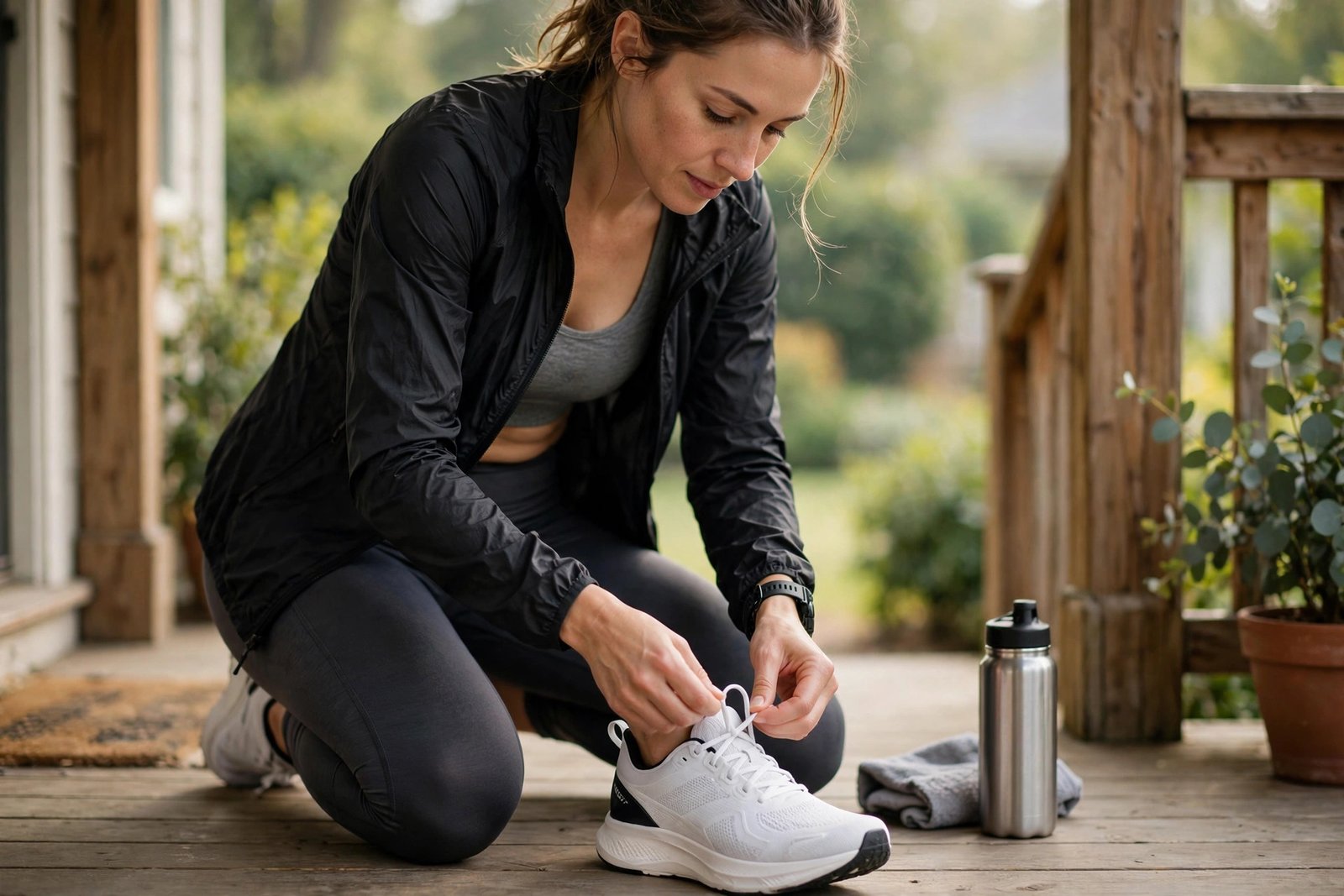
New running shoes should feel like an upgrade — instead, mile three brings the hot spot, mile five brings the blister, and by the weekend you’re limping in $150 shoes you now resent. Blisters from new running shoes are so common they’re treated as a rite of passage, but they’re actually a solvable friction problem with specific, proven fixes. You don’t need to “tough it out” for weeks — most blister issues resolve in days with the right adjustments. Here’s the complete playbook.
Why New Shoes Cause Blisters (It’s Not Just “Breaking In”)
Blisters form from the trifecta of friction, moisture, and heat. New shoes contribute on all three fronts: stiffer uppers that haven’t molded to your foot shape, insoles and heel counters at maximum rigidity, and sometimes a slightly different fit than your old pair that shifts pressure to new spots. But here’s what most runners miss — the shoes are only one variable. Socks, lacing, foot moisture, and fit interact with the shoe, and fixing the system beats blaming the shoe.
First, verify the fit is actually right. With running shoes, you need a thumb’s width (about half an inch) between your longest toe and the shoe’s end — feet swell during runs, and shoes that fit perfectly in the store become toe-crushers at mile 6. Your heel should feel locked with minimal slipping; excessive heel movement is the number one blister generator. Width matters as much as length — if the shoe squeezes your forefoot, friction concentrates on the sides. A proper fitting at a running store (including gait analysis) prevents most fit-related blisters before they start. The AAOS running shoe guidance covers fit fundamentals.
Fix #1: Upgrade Your Socks (The Cheapest Fix)
The highest-impact, lowest-cost blister fix is ditching cotton socks. Cotton absorbs sweat and holds it against your skin, multiplying friction with every step. Moisture-wicking synthetic or merino wool running socks pull moisture away, keeping the skin-shoe interface drier and dramatically reducing blister formation. This single change resolves a huge fraction of new-shoe blister complaints.
For persistent problems, double-layer socks (a thin liner plus an outer sock) let friction happen between the sock layers instead of against your skin — the blister-prevention equivalent of a slip plane. Ensure socks fit snugly without wrinkles (bunched fabric creates pressure ridges) and match the sock thickness to your shoe’s volume — thick socks in a snug shoe create the compression that causes black toenails and side blisters. Replace socks when they thin out; worn socks lose their moisture management exactly when you need it most.
Fix #2: Master the Heel-Lock Lacing
Most runners lace their shoes the way they laced sneakers at age eight — straight through, tied tight — and never discover that lacing is adjustable engineering. The heel-lock (or runner’s loop) technique uses the extra top eyelet most running shoes have: thread the lace through it to create a loop on each side, cross the laces through the opposite loops, and pull down. This locks your heel into the shoe’s heel cup, eliminating the micro-slipping that generates heel blisters.
Other lacing adjustments: skip an eyelet over a pressure point (window lacing) to relieve top-of-foot hot spots; use wider-spaced lacing over a high instep; keep the forefoot lacing snug but not strangling — over-tightening the front creates its own friction problems. Experiment during short runs, not long ones. Proper lacing transforms a slightly-imperfect fit into a blister-free one, and it’s free. Runner’s World’s gear guides demonstrate these techniques with step-by-step visuals.
Fix #3: Manage Moisture and Friction Directly
For feet that sweat heavily or blister-prone spots that persist: apply anti-friction balm or petroleum jelly to known hot spots before runs — it reduces the coefficient of friction at the skin interface directly. Athletic tape or blister-specific bandages on recurring spots provide a protective second skin; tape the hot spot before the run, not after the blister forms. Some runners swear by foot antiperspirant applied the night before long runs to reduce sweating at the source.
Break in new shoes gradually — and I mean genuinely gradually: wear them around the house for a day, then for short walks, then for a 2-mile easy run, building over 1–2 weeks before any long run. Alternating between the new pair and your old pair during the transition spreads the adaptation. Never debut new shoes in a race or long run — this rule is absolute in running culture because violating it has ruined so many race days. The break-in isn’t about the shoe changing dramatically; it’s about identifying and fixing the small friction issues before they matter.
When Blisters Signal a Bigger Problem
Occasional hot spots during break-in are normal; recurring blisters in the same spot after weeks signal a fit or mechanics issue worth solving. Black toenails repeatedly on the same toe suggest shoes too short or downhill running form issues. Blisters between toes may indicate a need for toe socks (individual toe sleeves that eliminate skin-on-skin friction). Blisters only on one foot suggest asymmetry — leg length differences, gait quirks — worth a professional gait analysis.
Treat active blisters correctly: don’t pop small intact blisters (the skin roof is nature’s bandage); for large painful ones, sterile drainage with the roof left intact, then antibiotic ointment and a bandage. Watch for infection signs — increasing redness, warmth, pus, red streaks — especially if you have diabetes, where foot blisters warrant prompt medical attention. Prevention beats treatment, but proper treatment beats limping.
Stop blisters from new running shoes with four fixes: verify fit (thumb’s width at the toe, locked heel), switch to moisture-wicking or double-layer socks, use heel-lock lacing to eliminate heel slip, and break shoes in gradually over 1–2 weeks — never debut them in a race. Add anti-friction balm on hot spots. Most blister problems resolve within days of fixing the system, not weeks of suffering.
Conclusion
Blisters aren’t the price of new shoes — they’re a friction problem with known solutions. Get the fit right, upgrade your socks, learn the heel-lock lace, manage moisture, and break shoes in progressively. Each fix is cheap or free, and together they end the blister cycle permanently. Your new shoes should carry you forward, not hold you back. For more running gear guidance, browse our sports section, meet our team, or ask your training questions.
Frequently Asked Questions
How long does it take to break in new running shoes?
Plan 1–2 weeks: wear them around the house, then for short walks and easy runs, alternating with your old pair. Modern running shoes need less break-in than old leather models, but the gradual process reveals and lets you fix friction issues before long runs.
Are blisters from new shoes normal?
Mild hot spots during break-in are common, but recurring blisters aren’t something to just accept — they signal a fixable fit, sock, lacing, or moisture issue. Persistent blisters in the same spot after weeks mean something in the system needs changing.
What’s heel-lock lacing and does it work?
It uses the extra top eyelet to create loops that lock your heel into the shoe, eliminating the micro-slipping behind most heel blisters. Thread laces through the top eyelets to form loops, cross through opposite loops, pull down. It’s free and remarkably effective.
Should I pop a running blister?
Leave small intact blisters alone — the skin roof protects against infection. For large, painful blisters, sterile drainage (clean needle at the edge, gentle pressure, roof left intact) plus antibiotic ointment and bandaging is the standard approach. Watch for infection signs.
Do expensive socks really prevent blisters?
The material matters more than the price: moisture-wicking synthetic or merino wool beats cotton decisively regardless of brand. Double-layer designs add friction protection for blister-prone runners. It’s the cheapest high-impact blister fix available.
Leave a Reply