
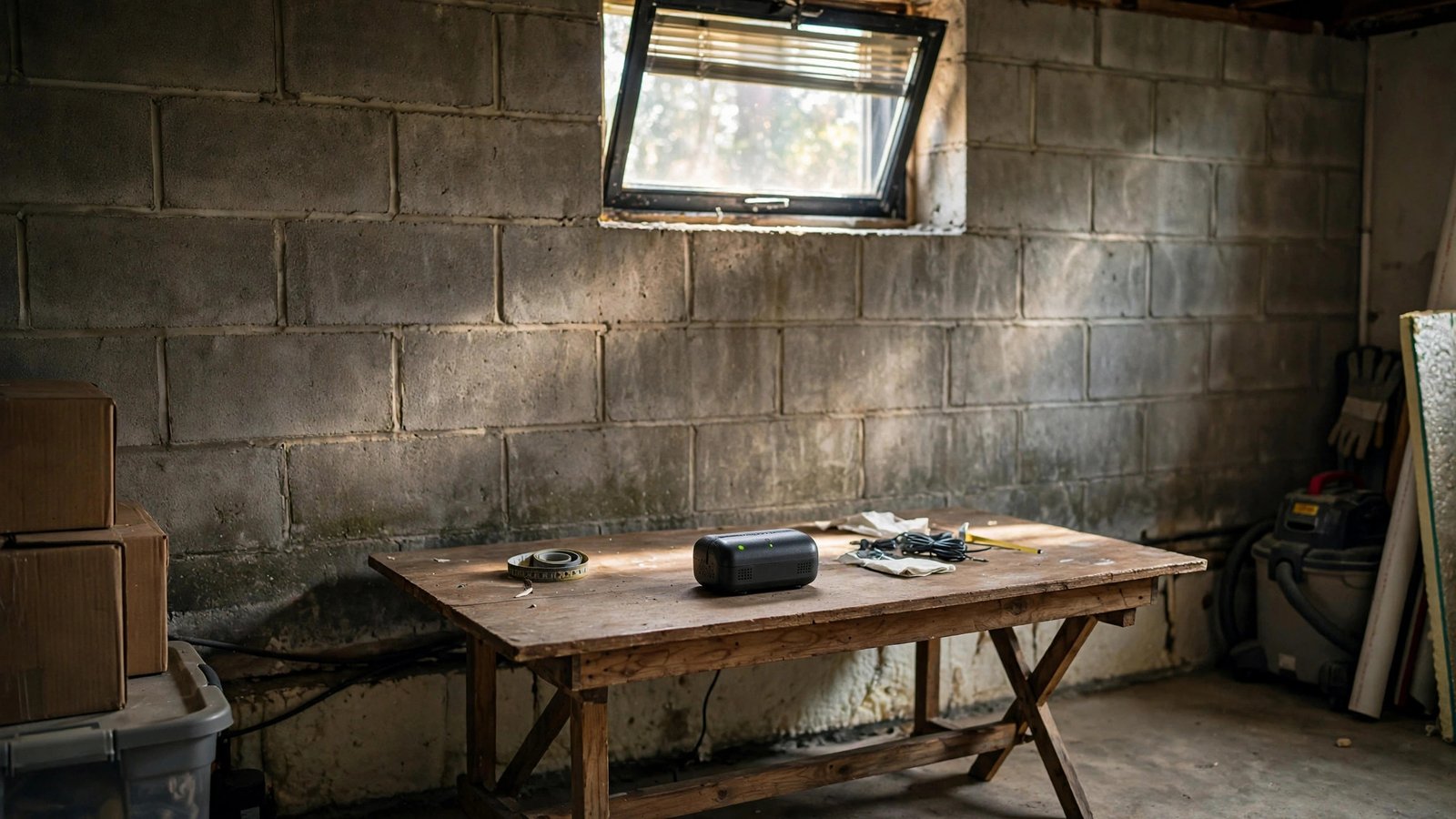
It is colorless, odorless, and tasteless — and it is the second leading cause of lung cancer in America, responsible for about 21,000 deaths a year. Radon seeps into homes from the soil, concentrates in basements and ground floors, and most homeowners have never tested for it. The unsettling part is how fixable it is: testing costs less than a pizza, and mitigation systems work reliably. The dangerous part is not knowing. Here is when to worry about radon levels in your basement, how to test, what the numbers mean, and how to fix it.
What Radon Is and Why It Loves Basements
Radon is a radioactive gas produced by the natural decay of uranium in soil and rock — it exists everywhere, in every state. Outdoors it dilutes harmlessly into the atmosphere. Indoors, it enters through cracks in foundations, gaps around pipes, sump pits, and even through concrete itself, then accumulates because modern homes are sealed tight. Basements and ground floors have the highest concentrations because they sit closest to the source; upper floors typically test much lower. When you breathe radon, its radioactive decay particles lodge in lung tissue and damage cells over years of exposure — the risk is cumulative and invisible, which is why radon causes cancer without ever causing a cough. Smokers face dramatically multiplied risk, but most radon-induced lung cancers occur in never-smokers. The EPA’s radon guidance for homeowners explains the health science and why every home should be tested regardless of age, style, or location.
The Numbers That Matter: 4 pCi/L
Radon is measured in picocuries per liter of air (pCi/L). The EPA’s action level is 4 pCi/L: at or above this, fix your home. Between 2 and 4, consider fixing — especially if anyone smokes or spends long hours in the basement. Below 2 is the goal zone. For perspective, average outdoor air is about 0.4 pCi/L and the average American home tests around 1.3 — but averages hide the danger, because radon levels vary wildly house to house. Your neighbor’s low result says nothing about your home; geology, construction, and ventilation differ on every lot. High-radon zones cluster in predictable regions (the Appalachians, the upper Midwest, mountain states), but elevated homes exist in every state — the EPA’s zone maps show potential, not destiny. The only number that matters is yours, and the only way to know it is testing.
How to Test: Cheap, Simple, Definitive
Testing is almost embarrassingly easy. Short-term kits ($15–$30 at hardware stores or from your state radon office, which often gives them free) sit in your lowest lived-in level for 2 to 7 days, then get mailed to a lab. Long-term kits (90+ days) give a more accurate year-round average and are the gold standard for decision-making. Test in the lowest level you actually use — if the basement is a lived-in family room, test there; if it is unfinished storage, test the ground floor. Place the kit at breathing height, away from drafts, exterior doors, and humidity sources like bathrooms. Keep windows closed and avoid whole-house fans during short-term tests (normal HVAC use is fine). Do not test during severe storms, which can skew results. If your short-term result is high, follow up with a second test — either another short-term or a long-term kit — before investing in mitigation. Two tests beat one, and the second is often free from state programs.
Reading Your Results Without Panic
A high result is information, not a death sentence — radon is fixable in virtually every home. If both tests average at or above 4 pCi/L, get a mitigation system; the risk is real and the fix is routine. Between 2 and 4, weigh fixing against your situation: long basement hours, smokers in the home, or young children tip the scales toward action. Below 2, retest every few years or after major renovations that change ventilation or foundation. Understand that radon levels fluctuate daily and seasonally — winter tests often read higher because homes are sealed and stack effect draws more soil gas. That is why long-term tests average out the noise. Do not let a single alarming number spiral you; confirm it, then act methodically. And never ignore a confirmed high reading because the house “feels fine” — radon never feels like anything, which is precisely the problem.
How Mitigation Works (and What It Costs)
The standard fix — sub-slab depressurization — is elegant and proven. A certified contractor drills a small hole through the basement slab, inserts a pipe, and runs it to a quiet fan that vents above the roofline. The fan creates suction beneath the slab, capturing radon before it enters and exhausting it safely outdoors. Most systems drop levels by up to 99 percent, often below 2 pCi/L. Installation typically costs $800 to $2,500 depending on foundation type, takes less than a day, and the fan uses about as much electricity as a light bulb. Sealing foundation cracks helps but is never sufficient alone — suction is the engine. Get quotes from certified mitigators (look for NRPP or NRSB certification), and always retest after installation to verify performance. Compared to the cost of the home it protects, mitigation is one of the cheapest life-safety investments a homeowner can make.
Special Situations: Buying, Selling, and Well Water
Real estate transactions are radon’s moment in the spotlight: most buyers now test during inspection, and a high result becomes a negotiation point — sellers often credit mitigation costs or install systems before closing. If you are buying, insist on a radon test; if selling, testing proactively and mitigating beforehand removes a deal-killer. New construction can include radon-resistant features (a passive pipe system) for a few hundred dollars during the build — ask your builder, because retrofitting costs far more. Well water can carry radon too: it releases into indoor air during showers and laundry, and water with high radon warrants separate water testing and aeration treatment. The National Cancer Institute on radon and cancer risk covers these scenarios with the underlying research for readers who want the full evidence base.
Radon is an invisible radioactive gas that causes about 21,000 U.S. lung cancers yearly — and testing costs $15–$30. Test your lowest lived-in level; at 4 pCi/L or above, install mitigation. Between 2 and 4, consider it. Sub-slab depressurization fixes nearly every home for $800–$2,500. Your neighbor’s result means nothing — only your test counts.
Conclusion
When should you worry about radon levels in your basement? The honest answer: test first, worry based on numbers. Every home should be tested — radon zones predict potential, not your result. At 4 pCi/L or above, mitigate; between 2 and 4, seriously consider it; below 2, retest periodically. The test is cheap, the fix is proven, and the risk of ignoring it is real but entirely preventable. For more home health science, visit our science section, meet our team, or share your radon testing experience.
Frequently Asked Questions
What is a dangerous radon level in a home?
The EPA recommends fixing homes at or above 4 pCi/L and considering action between 2 and 4 pCi/L. There is no truly “safe” level — risk decreases as levels drop — but below 2 pCi/L is the practical goal. Average outdoor air is about 0.4 pCi/L for comparison.
How do I test for radon in my basement?
Buy a $15–$30 short-term kit from a hardware store or get a free one from your state radon office. Place it in the lowest lived-in level for 2–7 days, then mail it to the lab. For the most accurate picture, follow up with a 90-day long-term test.
Can I fix high radon myself?
Sealing cracks helps marginally, but effective mitigation requires sub-slab depressurization installed by a certified contractor — typically $800–$2,500. DIY fixes rarely achieve meaningful reductions. Always hire NRPP- or NRSB-certified mitigators and retest afterward to verify.
Does radon affect upper floors or just basements?
Basements and ground floors have the highest levels since they are closest to the soil source, but radon reaches upper floors too — just at lower concentrations. Test the lowest lived-in level; if that is fine, upper floors are almost certainly fine as well.
Should I test for radon when buying a house?
Absolutely — insist on it during inspection. A high result is a standard negotiation point, with sellers often covering mitigation. Testing before you buy is far easier than discovering the problem after closing, and mitigated homes carry no stigma or resale penalty.
Leave a Reply