
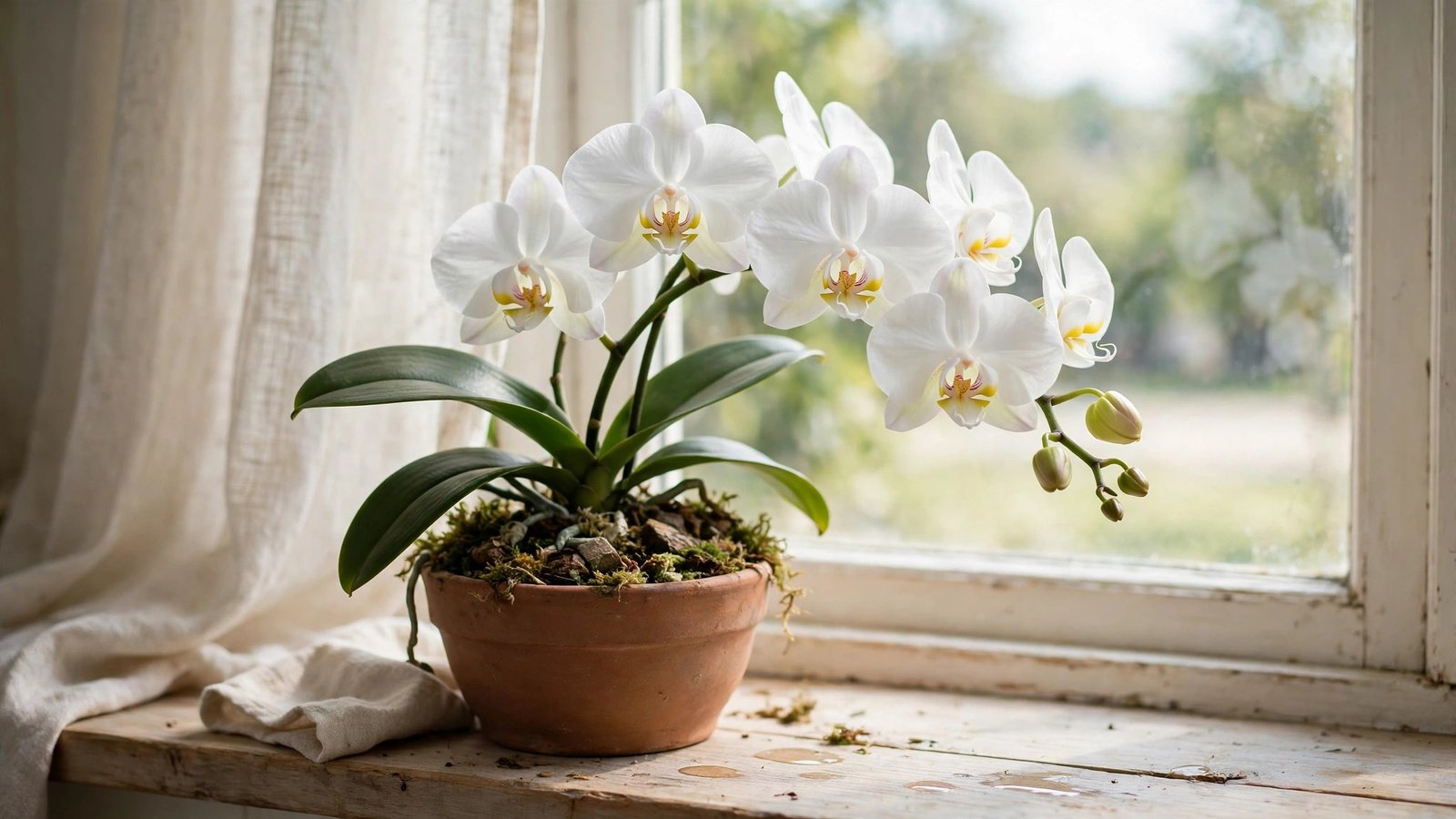
The flowers were spectacular — weeks of elegant blooms — and then they faded, the petals dropped, and you were left with a pot of green leaves and a bare flower spike. That was months ago. Or years. The plant looks healthy enough, it grows new leaves, but no matter what you do, it never blooms again. If this is your orchid story, you are in enormous company: failure to rebloom is the number-one orchid complaint, and it is almost never because the plant is broken. Orchids rebloom in response to specific environmental triggers, and the average home simply does not provide them by accident. Give the plant what it is waiting for, and reblooming becomes routine rather than miraculous.
First, Know Which Orchid You Have
Almost everything in this article targets the moth orchid, Phalaenopsis — the grocery-store orchid with broad flat leaves and arching sprays of blooms, which accounts for the vast majority of orchids in American homes. Phalaenopsis reblooms from the same plant readily once its triggers are met. If you have a different type, the rules change: Cattleyas need brighter light and a distinct dry rest, Oncidiums and Dendrobiums have their own seasonal rhythms, and some orchids bloom only from new growths. Check your plant against photos if you are unsure, because applying Phalaenopsis advice to a Dendrobium leads nowhere. The good news: if your plant came from a supermarket, florist, or home improvement store with no label, it is overwhelmingly likely a Phalaenopsis, and the guidance below applies directly. Healthy Phalaenopsis can rebloom annually for decades — some specimens bloom for twenty years or more.
The Cool-Night Trigger Most Homes Never Provide
Here is the secret: Phalaenopsis initiates flower spikes after a sustained nighttime temperature drop — roughly 10 to 15 degrees cooler than daytime, with nights around 55 to 65°F for several weeks in fall. Your thermostat holds 70°F around the clock, so the plant never gets the signal. The fix: in September or October, move the orchid somewhere nights dip into the low 60s or high 50s for 3 to 4 weeks, then watch for a tiny nub at the base — a pointed, mitten-shaped spike tip (not a rounded silvery root tip). No cool nights, no spike. The American Orchid Society’s care resources describe this temperature trigger as the key to reliable reblooming.
Light: Almost Certainly Brighter Than You Think
The second great rebloom blocker is dim light. Orchids sold as “low light” plants are merely low-light tolerant — they survive in dim spots but will not bloom there. A Phalaenopsis that never reblooms in a north-facing room or a dark corner is behaving exactly as expected. The target is bright, indirect light: an east-facing windowsill is ideal (gentle morning sun), a shaded south or west window works, and sheer curtains diffuse harsh rays. The leaf test tells you where you stand: healthy leaves are medium olive-green and firm; dark floppy green leaves mean too little light, while yellowish or reddish leaves with sunburn spots mean too much direct sun. If your windows are poor, a simple LED grow light 12 inches above the plant for 12 to 14 hours daily works perfectly — many dedicated orchid growers bloom plants under lights alone. Light drives the energy budget: without enough, the plant cannot afford the enormous expense of building a flower spike.
The Spike Question: Cut It or Keep It?
After the flowers fall, you face the classic dilemma: cut the bare spike or leave it? Both approaches work, with trade-offs. If the spike is still green and healthy, you can cut it just above a node (the little bump on the stem) — it may branch and produce a secondary flush of blooms in a few months, though the flowers are often smaller and fewer. Alternatively, cut the spike all the way to the base once it yellows; the plant then rests and channels energy into a brand-new, stronger spike later, typically with a fuller flower display. Never cut a spike that is still green and firm out of impatience — only remove it once it turns yellow and papery, or cut above a node deliberately. A common mistake is cutting the spike and then changing nothing else; the spike was never the problem. The rebloom triggers — cool nights, bright light, proper feeding — matter infinitely more than spike surgery.
Feeding and Watering Rhythms That Support Blooming
Orchids are light feeders, but “light” does not mean “never.” The classic advice — “weakly, weekly” — means a balanced orchid fertilizer at quarter to half strength with most waterings during active growth. Many growers switch to a bloom-booster formula (higher phosphorus) in late summer as spike season approaches, though consistent feeding matters more than the formula. Flush with plain water monthly to prevent salt buildup, which shows as brown root and leaf tips. Watering technique matters too: soak the bark medium thoroughly, then let it approach dryness before watering again — Phalaenopsis roots need the wet-dry cycle and suffocate in constant sogginess. If your orchid is still in the original sphagnum moss from the store, consider repotting into bark mix after blooming; moss stays too wet for most home conditions and is a slow root-rot machine. Healthy, silvery-green roots that turn green when watered are the sign everything below the surface is working.
The Patience Timeline: What to Expect
Set honest expectations and the process feels rewarding instead of anxious. After the cool-night treatment in fall, a spike typically emerges within weeks, then grows for 2 to 3 months before buds form, with blooms opening in late winter or spring — roughly 3 to 4 months from spike to flowers. The full cycle from one blooming to the next is about a year, which is completely normal. If nothing happens after a proper cool treatment plus good light, run the checklist: Is the plant actually healthy (firm leaves, good roots)? Is it getting enough light? Was the temperature drop sustained for weeks, not days? Is it being fed? Most “never rebloom” orchids are simply missing one of these, and correcting it starts the cycle. An orchid that grows new leaves and roots is alive and trying — it just needs the right signal. Give it one proper autumn, and you will likely never buy a blooming orchid again. For species-specific detail, the American Orchid Society’s Phalaenopsis culture sheet is the definitive reference.
Phalaenopsis orchids rebloom when fall nights drop 10–15°F below daytime temperatures (55–65°F) for several weeks, combined with bright indirect light and regular weak feeding. No cool nights means no flower spike — move the plant somewhere cooler each autumn and reblooming becomes annual.
Conclusion
An orchid that never reblooms is not broken — it is waiting for signals your home is not sending. Provide the cool-night trigger each fall, move it into genuinely bright indirect light, feed weakly but regularly, water with a proper wet-dry cycle, and give the spike months to develop. Do this consistently and the plant will bloom year after year, often for decades. The patience the process demands is repaid every time a new spike emerges. For more houseplant care guides, explore our gardening section, meet the team, or ask us your orchid questions.
Frequently Asked Questions
How long after flowers fall will my orchid rebloom?
Typically about a year: cool fall nights initiate the spike, which takes 3 to 4 months to grow and bloom by late winter or spring. This annual rhythm is normal and healthy.
Should I cut the flower spike after blooming?
If it stays green, you can cut above a node for a possible smaller secondary bloom, or cut to the base once it yellows so the plant builds a stronger new spike. Either works — but spike handling matters far less than providing the cool-night and light triggers for reblooming.
Can I force my orchid to bloom out of season?
You can approximate the trigger any time with 3 to 4 weeks of cool nights (55–65°F), but working with the natural fall cycle gives the most reliable results. The plant also needs to be healthy and well-fed — a stressed orchid will not bloom no matter the temperature.
Why is my orchid growing leaves but no flower spike?
It is missing the bloom trigger — almost always the sustained cool-night temperature drop, often combined with insufficient light. The plant is healthy enough for vegetative growth but has not received the seasonal signal to reproduce. Give it cool fall nights and brighter light.
Do orchids need a rest period after blooming?
Phalaenopsis does not need a true dormancy, but a few months of reduced feeding and steady care after blooming lets it rebuild energy. Think of it as a recovery phase, not a shutdown — keep watering and lighting normal while the plant grows the new leaves that will power the next bloom cycle.
Leave a Reply