
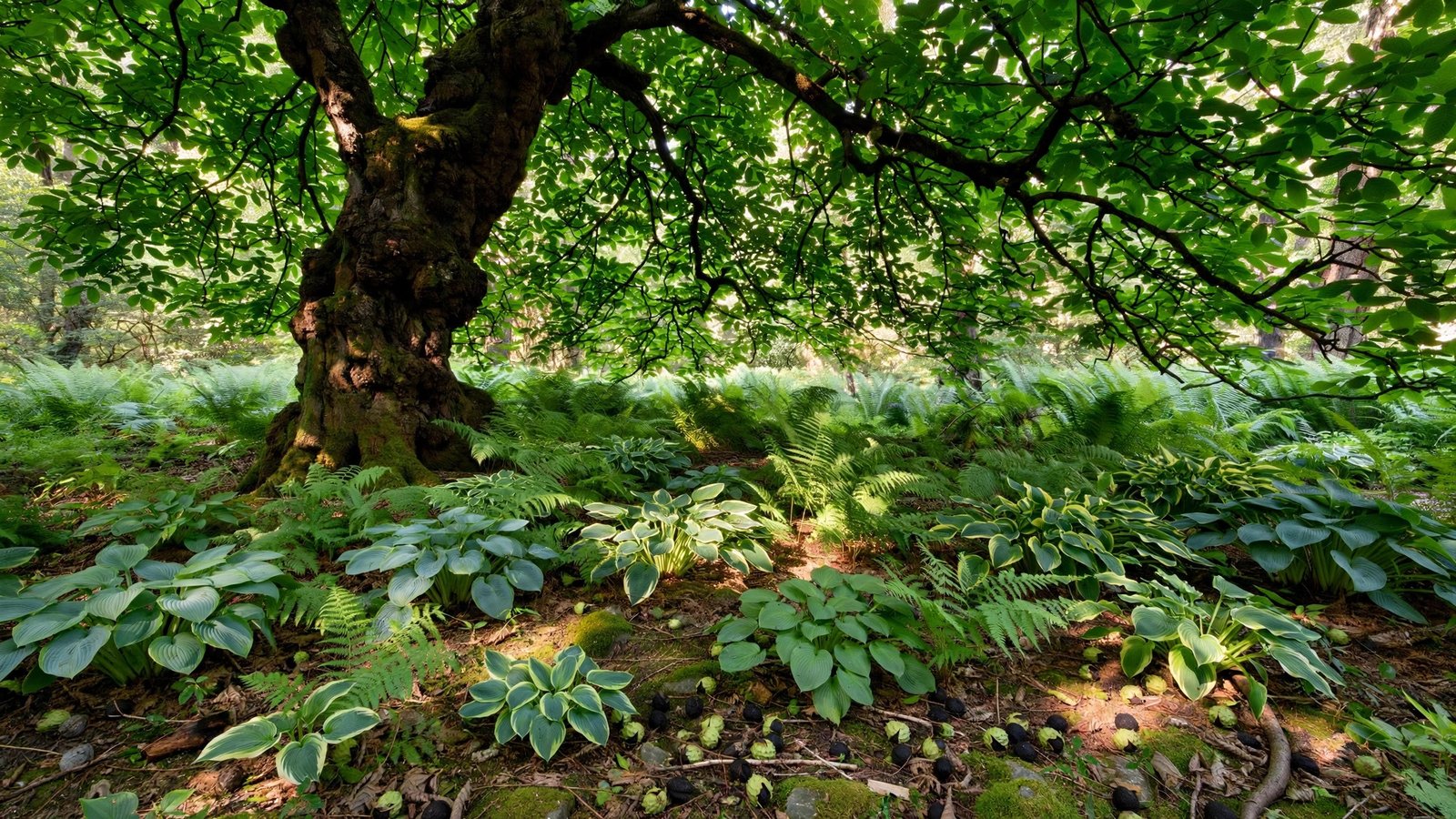
Every gardener with a black walnut tree knows the heartbreak: you plant tomatoes, peppers, or petunias near it, they grow hopefully for a few weeks, then wilt, yellow, and die for no apparent reason. The soil is fine, the water is fine — but the tree is waging chemical warfare. Black walnuts produce juglone, a natural compound toxic to many plants, released from roots, fallen leaves, nut husks, and even rain dripping off the canopy. The result is a notorious dead zone where “nothing grows.” Except that is not quite true. A surprising number of plants tolerate or even ignore juglone, and with the right plant list plus a few smart strategies, the ground under your walnut can be lush and beautiful instead of bare.
Why Black Walnut Kills: Understanding Juglone
Juglone is an allelopathic chemical — a compound one plant produces to suppress competitors. Black walnut roots exude it constantly, and it concentrates in the soil within the tree’s root zone, which extends far beyond the canopy drip line (roots can reach 50 to 80 feet from the trunk). Fallen leaves, twigs, and especially the fleshy nut husks add more as they decompose. Sensitive plants absorb juglone through their roots; it disrupts their respiration and water uptake, causing wilting, yellowing, stunting, and death — symptoms easily mistaken for drought or disease. Tomatoes, peppers, eggplants, potatoes, pines, azaleas, rhododendrons, and many annuals are highly sensitive. But tolerance varies enormously between species, and many common landscape plants evolved alongside walnuts and shrug off juglone entirely. One important note: juglone breaks down in well-aerated, biologically active soil, so rich compost-amended soil with good drainage reduces toxicity compared to compacted, waterlogged ground. Ohio State University Extension maintains a thorough list of juglone-tolerant plants that is the gold standard reference, and the Morton Arboretum’s black walnut toxicity guide explains the science behind it.
Tolerant Perennials and Groundcovers
The shade garden palette for walnut zones is richer than most people expect. Hostas — the backbone of shade gardening — are juglone tolerant and thrive under walnuts, as are ferns of nearly every type (ostrich fern, Christmas fern, Japanese painted fern). Bee balm (Monarda), daylilies, coneflowers, black-eyed Susans, astilbe, coral bells (Heuchera), lungwort (Pulmonaria), wild ginger, Virginia bluebells, and spiderwort all handle juglone well. For groundcovers, consider vinca minor, pachysandra, sweet woodruff, lamium, and barrenwort (Epimedium) — the last being nearly indestructible in dry walnut shade. Spring bulbs including daffodils, crocus, and snowdrops are tolerant and naturalize beautifully. Ornamental grasses like Japanese forest grass (Hakonechloa) add texture. The key insight: build the planting around proven survivors rather than testing sensitive favorites and mourning them. A layered planting of tolerant species looks intentional and lush, not like a compromise.
Tolerant Shrubs, Vines, and Trees
For structure, several shrubs coexist peacefully with black walnut. Arborvitae, yews, hemlocks, and junipers are tolerant evergreens for screening. Flowering options include forsythia, lilac, viburnum, mock orange, weigela, spirea, and red- and yellow-twig dogwoods. Climbing vines like Virginia creeper, trumpet vine, and Boston ivy tolerate juglone (though plant aggressive vines with caution for other reasons). If you want another tree nearby, choose from tolerant species: oaks, hickories, maples (most), redbud, serviceberry, dogwood, and most fruit trees except sensitive ones — though giving any new tree distance from the walnut’s root zone is wise. Notably, many native woodland plants evolved with walnuts and are the safest bets of all: bloodroot, trillium, jack-in-the-pulpit, Solomon’s seal, and wild geranium form a gorgeous native understory that asks for nothing once established. Designing with natives under a walnut is working with the ecosystem instead of against it.
What About Vegetables and Annuals?
Here is the honest answer: the vegetable garden does not belong under a black walnut. Most beloved edibles — tomatoes, peppers, eggplant, potatoes — are among the most juglone-sensitive plants in existence, and even “tolerant” vegetables underperform in walnut root zones due to competition for water and nutrients. Annual flowers are similarly risky: petunias, impatiens (the classic shade annual), and marigolds struggle or die. If you are determined to grow food near a walnut, use raised beds with imported soil and a root barrier (landscape fabric at the bed’s base) to physically separate crops from juglone-laden soil — this works reliably since juglone moves through soil contact. Site the beds as far from the tree as possible, ideally beyond the canopy drip line. Some herbs like mint and bee balm tolerate juglone in the ground, but for serious food production, distance plus raised beds is the answer, not wishful planting.
Strategies Beyond Plant Selection
Smart tactics multiply your options. First, respect the root zone: juglone concentration is highest near the trunk and decreases with distance, so your most sensitive choices go farthest out. Second, build soil health aggressively — deep compost, mulch, and good drainage accelerate juglone breakdown by soil microbes. Third, use containers: a walnut-shaded patio with potted plants sidesteps the problem entirely, since container soil has no juglone. Fourth, mulch the area under the tree with wood chips, but compost walnut leaves separately before using them as mulch — fresh walnut leaves and especially husks are juglone-concentrated; composted for a full hot cycle, they are generally safe. Fifth, remove fallen nuts promptly if you are planting nearby, since the husks are the most potent juglone source. Finally, test before investing: plant one inexpensive specimen of anything you are unsure about and watch it for a full season before committing to a large planting. Patience here saves money and disappointment.
Black walnut trees kill sensitive plants with juglone, but many plants are immune: hostas, ferns, daylilies, bee balm, daffodils, arborvitae, lilacs, and native woodland wildflowers all thrive beneath walnuts. Plant proven survivors, build healthy soil, and use raised beds for anything sensitive.
Conclusion
The ground under a black walnut is not cursed — it is just selective. Understanding juglone lets you stop fighting the tree and start planting the long list of tolerant species that genuinely thrive there: hostas, ferns, daylilies, bee balm, spring bulbs, hardy shrubs, and native woodland plants. Keep the vegetable garden at a distance in raised beds, compost walnut debris before using it, and build rich soil to help microbes neutralize juglone faster. Work with the tree’s chemistry instead of against it, and the “dead zone” becomes one of the lushest spots in your landscape. For more problem-area planting guides, visit our gardening section, learn about our team, or ask us your shade-garden questions.
Frequently Asked Questions
How far does juglone spread from a black walnut tree?
The toxic root zone extends well beyond the canopy, often 50 to 80 feet from the trunk in mature trees, since roots spread widely. Juglone concentration is highest near the trunk and decreases with distance. When in doubt, assume the entire root zone is affected and plant tolerant species throughout.
Can I compost black walnut leaves safely?
Yes, with proper hot composting. Juglone breaks down during active composting, and finished compost from walnut leaves is generally safe to use. Avoid using fresh, uncomposted walnut leaves or nut husks as mulch around sensitive plants — the husks are the most concentrated juglone source.
Will removing the tree fix the soil?
Mostly, with time. Juglone breaks down in soil within weeks to months once the source is gone, especially in healthy, biologically active soil. Stump and major roots should be removed since they continue releasing juglone as they decay. Most gardeners can plant sensitive species within a season or two of removal.
Are English walnuts as toxic as black walnuts?
No — English (Persian) walnuts produce much less juglone and rarely cause the severe planting problems black walnuts do. Butternut is intermediate. If your tree is an English walnut, your planting options are far wider, though the most sensitive plants may still struggle directly beneath it.
Do raised beds really protect vegetables from juglone?
Yes, when built correctly. Use imported soil, keep beds at least 12 inches deep, and lay landscape fabric or a solid barrier at the base to block root intrusion from below. Site beds as far from the tree as practical. This physical separation reliably prevents juglone exposure.
Leave a Reply