
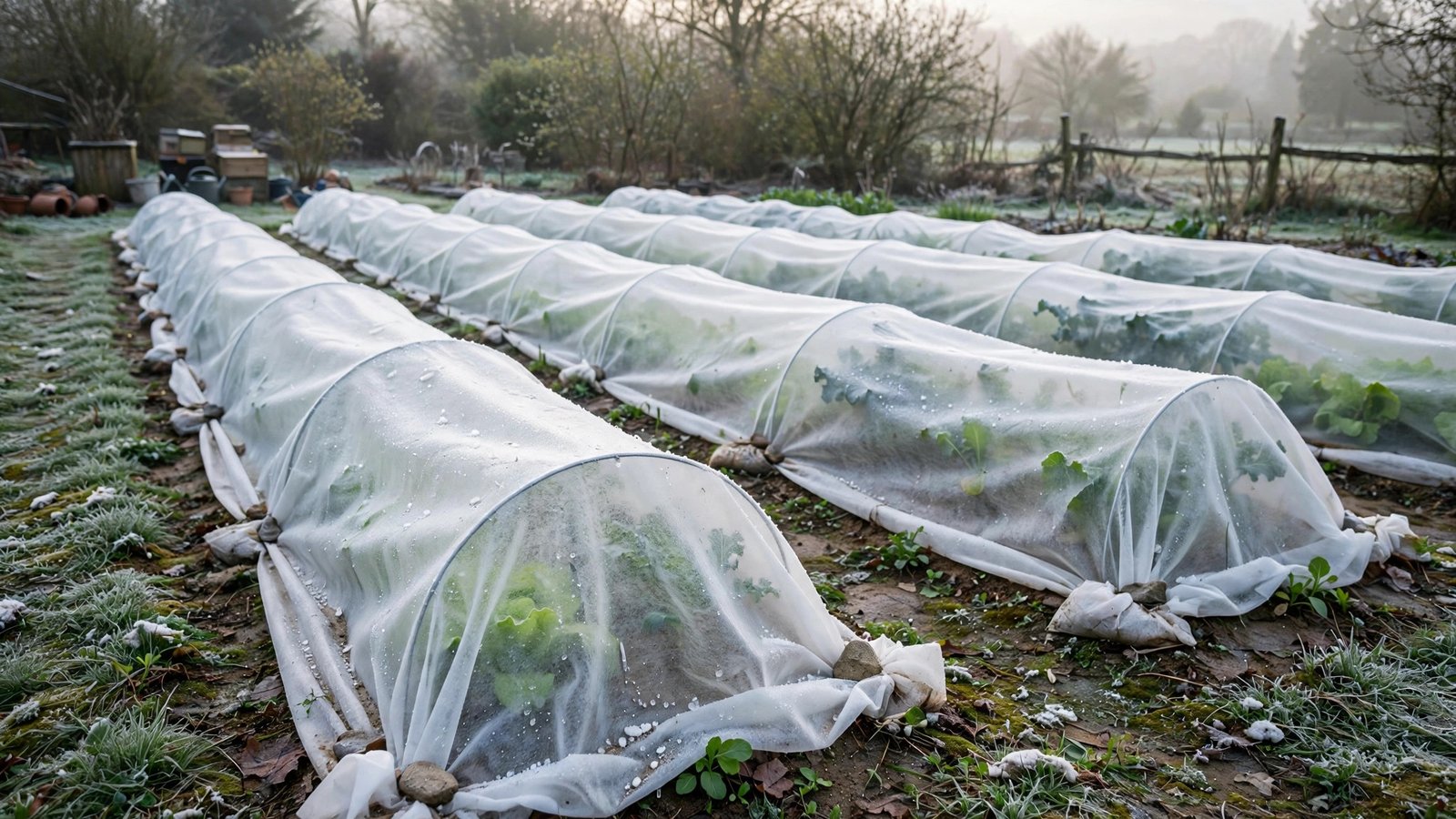
The forecast was perfect all week — your tomatoes are in, the peppers are thriving, the basil is finally taking off — and then the evening news drops the words every spring gardener dreads: frost warning tonight, lows in the upper 20s. A late spring frost can undo months of work in a single night, blackening tender growth you nurtured since February. But here is the reassuring truth: a frost warning is not a death sentence. With a few hours of preparation using materials you probably already own, you can carry almost everything through the night unscathed. Here is exactly what to do when the warning hits.
Understand What You Are Fighting
Not all cold nights are equal, and the distinction shapes your defense. A light frost (lows of 29 to 32°F) damages only the most tender plants and often just nips outer leaves. A hard freeze (below 28°F for several hours) can kill tender plants outright and damage even hardy ones. Most late-spring warnings involve radiational cooling: clear skies and calm winds let heat radiate away from surfaces, so plant leaves and the ground can freeze even when the official air temperature reads a degree or two above freezing. Low spots and open areas get hit hardest; plants near the house, under trees, or on slopes often skate through. Check the details of your warning — predicted low, duration below freezing, wind, and cloud cover all matter. A forecast of 31°F for two hours under clearing skies demands covering; 36°F with wind and clouds might need nothing. Your local National Weather Service forecast discussion, not just the headline number, tells you how serious the night will be.
Cover Before Sunset: The Core Move
Covering is the most effective frost defense, but timing and materials matter. Cover before sunset, not after dark — you are trapping the day’s residual ground heat. Frost cloth (floating row cover) is best: lightweight, breathable, rated for 4 to 8 degrees of protection. Old bedsheets and blankets work too. Drape loosely, extending all the way to the ground on all sides to trap earth-warmed air. Support fabric on stakes or cages so it does not crush growth, and secure edges against wind. Remove covers in the morning once temperatures rise above freezing — leaving them on cooks plants in midday sun. The University of Minnesota Extension’s frost protection guide details material choices and temperature thresholds.
Water the Soil: Free Degrees of Protection
Here is the trick many gardeners miss: water the soil thoroughly in the late afternoon before a frost night. Moist soil holds far more heat than dry soil, releasing it slowly through the night and keeping the air around plants several degrees warmer. This is the same principle behind commercial orchards running sprinklers during frost events. Water the ground, not the foliage — wet leaves freeze faster and suffer more damage. A deep watering also ensures roots are hydrated heading into a stressful night. Combine watering with covering and you stack two independent warming effects. One caution: do not create a swamp — waterlogged cold soil damages roots. Aim for deeply moist, the normal good-watering standard. In containers, group pots together against the house wall (which radiates stored heat) and water them too; clustered pots protect each other, and the thermal mass of the building is free frost insurance.
What NOT to Drape Over Your Plants
The most common frost-protection mistake is reaching for plastic sheeting laid directly on foliage. Plastic conducts cold straight to any leaf it touches — everywhere plastic contacts a leaf, that leaf freezes and dies, often worse than if left uncovered. If plastic is all you have, support it on stakes or frames so it never touches the plants, creating a tent with an air gap. Newspaper works as an emergency cover for small plants (a few layers, weighted down), and paper grocery bags slipped over individual seedlings are a classic. Avoid turning on heat lamps or string lights indiscriminately — old-fashioned incandescent Christmas lights under a frost cloth genuinely add a few degrees of warmth, but modern LEDs produce almost no heat and do nothing. And resist the urge to prune frost-damaged growth immediately afterward; wait several days to see what is truly dead, since apparently blackened stems sometimes resprout from below.
Containers, Seedlings, and Special Cases
Container plants are the most vulnerable and the easiest to save: simply carry pots indoors or into the garage for the night. It takes ten minutes and provides total protection. Newly transplanted seedlings, hardened off or not, deserve covers even in a light frost — their root systems are shallow and their tissue is soft. Cold frames and cloches (even a milk jug with the bottom cut off) give individual plants excellent protection. For fruit trees in bloom, the stakes are higher: open blossoms die around 28°F, and a lost bloom is a lost fruit. Cover small trees with sheets, run a sprinkler overnight for larger ones (the ice that forms actually protects blossoms at 32°F through latent heat release), or accept the loss on a big tree and thin the survivors. Tropical houseplants summering outdoors should come inside whenever nights threaten the 40s — they suffer chilling injury well above freezing. Prioritize your effort: protect the irreplaceable (grafted trees, long-season crops) first.
After the Frost: Assess Before You Act
Morning after, do not panic at the sight of wilted, darkened foliage — and do not immediately rip plants out. Wait until midday, when temperatures recover, to assess: some plants that look devastated at dawn perk up remarkably. Water normally and wait three to five days before pruning anything; the full extent of damage reveals itself slowly, and cutting too early removes tissue that might have recovered while stimulating tender new growth vulnerable to the next cold snap. If the growing point (the central bud) of a plant is mushy and dead but lower stems are firm, prune back to healthy tissue and the plant will usually branch out. Keep frost cloth handy — late spring often delivers multiple warnings, and the second one catches gardeners who relaxed. Note what survived uncovered; that is valuable data about your microclimate for next year’s planting decisions. The National Weather Service offers the most reliable frost and freeze warnings — sign up for alerts rather than relying on generic weather apps.
When a late spring frost warning hits, cover tender plants with frost cloth or sheets before sunset (all the way to the ground), water the soil deeply in the afternoon, and never lay plastic directly on foliage. Remove covers in the morning — most plants survive a properly prepared frost night just fine.
Conclusion
A late spring frost warning is a call to action, not a funeral notice. Cover before sunset with breathable fabric sealed to the ground, water the soil to bank heat, keep plastic off leaves, haul containers inside, and assess damage patiently the next day. These simple steps routinely save entire gardens from nights in the upper 20s. Keep your frost cloth accessible through May — spring’s last cold snap is always the one that surprises people. For more seasonal garden protection guides, browse our gardening section, meet the team, or ask us your frost questions.
Frequently Asked Questions
What temperature actually damages garden plants?
Tender warm-season plants (tomatoes, peppers, basil) suffer damage at 32°F and below, with death likely under 28°F for extended periods. Cool-season crops (lettuce, peas, broccoli) tolerate light frosts into the upper 20s. Duration matters as much as the low — two hours at 30°F differs greatly from six hours at 26°F.
Can I use a tarp to cover plants in a frost?
Only if it does not touch the foliage — drape it over stakes or frames to create a tent. Plastic laid directly on leaves conducts cold to every contact point and causes worse damage than no cover. Frost cloth, sheets, or blankets are safer choices for direct draping.
Should I water plants before a frost?
Water the soil, not the leaves. Moist soil stores and releases significantly more heat overnight than dry soil, buying several degrees of protection. Water in the late afternoon so it soaks in before nightfall, and avoid waterlogging.
When should I remove frost covers in the morning?
Once temperatures climb safely above freezing and sun hits the plants — typically mid-morning. Leaving covers on into a sunny day overheats plants quickly. If another frost is forecast the next night, you can leave the supports in place and re-cover in the evening.
My plants look dead after the frost. Are they?
Maybe not — wait. Assess at midday, not dawn, and give plants 3 to 5 days before pruning or replacing. If stems are firm and only leaves blackened, recovery is likely. If the central growing point is mushy, prune to firm tissue and watch for resprouting from below.
Leave a Reply