
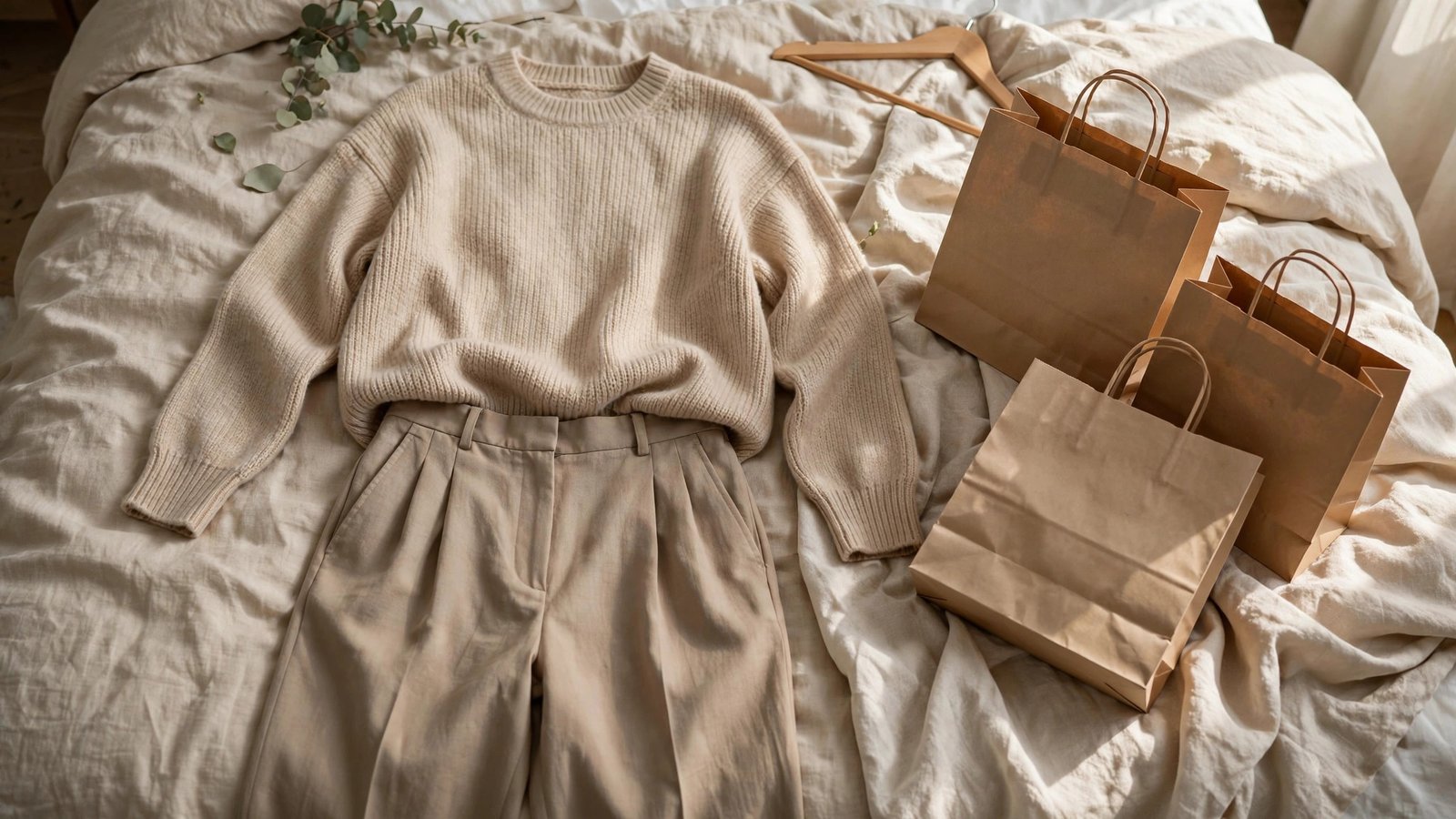
There is a particular magic to an outfit that looks like it cost $300 when the whole thing came from Target for $60. It is not about fooling people — it is about understanding that “expensive-looking” is a set of visual signals, not a price tag. Fabric behavior, fit, color discipline, and finishing details are what the eye reads as luxury, and every one of them is achievable on a Target budget. Here is how to shop the aisles like a stylist and make budget clothes look genuinely premium.
Why Some Cheap Clothes Look Expensive and Others Do Not
The eye judges clothing on a few unconscious criteria: how the fabric drapes and moves, whether the color looks rich or washed out, how clean the construction looks (straight seams, no puckering, no loose threads), and how the garment fits the body. Expensive clothes tend to nail all four; cheap clothes fail on at least one. The good news is that Target’s in-house lines — particularly A New Day, Universal Thread, and All in Motion — have genuinely improved in fabric and construction over the years. The raw material is often fine; the difference between “cheap” and “expensive-looking” comes down to selection and styling.
The single biggest giveaway of cheap clothing is fit. A $25 blazer that has been tailored for $20 looks more expensive than a $200 blazer that swims on you. Conversely, nothing screams “budget” like pulling, gaping, or drowning in fabric. When shopping Target, try everything on, buy for the shoulders and the widest point, and plan to tailor the rest. A tailor is the great equalizer of the clothing world.
Shop Like a Stylist: What to Grab and What to Skip
Certain categories are Target sweet spots where the quality-to-price ratio is excellent. Knitwear — simple crewneck sweaters, cardigans, and fine-gauge knits in solid colors — is a standout; without complex tailoring to expose, a $30 sweater in merino-look knit reads far above its price. Basic tees and tanks in the All in Motion or A New Day lines, simple midi skirts, slip skirts, and well-cut basic trousers are all strong picks. Linen-blend pieces in summer look inherently premium because the fabric itself signals quality.
Skip the categories where cheap construction shows: structured blazers with visible fusing (they bubble after washing), anything with elaborate hardware or embellishment (cheap zippers and buttons are instant tells), and fussy details like fake pockets or glued-on elements. Also skip the loudest trend pieces — a neon fast-fashion item looks disposable by design. The expensive-looking Target wardrobe is built on quiet, classic pieces, not statement items. Check seams in the store: turn the garment inside out and look for straight stitching, finished edges, and no loose threads. Two minutes of inspection saves buyer’s remorse.
The Fit Fix: Tailoring Is Your Secret Weapon
Budget for tailoring as part of the purchase price. A $28 pair of trousers plus a $15 hem looks like $100 trousers; a $35 dress taken in at the waist for $18 looks custom. The alterations with the highest return on investment are hemming pants and skirts to the right length, taking in the waist of dresses and trousers, shortening sleeves on jackets, and tapering a leg that is too wide. These are all quick, inexpensive jobs at any dry cleaner or tailor shop.
Learn your measurements once — waist, inseam, sleeve length — and you can even shop Target online with confidence, knowing what will need the tailor’s touch. Press or steam everything before wearing it; wrinkles are the fastest way to make any outfit look cheap, and a $25 handheld steamer pays for itself in a week. The Who What Wear style guides regularly feature affordable pieces styled to look high-end, and Real Simple’s budget fashion advice offers more affordable styling strategies.
Color and Fabric: The Luxury Signals
Color choice does enormous work. Rich, deep, or neutral tones — camel, navy, forest green, burgundy, cream, black, warm gray — read expensive; faded brights, neon, and muddy pastels read cheap. Monochrome or tonal outfits (different shades of one color family) look instantly more polished and intentional than high-contrast mixes, and they are easy to build from Target basics. An all-cream or all-navy outfit from head to toe looks deliberate and chic regardless of the price tags.
Fabric matters more than brand. Hold the garment up: does it drape or does it stand stiff? Does the color look saturated or thin? Natural fibers and good blends (cotton, linen, viscose, Tencel) generally look richer than 100-percent polyester, though modern poly blends have improved. Avoid anything shiny that is not supposed to be — cheap satin and plasticky faux leather are the two fabrics most likely to betray a budget. Matte textures, interesting weaves, and substantial-feeling knits all punch above their price.
Styling and Accessories: The 20 Percent That Does 80 Percent
Styling is where budget outfits become convincing. Tuck or half-tuck your tops — an untucked boxy tee over trousers looks unfinished, while a French tuck looks styled. Roll or push sleeves deliberately. Belt your dresses and high-waisted trousers with a simple, good-looking belt; the belt is one of the few accessories worth spending slightly more on, since a quality leather belt elevates everything it touches and lasts for years.
Shoes and bags are the credibility anchors of any outfit — the eye goes to them first when judging overall polish. You do not need designer anything, but clean, minimal, well-maintained shoes and a structured bag in a neutral color do more for a Target outfit than any other single factor. Keep shoes clean and bags scuff-free. Simple jewelry — small hoops, a delicate necklace, a classic watch — reads refined; big, flashy costume pieces read the opposite. And grooming is free: neat hair, clean nails, and pressed clothes make a $60 outfit look like $300 before you have even left the house.
Making Target clothes look expensive comes down to four things: ruthless fit (tailor everything that needs it), quiet luxury colors and matte natural-feeling fabrics, steamed and pressed finishing, and credibility anchors — clean minimal shoes, a structured bag, and simple accessories. Buy the quiet classics, skip the fussy details, and let tailoring do the heavy lifting.
Conclusion
The expensive look was never really about money — it is about intention. Shop Target’s strong categories (knitwear, basics, simple skirts and trousers), inspect construction before buying, tailor the fit, choose rich neutrals and tonal outfits, steam everything, and anchor it all with clean shoes and a structured bag. Do that consistently, and nobody will ever guess the total. Style is a skill, and like any skill, it responds to practice far more than to budget. For more budget-style intelligence, browse our fashion section, read about our approach to real-world style, or share your best affordable finds.
Frequently Asked Questions
Which Target clothing lines look the most expensive?
A New Day, Universal Thread, and All in Motion consistently offer the best fabric and construction for the price. Focus on their knitwear, basic tees, simple skirts, and well-cut trousers in solid colors — the quiet classics rather than trend pieces.
Is tailoring cheap clothes worth the cost?
Absolutely — it is the highest-return investment in a budget wardrobe. A $15 hem or $18 waist alteration on a $30 garment produces a fit that reads as custom. Budget the alteration into the purchase price and only tailor pieces you will wear often.
What colors make cheap clothes look more expensive?
Rich, deep, and neutral tones: camel, navy, forest green, burgundy, cream, black, and warm gray. Monochrome or tonal outfits in one color family look instantly more polished. Avoid neon, faded brights, and muddy pastels, which tend to read as cheap.
How can I tell if a cheap garment is well made in the store?
Turn it inside out and check for straight stitching, finished seam edges, and no loose threads. Hold it up to check drape and color saturation, and avoid shiny fabrics that should not be shiny, cheap hardware, and glued-on details.
What is the one accessory most worth upgrading?
Shoes and bags are the credibility anchors — clean, minimal shoes and a structured neutral bag elevate everything. A quality leather belt is the next best investment since it touches nearly every outfit and lasts for years.
Does steaming really make a difference?
Enormous. Wrinkles are the fastest way to make any outfit look cheap, and a $25 handheld steamer removes them in minutes. Pressed, wrinkle-free clothes signal care and intention, which the eye reads as quality regardless of the price tag.
Leave a Reply