
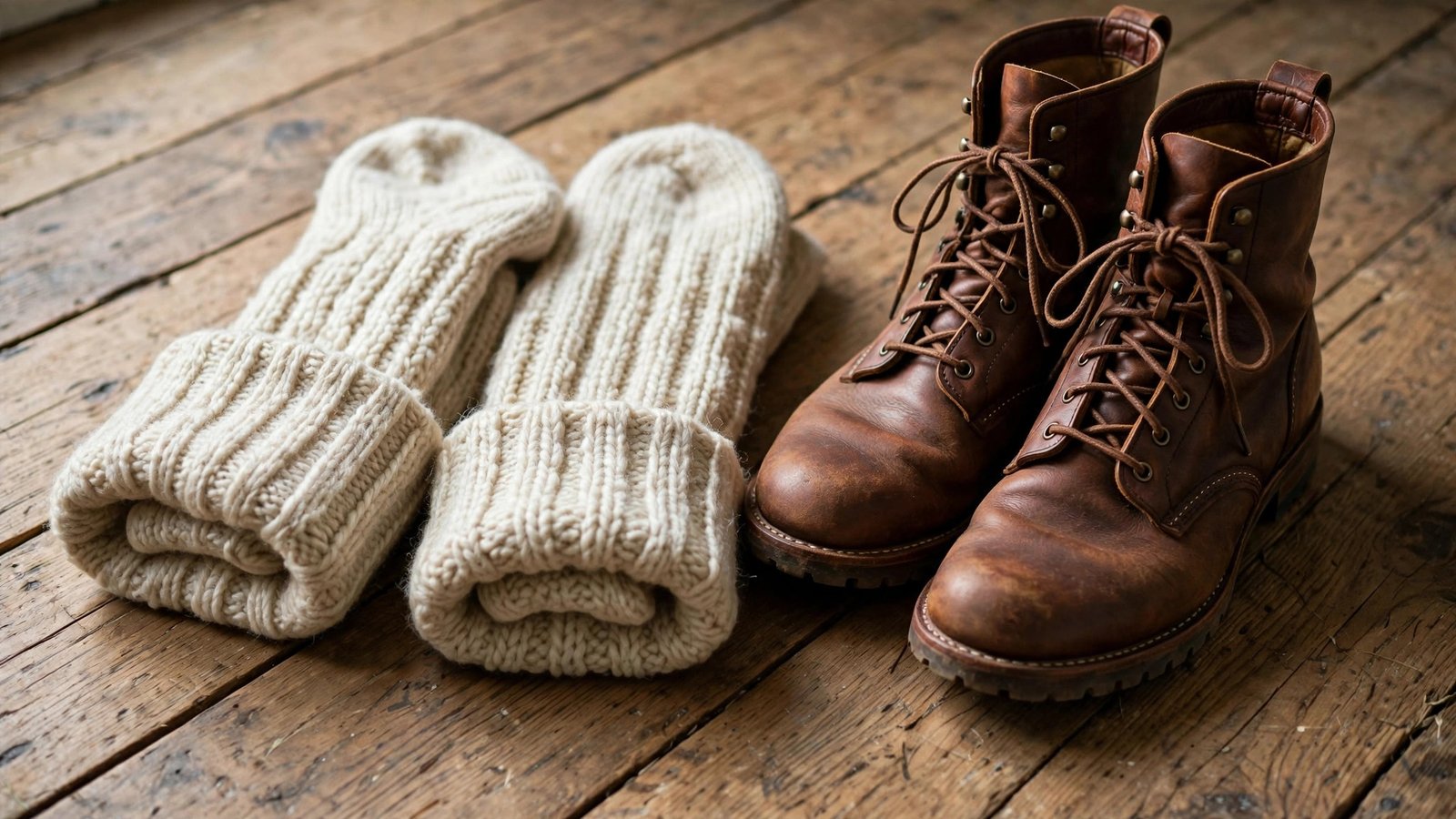
There is a special annoyance reserved for the moment your sock slides down inside your boot and bunches under your arch — and you are nowhere near a place to fix it. Every step becomes a negotiation with the wad of fabric migrating south, and by the end of the day your feet ache in ways that have nothing to do with the boots. Socks slide inside boots for specific, fixable reasons: wrong sock construction, wrong size, wrong material, or a boot fit that lets the foot move too much. Here is how to end the slide for good.
Why Socks Slide Down in Boots
A sock stays up through a combination of elastic grip at the cuff, friction against the skin and boot, and structural fit around the foot. Boots disrupt all three. The tall shaft creates a long column where gravity works on the sock with every step; the roomier fit of most boots (compared to shoes) lets the foot and sock move independently, breaking the friction hold; and the stiff shaft does not flex with the ankle, creating a shear force at the ankle that gradually walks the sock downward. Add sweat — boots run warm, moisture reduces friction — and the slide becomes inevitable.
The sock’s own construction is usually the main culprit. Thin, worn-out elastic at the cuff cannot grip the calf; smooth synthetic fabrics slide against both skin and boot lining; and a sock that is too large bunches and migrates, while one that is too small pulls down from tension. Cotton crew socks — the default for many boot wearers — are among the worst offenders: cotton absorbs moisture, gets heavy, loses shape, and slides. The fix starts with retiring the wrong socks, not fighting them.
The Right Socks: What Actually Stays Up
Boot socks exist as a category for a reason, and they differ from regular socks in the ways that matter. Look for: a tall cuff that reaches well above the boot shaft (over-the-calf or knee-high) — the cuff grips the calf where it is narrower, above the boot’s top edge, which anchors the whole sock; strong elastic in the cuff and arch (try the pull test — quality boot socks snap back firmly); cushioning through the foot that fills the boot’s volume and reduces internal movement; and moisture-wicking materials (merino wool blends are the gold standard — they manage sweat, cushion well, and their natural texture grips better than slick synthetics).
Specific constructions to seek: socks with an elastic arch band (a ribbed section that hugs the midfoot and prevents the slide), Y-stitched or anatomical heels that cup the heel instead of sliding off it, and seamless toes (comfort bonus). Brands like Darn Tough, Smartwool, and Thorlo build all of this into their boot socks — they cost $18–$28 a pair, which stings until you calculate the cost-per-wear of socks that actually work versus the drawer of sliders you never reach for. Size down if between sizes: a snug sock stays up; a loose one never will. The Darn Tough fit guides explain the construction features that separate real boot socks from tall regular socks, and REI’s sock buying guide compares cushioning and height options.
Fit Fixes: When the Boot Is Part of the Problem
Sometimes the sock is fine and the boot is the issue. Boots with too much volume — too wide, too long, or with a shaft too loose around the calf — let the foot piston up and down with each step, and that movement drags the sock down regardless of its quality. If your heel lifts significantly when you walk, the boot is too big or needs fitting help: try a tongue pad, a heel grip, or a thicker insole to take up volume. Lace-up boots should be laced snugly through the ankle (the “heel lock” lacing technique prevents lift); pull-on boots need to fit the calf closely enough not to gap.
Calf fit deserves special attention with tall boots: if the shaft is much wider than your calf, the sock has nothing to brace against and the boot’s movement works it down relentlessly. Boot shafts can be taken in by a cobbler, or calf-width inserts and boot shapers reduce the gap. For the common case of boots that fit the foot but gape at the calf, wearing over-the-calf socks whose cuff sits above the boot top solves it elegantly — the cuff anchors on your leg, independent of the boot shaft entirely.
Anti-Slide Tricks and Hacks
Beyond proper socks and boot fit, several tricks add insurance. Sock garters or sock suspenders — the old-fashioned elastic bands worn around the calf — are unfashionable and completely effective; modern versions are discreet and comfortable. Fashion tape (double-sided body tape) between sock cuff and skin holds through a full day. A light application of anti-chafe balm on the calf where the cuff sits increases grip slightly.
Layering works too: a thin liner sock under the boot sock adds friction between layers and manages moisture — the liner stays with the foot while the outer sock stays with the boot, and the relative motion happens between sock layers instead of dragging everything down. Tucking pant legs into the socks (for work boots and outdoor use) adds compression that holds the cuff up. And the simplest hack of all: fold the sock cuff down over the boot shaft — the fold creates a mechanical lock that resists sliding, looks intentional with many boot styles, and costs nothing.
Socks slide down inside boots because gravity, boot-shaft shear, sweat, and weak sock construction defeat the cuff’s grip. Fix it with real boot socks — over-the-calf height, strong elastic, arch bands, merino blends, sized snugly — plus boot fit that prevents heel lift. Sock garters, fashion tape, or folding the cuff over the shaft add insurance for stubborn cases.
Conclusion
The migrating sock is not a fact of boot-wearing life — it is a symptom of wrong socks, loose boots, or both. Invest in proper boot socks with real structure, dial in your boot fit so the foot is not pistoning, and deploy the anti-slide tricks for insurance. Your feet will stop negotiating with bunched fabric by noon, and you will wonder why you tolerated it for so long. For more footwear problem-solving, explore our fashion section, read about our practical philosophy, or share your own anti-slide discoveries.
Frequently Asked Questions
Why do my socks always slide down in my boots?
Boot shafts create shear force at the ankle, roomier boot fits let the foot move independently of the sock, sweat reduces friction, and most regular socks lack the cuff elastic, arch support, and height to resist. Cotton crew socks are among the worst offenders — they absorb moisture, lose shape, and slide.
What kind of socks stay up in boots?
Real boot socks: over-the-calf or knee-high height (cuff grips above the boot top), strong cuff and arch elastic, cushioned foot, anatomical heel, and moisture-wicking merino wool blends. Darn Tough, Smartwool, and Thorlo are benchmark brands. Size snugly — loose socks never stay up.
Can boot fit cause socks to slide?
Yes — boots with excess volume let the foot piston with each step, dragging any sock down. Fix heel lift with heel-lock lacing, tongue pads, heel grips, or thicker insoles. Shafts much wider than the calf let the sock migrate; over-the-calf socks anchor above the shaft independently.
Do sock garters actually work?
Yes — elastic sock garters around the calf are old-fashioned and completely effective at holding cuffs up. Modern versions are discreet and comfortable. Fashion tape between cuff and skin, or folding the cuff over the boot shaft, are simpler alternatives.
Should I wear liner socks under boot socks?
It helps in stubborn cases: the liner stays with the foot, the outer sock stays with the boot, and relative motion happens between the layers instead of dragging everything down. It also adds moisture management — a legitimate two-sock system for work and hiking boots.
Are expensive boot socks worth it?
Usually yes — $18–$28 pairs from Darn Tough or Smartwool with proper construction (arch bands, anatomical heels, strong elastic, merino blends) outlast and outperform cheap multipacks dramatically. Cost-per-wear favors the good socks, and many come with lifetime guarantees.
Leave a Reply