
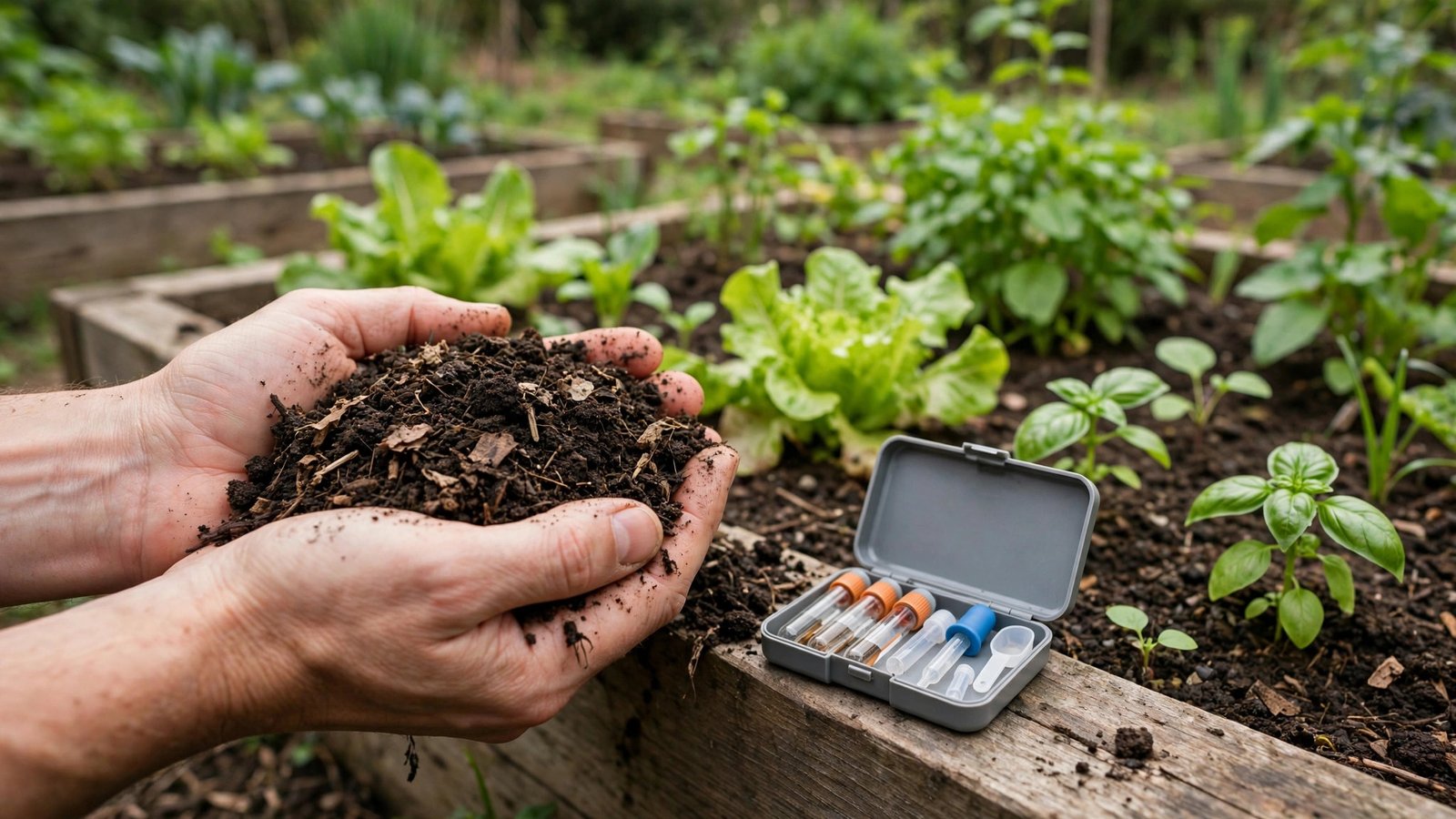
You did everything right — good seeds, plenty of water, full sun — and your plants still look miserable. Yellow leaves, stunted growth, blossoms that never become fruit. Before you blame the seeds, blame the soil: its pH might be locking away every nutrient your plants are hungry for. Soil acidity is the invisible variable behind countless garden failures, and testing it takes minutes. Here is how to test if your soil is acidic or alkaline before planting, from a free kitchen test to the lab analysis that tells you exactly what to add.
What Soil pH Actually Means for Your Plants
Soil pH measures acidity on a scale from 0 to 14, with 7 neutral. Below 7 is acidic, above 7 is alkaline — and the scale is logarithmic, so pH 5 is ten times more acidic than pH 6. Why should you care? Because pH controls nutrient availability: in strongly acidic soil, phosphorus, calcium, and magnesium get locked up; in strongly alkaline soil, iron, manganese, and zinc become unavailable. The plant can be sitting in fertile soil and starving at the same time. Most vegetables and flowers thrive between 6.0 and 7.0, slightly acidic to neutral. But preferences vary dramatically: blueberries demand 4.5–5.5 (strongly acidic), while lilacs and clematis prefer 7.0+. Regional patterns help you guess: eastern U.S. soils trend acidic from heavy rainfall leaching minerals; western soils trend alkaline. Guessing is free; testing is cheap; planting blind is expensive.
Test 1: The Free Vinegar and Baking Soda Fizz Test
The fastest test costs nothing and takes two minutes — though it only tells you which side of neutral you are on, not how far. Scoop soil from 4–6 inches deep (skip the surface mulch layer), remove debris, and split it into two small cups. To the first, add half a cup of white vinegar: fizzing and bubbling means alkaline soil (the acid is reacting with carbonates). To the second, wet the soil and add half a cup of baking soda: fizzing means acidic soil. No reaction in either? Your soil is roughly neutral. This test is gloriously simple but crude — it cannot distinguish pH 5.5 from pH 6.5, and that distinction matters for picky plants. Use it as a first-pass scout: if it screams acidic or alkaline, follow up with a real measurement before amending. If it reads neutral, you have ruled out the extremes and can plant most things with confidence.
Test 2: pH Strips and Color Kits ($10)
Step up in precision with a soil pH test kit from any garden center — typically under $10 for dozens of tests. The method: mix soil with distilled water (not tap water, which has its own pH) at roughly equal parts, let it settle, then dip a test strip or add the kit’s indicator solution and match the color to the chart. You will get a reading within about half a pH unit — good enough for most gardening decisions. Tips for accuracy: sample from several spots in the bed and mix them, since pH varies across a garden; test at the root-zone depth of 4–6 inches; and retest in a different season if the result surprises you, because pH drifts slightly with moisture and temperature. Kits also commonly include NPK (nitrogen, phosphorus, potassium) tests — bonus information, though less precise than pH. For the casual gardener planting annuals and vegetables, this level of testing is the sweet spot of cost and usefulness.
Test 3: Probe Meters ($15–$50)
Digital soil pH meters give instant readings with no mixing or color-matching — push the probe into moist soil and read the display. The cheap $15 three-in-one meters (pH, moisture, light) are popular but notoriously imprecise for pH; treat their readings as rough estimates. Dedicated digital pH pens in the $30–$50 range, properly calibrated with buffer solution, are meaningfully better and worth it if you test often. Whatever meter you buy, technique matters: test moist (not dry, not soggy) soil, insert to root depth, take multiple readings across the bed and average them, and clean the probe between tests. Calibrate periodically — an uncalibrated meter drifts into fiction. Meters excel at tracking changes: test before amending, then monthly after, and watch the line move. For gardeners who amend and retest seasonally, a decent meter pays for itself in saved guesswork. The Old Farmer’s Almanac’s soil pH chart lists ideal ranges for dozens of plants to compare against your readings.
Test 4: Lab Testing Through Your Extension Service (Most Accurate)
For the definitive answer — exact pH plus nutrient levels plus specific amendment recommendations — send soil to your state’s cooperative extension laboratory. It typically costs $15–$25, and the report tells you precisely how many pounds of lime or sulfur per square foot your soil needs. Collect a proper sample: take 8–10 small cores from across the bed at 6 inches deep, mix them in a clean bucket, and submit about a pint in the lab’s bag. Do not sample right after fertilizing or liming — wait several weeks. The two-week turnaround rewards patience with professional-grade data, and many gardeners test every two to three years as routine maintenance. If you are establishing a new garden, growing acid-lovers like blueberries, or troubleshooting mysterious failures, lab testing is the highest-value $20 in gardening. It replaces every guess with a number and a prescription.
Fixing pH: What to Add and How Much
Testing without amending is just trivia, so here is the fix. For acidic soil (below 6.0): add garden lime (calcium carbonate) — it raises pH slowly and safely, and also supplies calcium. Pelletized lime is easiest to spread; work it into the top few inches in fall so winter rains carry it down. For alkaline soil (above 7.5): add elemental sulfur, which soil bacteria convert to sulfuric acid, lowering pH gradually over months — or use acidic organic matter like pine needles and peat moss for gentle shifts. Never guess quantities: the lab report or kit instructions give rates, because over-liming is harder to fix than under-liming. Amend in fall for spring planting — pH changes take months, not days. Retest the following season and adjust. The USDA’s soil health resources explain how organic matter and cover cropping support stable, healthy pH over the long term, beyond quick chemical fixes.
Soil pH controls whether your plants can actually eat: most thrive at 6.0–7.0, but acidic soil locks up phosphorus and alkaline soil locks up iron. Test free with the vinegar-and-baking-soda fizz test, measure with $10 strips or a meter, or get the definitive answer from your extension lab for $20. Then amend with lime (to raise) or sulfur (to lower) in fall, and retest next season.
Conclusion
Testing if your soil is acidic or alkaline before planting is one of the highest-return chores in gardening: a free fizz test for a rough read, cheap strips or a meter for real numbers, or a $20 extension lab test for the full prescription. Match amendments to the reading — lime for acidic, sulfur for alkaline — apply in fall, and retest. Your plants were never the problem; the chemistry was. For more garden science, visit our science section, meet our team, or send us your soil questions.
Frequently Asked Questions
What is the ideal soil pH for a vegetable garden?
Most vegetables thrive between 6.0 and 7.0 — slightly acidic to neutral. This range keeps all major nutrients available. Notable exceptions: potatoes prefer 5.0–6.0, while asparagus tolerates up to 8.0. Test first, then amend toward your crops’ preferences.
How accurate is the vinegar and baking soda soil test?
It reliably tells you whether soil is acidic, alkaline, or roughly neutral, but not the degree — it cannot distinguish pH 5.5 from 6.5. Use it as a free first screen, then confirm with strips, a meter, or lab testing before buying amendments.
How do I make my soil more acidic?
Add elemental sulfur (slow, lasting) or acidic organic matter like pine needles, peat moss, or coffee grounds (gentle, gradual). For blueberry beds needing strongly acidic soil, sulfur worked into the root zone months before planting is the standard approach. Always retest after amending.
How do I make my soil less acidic?
Add garden lime (calcium carbonate), which raises pH and supplies calcium. Pelletized lime spread in fall and worked into the soil gives winter to take effect. Wood ash also raises pH but acts faster and adds potassium — use it more sparingly and never combine with fresh lime applications.
How often should I test my soil pH?
Every two to three years for established gardens, plus before starting a new bed or after heavy amending. Test in the same season each time for comparable results, since pH drifts slightly with moisture and temperature through the year.
Leave a Reply