
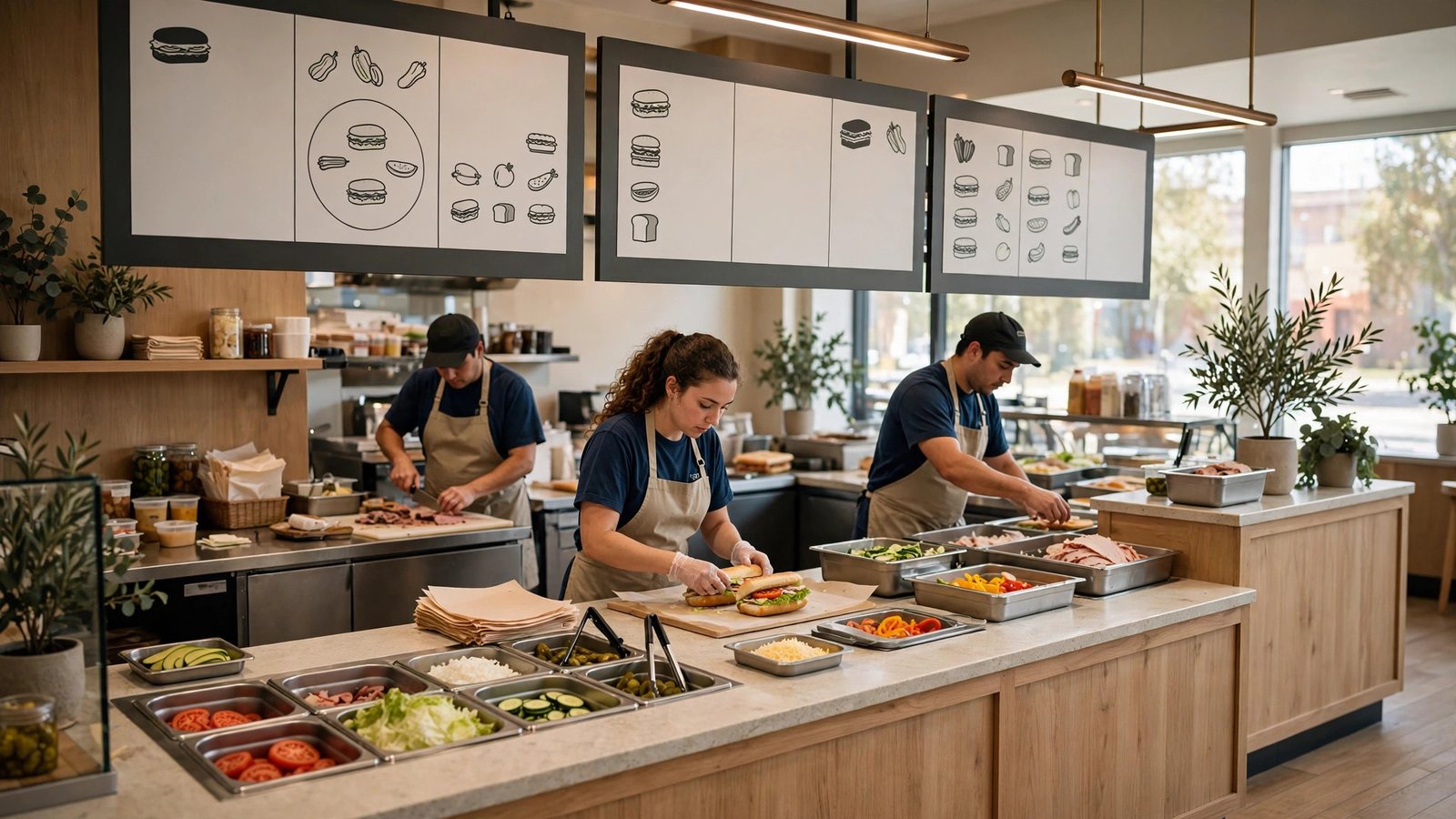
The franchise brochure shows a tidy investment table: franchise fee, equipment, build-out — total it up and the sandwich shop looks affordable. Then the real bills arrive: the grand-opening marketing you must buy from corporate, the point-of-sale system you must lease from their vendor, the insurance minimums triple what you budgeted, and royalties calculated on gross sales whether you profit or not. Franchise sandwich shops fail most often not from bad sandwiches but from undercapitalized owners blindsided by costs the brochure minimized. Here are the hidden ones.
Royalties and Ad Fund Fees on Gross Sales
The headline cost everyone underestimates: ongoing royalties of 5-8% of gross sales plus national advertising fund contributions of 2-4% — taken off the top, every week, profitable or not. On $600,000 in annual sales, 8% royalty plus 3% ad fund is $66,000 a year before you pay rent, labor, or food. These are not optional and not negotiable; the franchise agreement dictates them. Worse, some franchisors calculate royalties on gross sales including catering and delivery, and audit your books to verify. Model your pro forma with these deducted first, because in cash-flow terms, they come before everything except taxes.
The Build-Out Always Costs More Than the Estimate
Franchise disclosure documents list estimated build-out ranges, but the range’s low end assumes ideal conditions you will not get. Real-world overruns come from: landlord-required upgrades to older spaces, health department and ADA compliance changes discovered mid-construction, franchisor-mandated design revisions, and equipment installation surprises. Budget 20-30% above the FDD’s high estimate for build-out, and verify whether the estimate includes signage, smallwares, initial inventory, and technology — it often does not. Talk to at least five existing franchisees about their actual all-in costs; the FDD’s Item 19 financials and Item 20 outlet data tell you who to call.
Mandatory Vendors, Technology, and Supply Markups
The franchise agreement typically requires you to buy from approved suppliers — and approved often means marked-up. Proprietary bread mixes, branded packaging, and mandated point-of-sale systems frequently cost 10-30% more than open-market equivalents, and you cannot shop around. Technology fees add up: POS leases ($200-$400/month), required software subscriptions, digital menu boards, online ordering platform fees, and mandatory system upgrades every few years. Ask current franchisees for their actual monthly technology and supply costs, then add 15% for the increases coming in years two and three.
Grand Opening, Local Marketing, and Transfer Costs
Many agreements require a grand-opening marketing spend ($5,000-$15,000) purchased through corporate-approved channels, plus ongoing local marketing minimums of 1-3% of sales on top of the national ad fund. Insurance requirements routinely exceed independent-shop norms: general liability, workers’ comp, business interruption, and sometimes franchisor-named additional insured endorsements — budget $8,000-$15,000 annually. And read the transfer and renewal terms now: selling your franchise later typically costs a transfer fee ($5,000-$15,000) plus the buyer’s approval process, and renewal at term end can require a full remodel to current brand standards — a $50,000-$150,000 surprise in year 10. The FTC’s franchise guidance explains exactly what the disclosure document must contain.
Working Capital: The Killer Nobody Budgets
The single biggest hidden cost is not a fee at all — it is the working capital to survive until profitability. Most sandwich franchises take 6-18 months to stabilize, during which you pay full royalties, rent, and payroll from reserves. The FDD’s “additional funds” estimate (often 3 months) is routinely inadequate; experienced franchisees recommend 6-12 months of operating expenses in reserve beyond the build-out. Undercapitalization is the top-cited cause of franchise failure. If the total investment plus a year of operating reserves exceeds what you can fund without risking your home, the opportunity is too big for your capital — no matter how good the sandwiches are.
How to Evaluate Before You Sign
Protect yourself with diligence the brochure will not do for you. Read the entire Franchise Disclosure Document, especially Items 7 (costs), 8 (supplier restrictions), 11 (franchisor obligations), and 19 (financial performance). Call 10+ current and former franchisees — the FDD lists them — and ask: actual all-in investment, time to profitability, franchisor support quality, and whether they would do it again. Have a franchise attorney (not a general business lawyer) review the agreement; $2,000-$3,000 in legal review is trivial against a $300,000 investment. And model three scenarios — base, 20% worse sales, and 6-month delay to breakeven — before committing a dollar. The SBA’s franchise buying guide walks through the evaluation process.
Questions to Ask Existing Franchisees
The FDD tells you what the franchisor wants you to know; current franchisees tell you the rest. Call at least ten and ask: What was your actual all-in investment versus the FDD estimate? How long until you were profitable — and how much working capital did you really need? What surprised you most about ongoing costs? How responsive is corporate support when you have a real problem? Would you buy this franchise again? Also call former franchisees (the FDD lists them) and ask why they left — patterns in their answers are gold. Ask about the franchisor’s financial health too: a franchisor in trouble cuts support and raises fees. Take notes on every call; after ten conversations, the real economics of the franchise will be unmistakable, and you will know whether the brochure’s numbers survive contact with reality.
The hidden costs of a franchise sandwich shop are royalties and ad fees on gross sales, build-out overruns, mandatory vendor markups, technology leases, grand-opening spends, and — biggest of all — 6-12 months of working capital. Budget 20-30% above the brochure, call existing franchisees, and have a franchise attorney review everything.
Conclusion
A franchise sandwich shop can work beautifully — but only when entered with eyes open. Add up royalties, ad funds, supplier markups, technology, insurance, and real working capital, then verify every number against actual franchisees, not the brochure. The franchise model trades independence for a proven system; make sure the system’s total price still leaves room for your profit. For more on evaluating business opportunities, browse our business guides, read about us, or ask us anything.
Frequently Asked Questions
What are the real hidden costs of a sandwich franchise?
Royalties (5-8%) and ad fund fees (2-4%) on gross sales, build-out overruns of 20-30%, mandatory supplier markups, technology leases, grand-opening marketing requirements, elevated insurance, transfer/renewal fees, and 6-12 months of working capital reserves.
How much working capital do I need for a franchise?
Plan for 6-12 months of operating expenses beyond build-out costs. Most sandwich franchises take 6-18 months to stabilize, and undercapitalization is the top cause of franchise failure.
Can I negotiate franchise fees?
Ongoing royalties and ad fund contributions are essentially non-negotiable. You may occasionally negotiate the initial franchise fee or development terms for multi-unit deals, but assume the published fee structure is fixed.
What should I check in the Franchise Disclosure Document?
Focus on Item 7 (total investment), Item 8 (supplier restrictions), Item 11 (franchisor support duties), Item 19 (financial performance representations), and Item 20 (outlet turnover — high closure rates are a red flag).
Should I hire a lawyer before buying a franchise?
Yes — a franchise-specialist attorney ($2,000-$3,000) to review the agreement, which heavily favors the franchisor. This is trivial insurance against a $250,000-$400,000 total investment.
Leave a Reply