
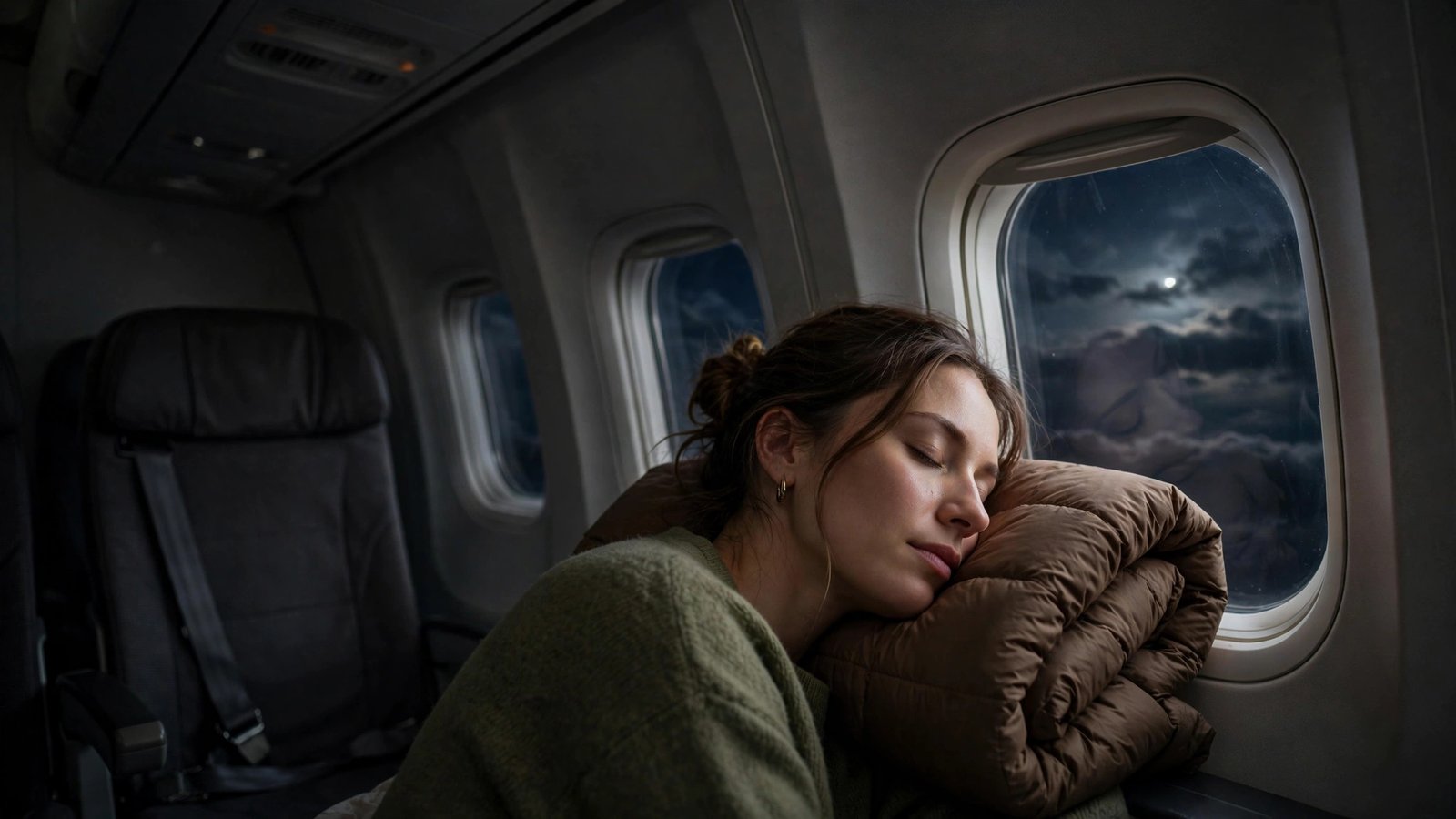
The red-eye is the bargain traveler’s paradox: you save the cost of a hotel night by sleeping on the plane, except nobody actually sleeps on the plane — you arrive hollow-eyed at 6 a.m., having dozed in twenty-minute fragments between announcements, turbulence, and the particular torture of your head lolling forward every time you drift off. The neck pillow is the standard solution, but plenty of travelers do not own one, forgot it, or find them useless. Good news: sleeping upright in economy is a solvable engineering problem, and the fixes are mostly about positioning, light, sound, and timing rather than gear. Here is how to actually sleep on a red-eye without a neck pillow.
Engineer Your Seat Position
Your seat is the foundation — set it up deliberately the moment you board. Recline as far as the seat allows (the small angle change significantly reduces the head-loll problem), then create lateral support: the window seat is worth fighting for on a red-eye, because the wall becomes your pillow — lean a folded jacket, sweater, or the airline blanket against the window and rest your head sideways, which is biomechanically far more stable than the forward nod. No window? The tray table trick works: fold the tray down, stack a pillow or bundled jacket on it, and lean forward onto it — backpackers call this the “desk sleep” and it is surprisingly effective for short stretches. Cross your arms on the tray and rest your forehead on them if you have nothing to stack. Tuck the airline blanket around your sides to fill the gaps between you and the armrests — eliminating the micro-gaps stops the slow sideways slide that wakes you every half hour. The goal is a stable triangle: head supported, torso wedged, no drift.
Build a Pillow From What You Have
No neck pillow does not mean no pillow — it means improvising better. The rolled-jacket method: roll your jacket or hoodie into a tight cylinder, wedge it between your shoulder and the headrest on one side, and lean into it — this mimics a neck pillow’s lateral support. The hoodie trick: wear a hoodie backward (hood in front), inflate the hood slightly, and let your chin rest into it — the stuffed hood cradles the jaw and prevents the forward loll. The scarf wrap: wrap a scarf or pashmina firmly around your neck and the headrest, tying it to create a soft brace — flight attendants have used this improvisation for decades. The blanket burrito: roll the airline blanket tightly and curve it around your neck. Stuff a spare pair of socks into a beanie for a makeshift travel pillow. None of these is as good as a purpose-built pillow, but combined with the window lean they solve the core problem — head stability — which is 80% of red-eye sleep failure. The Sleep Foundation’s travel sleep guidance emphasizes that head and neck support, however improvised, is the single biggest factor in whether plane sleep happens.
Control Light and Sound Completely
Position gets you comfortable; sensory control gets you unconscious. Light: a sleep mask is non-negotiable on red-eyes — cabin lights, reading lights, sunrise through windows, and seatback screens create a strobe effect that fragments sleep. A contoured mask that does not press on your eyes is worth its weight; in a pinch, a hood pulled low plus a cap brim works. Sound: foam earplugs cut the engine drone and announcements significantly; noise-canceling earbuds or headphones playing brown noise, rain sounds, or a familiar podcast at low volume work even better — the key is consistent sound that masks the irregular cabin noises (carts, announcements, neighbors) that actually wake you. Brown noise specifically matches the low-frequency airplane drone and blends with it. Tell your seatmates you are trying to sleep — most people will keep their screen dimmed and skip the chat. And decline the meal service if sleep matters more than the mediocre pasta: the CDC’s traveler health guidance notes that uninterrupted sleep blocks, even short ones, are far more restorative than fragmented dozing between services.
Time It Like a Pro
When you sleep matters as much as how. Eat before boarding — a real meal, not airport junk — so hunger does not wake you and you can decline the onboard service immediately. Board, set up your nest, mask on, sound on, and sleep from wheels-up: the first two hours are your deepest sleep window, and every minute of cabin chaos you endure before trying is wasted. Avoid caffeine after mid-afternoon on red-eye day, and skip alcohol — it feels sedating but fragments sleep architecture badly, guaranteeing the 3 a.m. wide-awake. Consider melatonin (0.5-1mg, taken 30 minutes before desired sleep) if you use it at home — it helps with the circadian mismatch of sleeping at an odd hour, though check with your doctor about regular use. Set an alarm for 45 minutes before landing: the crew wakes everyone for descent anyway, but your own alarm lets you wake gradually, hydrate, and arrive functional rather than ambushed. The pros’ rule: protect the first half of the flight fiercely; the second half is bonus.
Choose Your Flight and Seat Strategically
Some red-eyes are simply more sleepable than others, and booking wisely is half the battle. Emptier flights (Tuesday/Wednesday red-eyes) mean a chance at an empty middle seat — the holy grail, effectively a lie-flat in economy. Check seat maps when booking: exit rows offer legroom but often have immovable armrests (bad for sprawling); bulkhead rows offer space but the tray tables in armrests narrow the seat. The window seat in the last few rows is often the quietest (fewer people walking past, near the engines’ white noise rather than the galley’s clatter). Avoid seats near lavatories and galleys — the foot traffic and light are sleep-killers. Longer red-eyes (5+ hours) paradoxically produce better sleep than short ones (under 4 hours), because your body gets past the falling-asleep friction into real rest. And the nuclear option for the truly sleep-desperate: the airline’s premium economy or extra-legroom section, often $50-$100 more, buys meaningful comfort without business-class prices.
Sleeping on a red-eye without a neck pillow is about engineering, not gear: wedge yourself stable with the window and a rolled jacket, improvise head support from a hoodie or scarf, black out light and sound completely, sleep from wheels-up, and pick emptier flights and window seats. Position plus sensory control beats any pillow.
Conclusion
To sleep on a red-eye flight in economy without a neck pillow, stabilize your head with the window seat and improvised supports (rolled jacket, backward hoodie, scarf brace), block all light and sound with a mask and earplugs, set up your nest immediately and sleep from takeoff, time caffeine and meals wisely, and book emptier flights in sleep-friendly seats. The red-eye does not have to mean a ruined next day. For more travel survival guides, browse our travel section, learn about our team, or share your best plane-sleep hack.
Frequently Asked Questions
What is the best way to sleep upright on a plane?
Get a window seat, recline fully, and lean sideways against the wall with a jacket or blanket as padding — side-leaning is far more stable than upright. Wedge the gaps around you with the blanket to prevent drifting, and support your head laterally.
How can I make a DIY neck pillow?
Roll a jacket into a tight cylinder and wedge it between shoulder and headrest; wear a hoodie backward with the hood stuffed under your chin; or wrap a scarf around your neck and the headrest as a brace. Any lateral head support prevents the forward loll.
Should I take melatonin on a red-eye?
Low-dose melatonin (0.5-1mg) 30 minutes before desired sleep can help with the circadian mismatch, if you tolerate it at home. Avoid alcohol — it fragments sleep badly. Check with your doctor about regular use.
Is it better to eat the plane meal or sleep through it?
Sleep through it if rest is the priority — eat a real meal before boarding instead. Uninterrupted sleep blocks are far more restorative than fragmented dozing between meal services.
Which seats are best for sleeping in economy?
Window seats away from lavatories and galleys, ideally on emptier Tuesday/Wednesday flights where middle seats stay open. Longer red-eyes (5+ hours) produce better sleep than short ones. Exit rows give legroom but often have fixed armrests.
Leave a Reply