
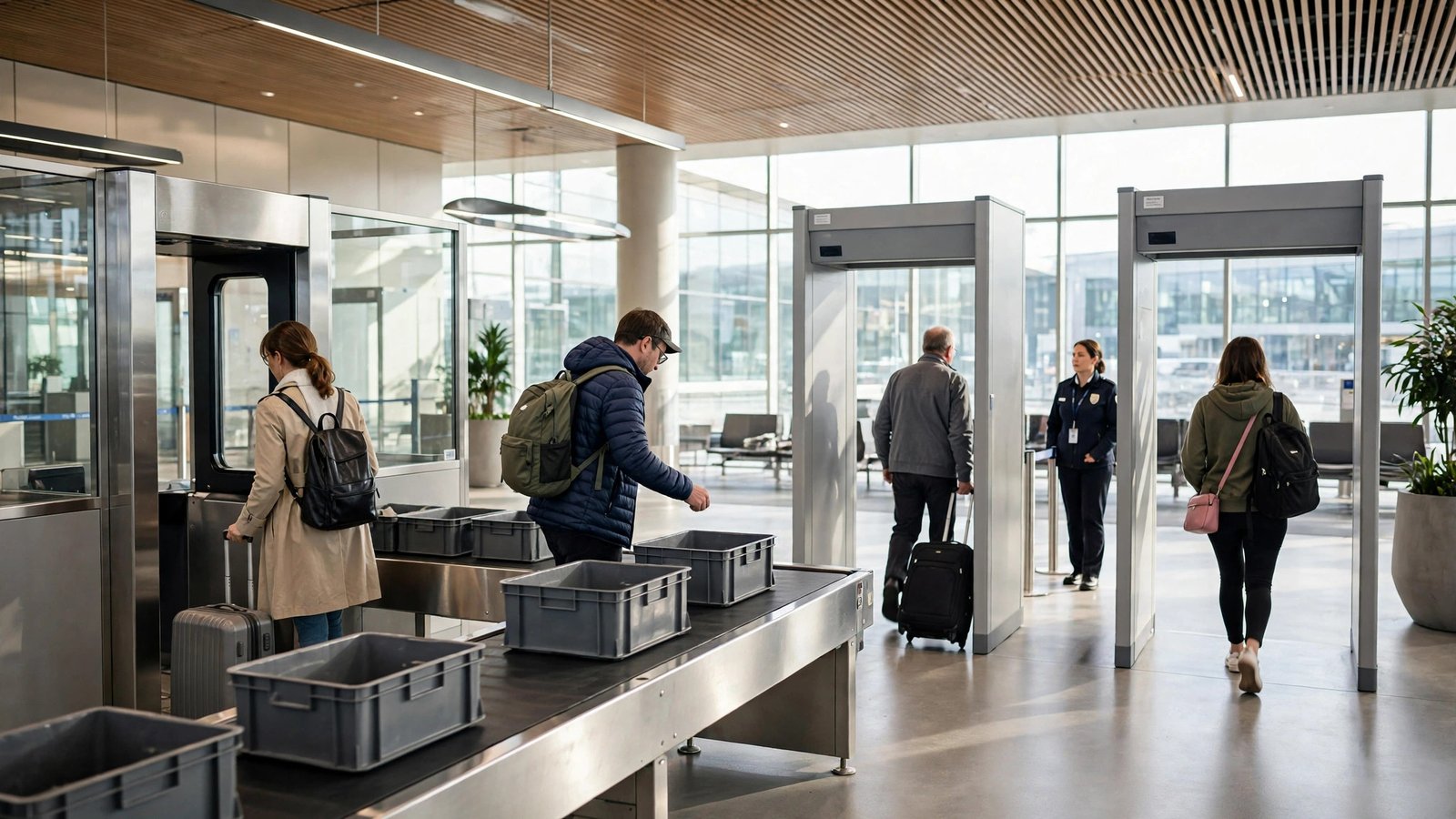
Hartsfield-Jackson Atlanta International Airport is the busiest airport on the planet — over 100 million passengers a year funnel through its security checkpoints. Even with TSA PreCheck, Atlanta can humble you: the PreCheck lane at the main checkpoint backs up, the South checkpoint’s PreCheck lane opens and closes on its own schedule, and first-timers routinely pick the wrong checkpoint entirely. But Atlanta rewards those who know its layout. With the right checkpoint choice, timing, and preparation, PreCheck at ATL can be a five-minute glide instead of a thirty-minute grind. Here is the insider playbook.
Choose the Right Checkpoint (This Is Everything)
ATL’s domestic terminal has three security checkpoints — Main (center), North, and South — and choosing wrong is the number-one PreCheck time-waster. The Main checkpoint is the largest and the default for most travelers, which means its PreCheck lane is often the longest; it is also the only checkpoint open 24 hours. The North checkpoint primarily serves Delta and partner airlines on the north side; its PreCheck lane is typically shorter but it opens later and closes earlier. The South checkpoint serves the south side airlines with similar hours. The critical insight: you can use any checkpoint regardless of your airline or gate — after security, the Plane Train connects all concourses airside in minutes. So check all three: the ATL airport’s official site and app show real-time checkpoint wait estimates, and the MyTSA app shows historical patterns. First-timers should default to Main for reliability; veterans check the app and walk to whichever checkpoint is shortest — a five-minute walk to save twenty minutes in line is always worth it.
Time Your Arrival Around Atlanta’s Peaks
ATL’s PreCheck lanes have brutal, predictable rush hours. Weekday mornings 6-9 a.m. are the worst — Atlanta is Delta’s super-hub and the business-traveler wave is enormous. Sunday afternoons and evenings (3-8 p.m.) are the second peak as weekend travelers return. Monday mornings combine both. The sweet spots: mid-morning (9:30-11:30 a.m.), early afternoon (1-3 p.m.), and late evening after 8 p.m. If you must fly at peak times, arrive earlier than the standard guidance — 2.5 hours for domestic at ATL during rush, not the usual 2. Also watch the calendar: Atlanta hosts massive conventions and sporting events that flood the airport unpredictably; check for big events during your travel dates. And remember that PreCheck does not exempt you from the airport’s sheer scale — ATL’s concourses are long, and the Plane Train ride plus walking to far gates (especially international Concourse F or the ends of A-E) takes 15-25 minutes. Budget the full journey, not just security.
Prepare Like a PreCheck Pro
PreCheck’s speed advantage evaporates if you fumble the bins. The drill: shoes stay on, light jacket stays on, laptop stays in the bag, liquids stay packed, belt stays on (mostly) — know this cold so you glide through while others strip down. Have your ID and boarding pass ready before you reach the podium; the document check is where unprepared travelers hemorrhage time. Wear slip-on shoes anyway (some random screenings still require removal), minimal metal, and empty pockets into your carry-on before joining the line — the pocket-emptying shuffle at the belt is the classic PreCheck self-sabotage. If traveling with family, prep the kids: shoes on is fine, but have their items consolidated. The TSA’s PreCheck guidance notes the average PreCheck wait is under 10 minutes nationally — at ATL, hitting that average requires doing your part, because the airport’s volume punishes every second of fumbling.
Use Technology and Alternatives
Stack every available advantage. The ATL Airport app (or the airport website) shows live security wait times per checkpoint — check it in the rideshare on the way. The MyTSA app provides crowd-sourced wait data and can confirm which checkpoints are open. If PreCheck lines are unexpectedly brutal, CLEAR Plus (biometric identity verification) has dedicated lanes at ATL that bypass the ID check entirely — combined with PreCheck, it is the fastest possible path, though it costs extra annually. Some premium credit cards reimburse PreCheck/Global Entry and CLEAR fees — check your cards before paying out of pocket. For international arrivals connecting domestically, Global Entry kiosks at ATL’s Maynard H. Jackson Jr. International Terminal speed re-entry dramatically. And the low-tech winner: the South checkpoint is chronically underused by travelers who default to Main — walking there is often the single fastest move in the airport.
When Things Go Wrong
Even perfect planning meets Atlanta chaos occasionally. If your PreCheck indicator is missing from your boarding pass: it is usually a booking detail issue — the name on the reservation must exactly match your PreCheck enrollment (middle names matter), and the Known Traveler Number must be in the reservation; fix it with the airline before arriving, or at the ticket counter. If the PreCheck lane is closed at your checkpoint (it happens during off-hours at North/South), you will be directed to standard screening — having your liquids and laptop accessible as backup saves the scramble. If you are running late, tell a TSA officer calmly — they occasionally expedite, though never count on it. And know the layout cold: after any checkpoint, follow signs for the Plane Train (not the walkways) to your concourse — first-timers who try to walk between concourses learn that ATL’s distances are measured in miles, not minutes. The airport’s scale is the real adversary; PreCheck just gets you past the first gate faster.
TSA PreCheck at Atlanta is fast when you work the airport’s layout: check live wait times, use whichever of the three checkpoints is shortest (South is often overlooked), avoid the 6-9 a.m. and Sunday evening rushes, and arrive prepped to glide through. At the world’s busiest airport, the checkpoint you choose matters more than the lane you are in.
Conclusion
Getting through TSA PreCheck faster at Atlanta airport comes down to checkpoint strategy (check all three, favor the underused South), timing around peak hours, flawless PreCheck preparation, live wait-time apps, and knowing the backup plans for missing indicators or closed lanes. ATL rewards the prepared traveler and punishes the default one. For more airport and travel guides, browse our travel section, learn about our team, or share your ATL survival tips.
Frequently Asked Questions
Which ATL checkpoint is fastest for TSA PreCheck?
It varies by time of day — check the ATL airport app’s live wait times. The Main checkpoint is open 24 hours but often busiest; North and South are typically shorter but have limited hours. The South checkpoint is chronically underused. You can use any checkpoint regardless of airline.
How early should I arrive at Atlanta airport with PreCheck?
Two hours for domestic is usually plenty off-peak; 2.5 hours during weekday morning rush (6-9 a.m.) or Sunday evenings. Remember ATL’s concourses are vast — budget 15-25 minutes from security to far gates via the Plane Train.
Why is my TSA PreCheck missing from my boarding pass?
Usually a name mismatch (reservation name must exactly match PreCheck enrollment, including middle names) or a missing Known Traveler Number in the booking. Fix it with the airline before arriving or at the ticket counter.
Is CLEAR worth it at Atlanta airport on top of PreCheck?
For frequent ATL travelers, yes — CLEAR Plus bypasses the ID check entirely, and combined with PreCheck it is the fastest path through. Several premium credit cards reimburse the fee, making it effectively free.
Can I use any checkpoint at ATL regardless of my airline?
Yes. All three domestic checkpoints feed the same airside Plane Train system connecting every concourse. Walk to whichever checkpoint has the shortest line — the train ride to your gate takes only minutes.
Leave a Reply