
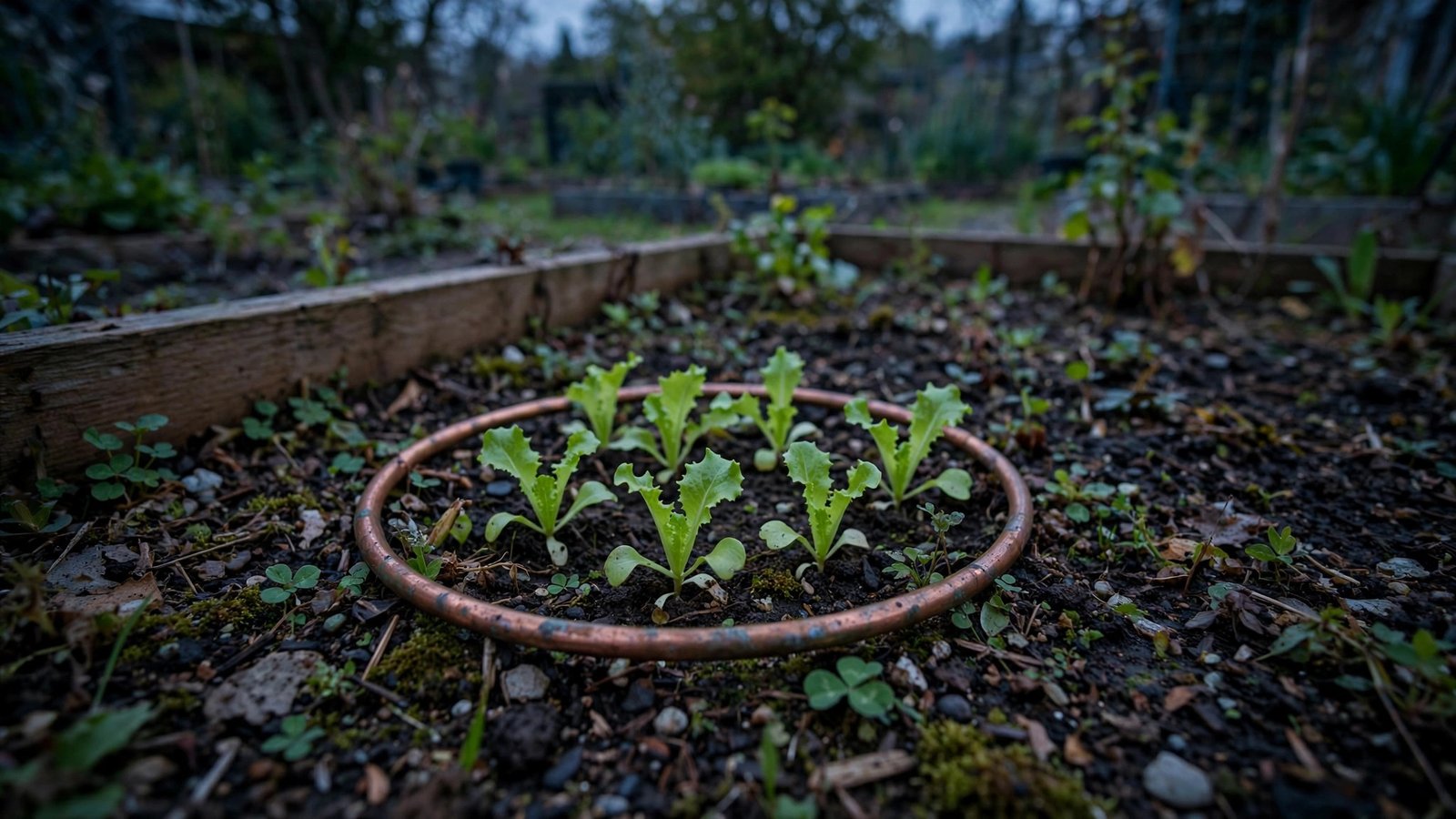
You tuck your lettuce seedlings into the garden bed in the evening, all tender green promise — and by morning, half of them are gone, reduced to ragged stems with telltale silvery slime trails nearby. Slugs are the night shift of garden pests: they emerge after dark, eat astonishing quantities of tender growth, and vanish into hiding spots before sunrise. Lettuce seedlings are their favorite food — soft, moist, and low to the ground. But slugs are beatable. They are slow, predictable creatures with simple habits, and a combination of barriers, traps, and smart garden hygiene can reduce seedling losses to nearly zero. Here is the full defense plan.
Know Your Enemy: How Slugs Operate
Understanding slug behavior is half the battle. Slugs are nocturnal and need moisture to move — they travel on a layer of mucus that dries out in sun and wind, which is why they feed at night and on damp, overcast days. During daylight they hide under boards, pots, dense mulch, leaf litter, and debris near the garden. A single slug can eat several times its body weight in a night, and they are strongly attracted to young, tender seedlings over tougher mature plants. They lay clusters of tiny translucent eggs in moist soil and debris, with each slug capable of producing hundreds of offspring per year — which is why a small problem becomes an infestation fast. The silvery dried slime trails on soil and leaves are your diagnostic evidence; if you see trails but no slugs, check under nearby hiding spots during the day. Knowing they must stay moist also reveals their weakness: anything that dries them out, blocks their path, or removes their daytime shelter works against them.
Barriers: Make Seedlings Hard to Reach
Physical barriers exploit the slug’s slow, ground-hugging movement. Copper tape or copper mesh rings around beds and pots give slugs a mild electric shock on contact — the reaction between copper and slug slime creates a tiny charge they will not cross. Apply copper tape around raised bed edges or individual pots, keeping it clean and unbridged by leaves or debris. Diatomaceous earth (food grade) sprinkled in a ring around seedlings lacerates soft slug bodies on contact, but it stops working when wet, so reapply after rain or watering — it is best in dry climates or under cover. Crushed eggshells are popular folklore but largely ineffective; slugs glide over them without much trouble. What does work surprisingly well is a dry, scratchy mulch ring of coarse bark or wood chips right around seedlings — slugs dislike crossing dry, rough terrain. For maximum protection, combine methods: a copper ring plus a dry mulch zone creates two obstacles most slugs will not bother crossing when easier food exists elsewhere.
Traps: Lure Them Away From Your Lettuce
Traps turn slug habits against them. The classic beer trap — a cup or jar sunk to rim level in the soil, filled halfway with cheap beer — attracts slugs from several feet away; they fall in and drown. It genuinely works, though you will need several traps per bed, emptied and refilled every few days. (Yeast mixed with sugar water works as a cheaper substitute.) Board traps exploit their daytime hiding instinct: lay damp boards, cardboard, or old carpet pieces near the bed, and each morning flip them over to collect and dispose of the sheltering slugs — drop them in soapy water. Grapefruit halves or hollowed melon rinds placed cut-side down work the same way on a smaller scale. Place traps a few feet away from the seedlings themselves to draw slugs outward rather than inward. Trapping will not eliminate every slug, but consistent trapping through the vulnerable seedling weeks dramatically reduces feeding pressure. Oregon State University Extension’s slug control guide rates these methods with practical detail.
Baits: The Nuclear Option, Used Safely
When barriers and traps are not enough, iron phosphate baits (sold as Sluggo and similar brands) are the safest effective option. Slugs eat the bait, stop feeding, and die within days. Iron phosphate is OMRI-listed for organic gardening, breaks down into fertilizer (iron and phosphorus), and is far safer around pets, wildlife, and children than the older metaldehyde baits, which are toxic to dogs and should be avoided entirely. Scatter the pellets thinly around (not on) the seedlings in the evening, since slugs feed at night. Reapply after heavy rain. One caution: even “safe” baits should be used as directed and kept from becoming a buffet — targeted application around vulnerable seedlings beats broadcasting across the whole garden. Used judiciously during the 2 to 3 weeks when lettuce seedlings are most vulnerable, iron phosphate bait plus barriers gives near-complete protection, and you can stop once plants are large enough to outgrow slug damage.
Cultural Controls: Make Your Garden Slug-Unfriendly
Long-term slug reduction comes from habitat management. Water in the morning, not the evening — wet soil at night is a slug invitation, while morning watering lets the surface dry before their active hours. Pull mulch back a few inches from seedling stems to create a dry zone. Clear the debris, boards, and dense ground cover near beds where slugs hide by day — a tidy garden edge has far fewer slugs. Space seedlings for airflow so foliage dries quickly. Encourage slug predators: ground beetles, toads, frogs, and birds all eat slugs, and a small wildlife pond or beetle bank (a grassy mound) invites them in. Ducks are legendary slug destroyers if your setup allows poultry. And consider timing: transplanting sturdy, larger seedlings rather than direct-sowing tiny ones means plants outgrow the most vulnerable stage faster. Once lettuce has several true leaves and tougher foliage, slug damage becomes cosmetic rather than fatal. The Royal Horticultural Society’s slug management advice covers these cultural strategies comprehensively.
Slugs feed at night and need moisture to move. Protect lettuce seedlings with copper barriers and dry mulch rings, set beer traps and board traps nearby, use iron phosphate bait during the vulnerable weeks, and water in the morning — combined, these methods stop nearly all seedling losses.
Conclusion
Slugs will always be part of gardening, but they do not have to eat your lettuce. Layer your defenses: make seedlings hard to reach with copper and dry barriers, lure slugs away with beer and board traps, deploy iron phosphate bait during the critical seedling weeks, and reshape garden habits — morning watering, cleared debris, predator-friendly plantings — to keep populations low year after year. No single method is perfect, but the combination is devastating to slugs and gentle on everything else. For more pest-management walkthroughs, browse our gardening guides, meet the team, or ask us your pest questions.
Frequently Asked Questions
Do eggshells really stop slugs?
Not effectively. Despite their popularity, studies and gardener experience show slugs cross crushed eggshells with little difficulty. Copper barriers, dry coarse mulch, and diatomaceous earth (when dry) are far more reliable physical deterrents.
Are slug pellets safe around pets?
Iron phosphate baits are much safer than the older metaldehyde pellets, which are toxic to dogs and wildlife and best avoided entirely. Still, use any bait as directed, scatter thinly rather than piling it, and store products where pets cannot reach them.
Why do slugs only eat my seedlings and not mature plants?
Slugs prefer soft, tender, moist tissue — exactly what seedlings are. As lettuce matures, leaves get tougher and less appealing, and the plant can outgrow minor feeding damage. The vulnerable window is roughly the first 2 to 3 weeks after transplanting or germination.
Will beer traps attract more slugs to my garden?
Beer traps attract slugs from a radius of a few feet, so place them slightly away from the plants you are protecting to draw slugs outward. They do not summon slugs from across the neighborhood — they mostly catch the ones already nearby. Empty and refill every few days for best results.
What eats slugs naturally?
Ground beetles, toads, frogs, shrews, ducks, chickens, and many birds all prey on slugs. Encouraging these predators — with log piles, a small pond, beetle banks, or poultry — provides free, continuous slug control and is the best long-term strategy.
Leave a Reply