
Every February, Ohio gardeners stare out at the snow and ask the same question: is it time to start seeds yet? Start too early and you get leggy, root-bound seedlings gasping on a windowsill weeks before they can go outside. Start too late and your peppers are still flowering when the first fall frost arrives. The answer is not a single date — it is a simple countdown from your last frost, adjusted crop by crop. Ohio spans USDA zones 5b to 6b, with last frost dates ranging from late April in Cincinnati to mid-May in Cleveland and Columbus, and that range changes everything. Here is how to nail the timing for a May planting.
Start With Your Actual Last Frost Date
Everything flows from one number: your average last spring frost date. For southern Ohio (Cincinnati, Dayton), it falls around April 20 to late April. Central Ohio (Columbus) averages early May, roughly May 5 to 10. Northern Ohio (Cleveland, Toledo) runs mid-May, around May 15 to 20. But “average” means half of all years see frost after that date, so experienced gardeners add a cushion — plan your transplant date one to two weeks after the average last frost, not on it. Warm-season crops like tomatoes, peppers, and basil go out after that cushioned date; cool-season crops like broccoli, cabbage, and lettuce can go out two to four weeks before it, tolerating light frosts. Look up your zip code’s date rather than trusting a statewide average, since microclimates near Lake Erie or in river valleys shift things by a week or more. Ohio State University Extension publishes planting date charts for Ohio vegetables that are worth bookmarking.
The Countdown Method: How Indoor Timing Works
Seed packets say things like “start indoors 6–8 weeks before last frost,” and that instruction is the whole system. Pick your target transplant date (your cushioned date after last frost), count backward by the weeks the packet specifies, and that is your sowing date. Add about a week as a germination buffer for slow starters. The reason timing matters is seedling quality: a tomato started eight weeks before transplant is stocky and vigorous, while one started twelve weeks early is tall, pale, and stressed from months in a small pot — and the younger transplant will outgrow it within weeks of planting out. Bigger is not better with seedlings; the ideal transplant is compact, dark green, and just beginning to outgrow its container. If you are unsure between two dates, choose the later one. You can always buy a few transplants to fill a gap, but you cannot undo six weeks of leggy windowsill suffering.
Crop-by-Crop Timing for a May Planting
For a mid-May transplant target in central and northern Ohio, the calendar looks roughly like this. Peppers and eggplant — the slowest — start indoors in late February to early March, needing 8 to 10 weeks plus their sluggish germination. Tomatoes follow in mid to late March, 6 to 8 weeks before transplant; they germinate fast and grow quickly, so resist starting them with the peppers. Onions from seed start early too, late February into March, though many gardeners use sets instead. Brassicas (broccoli, cauliflower, cabbage) and lettuce start in late March to early April for transplanting out in late April to early May, since they tolerate cool weather. Herbs split by type: basil waits until April (it hates cold and grows fast), while parsley, slow to germinate, can start in March. Cucumbers, squash, melons, and beans grow so fast that starting them indoors more than 3 to 4 weeks early backfires — sow them in late April to early May, or simply direct-sow after the soil warms. Southern Ohio gardeners shift everything about two weeks earlier; the method is identical, just anchored to an earlier frost date.
What NOT to Start Indoors
Some crops actively resent transplanting, and starting them indoors wastes effort. Root vegetables — carrots, beets, radishes, parsnips — should always be direct-sown; their roots fork and deform when transplanted. Corn, beans, and peas germinate so quickly in warm soil that indoor starting gains nothing. Cucumbers and squash can be started indoors but only 3 to 4 weeks before transplant, in biodegradable pots that go straight into the ground, since they hate root disturbance. Lettuce and other fast greens can go either way, but direct sowing successions every two weeks from April onward gives a steadier harvest than a single indoor batch. Garlic and potatoes are planted as cloves and seed potatoes, not started from seed at all. When in doubt, check the packet: if it says “direct sow after last frost,” believe it. Your windowsill space is precious — reserve it for the long-season crops like peppers and tomatoes that genuinely need the head start.
The Gear That Actually Matters
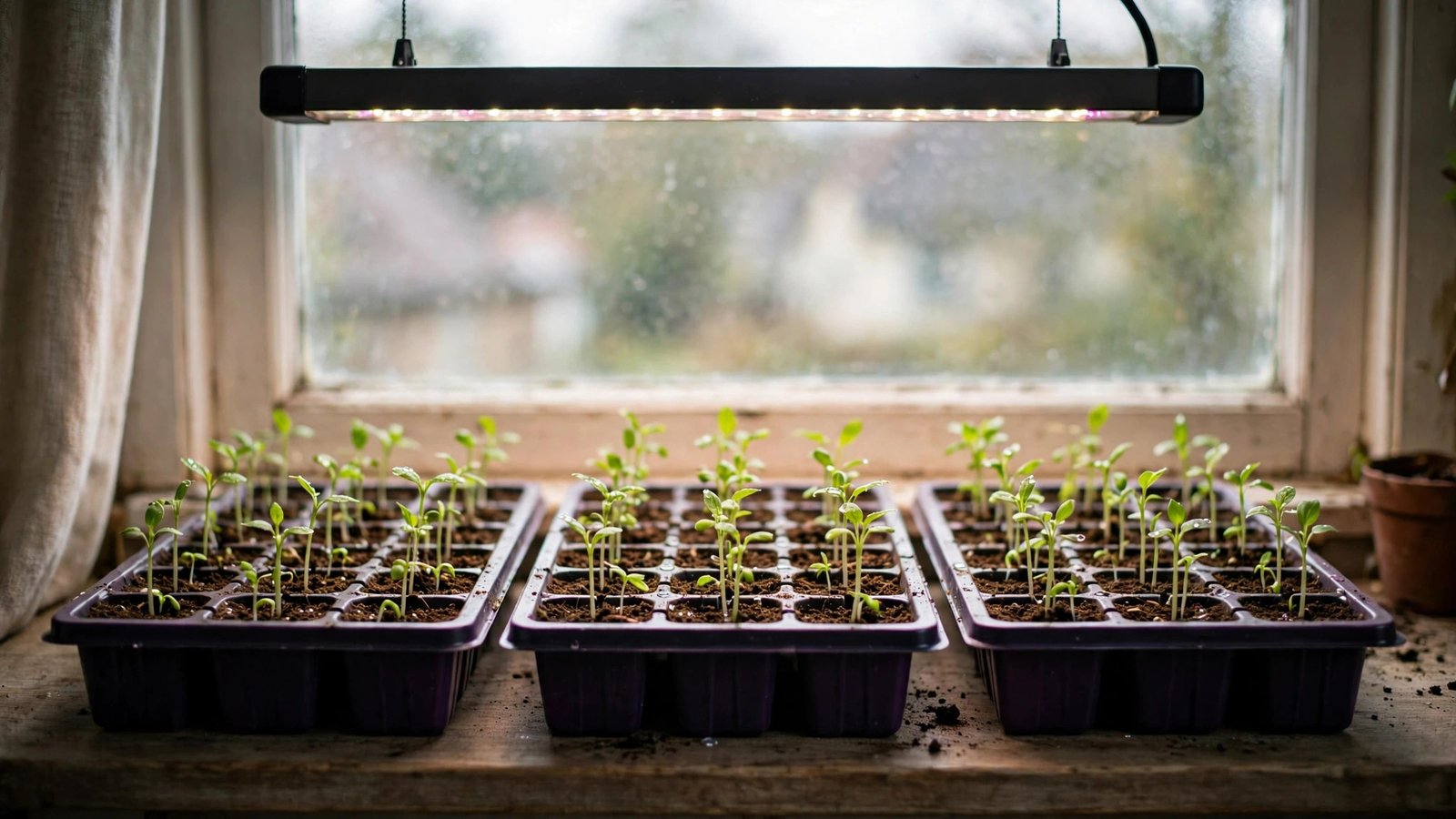
You do not need an expensive setup, but two items separate success from frustration. First, light: a sunny windowsill is almost never enough in February and March, and seedlings stretch toward weak light becoming leggy. A basic LED or fluorescent shop light hung two to three inches above the seedlings, raised as they grow, on for 14 to 16 hours a day, produces stocky plants. Second, warmth for germination: peppers and tomatoes germinate dramatically faster on a heat mat (around 75 to 85°F soil temperature) than at cool room temperature — days instead of weeks for peppers. Beyond that, the essentials are simple: clean containers with drainage, a bag of seed-starting mix (not garden soil, which compacts and harbors disease), a spray bottle or gentle watering can, and a small fan providing gentle air movement once seedlings emerge — the breeze builds sturdier stems. Harden seedlings off over 7 to 10 days before transplanting, introducing them to outdoor sun and wind gradually, or all that indoor perfection wilts on day one. The Old Farmer’s Almanac planting calendar lets you enter your zip code for customized indoor-start and transplant dates.
For a May planting in Ohio, anchor everything to your local last frost date — late April in the south, mid-May in the north. Count backward: peppers and eggplant 8–10 weeks, tomatoes 6–8 weeks, brassicas 4–6 weeks, and cucumbers just 3–4. When unsure, start later rather than earlier.
Conclusion
Starting seeds indoors for an Ohio May planting is a countdown, not a guess. Find your zip code’s last frost date, add a one- to two-week safety cushion for warm-season transplants, and count backward using each crop’s recommended weeks — late February for peppers, late March for tomatoes, April for the fast growers. Give seedlings strong light, bottom warmth for germination, and a proper hardening-off, and direct-sow everything that prefers it. A little calendar math in February buys you the healthiest transplants of your gardening life. For more regional growing guidance, browse our gardening guides, meet the team, or ask us your seed-starting questions.
Frequently Asked Questions
What is Ohio’s last frost date?
It varies by region: southern Ohio (Cincinnati) averages late April, central Ohio (Columbus) early May around May 5–10, and northern Ohio (Cleveland, Toledo) mid-May around May 15–20. Look up your specific zip code, since lake effects and valleys shift dates, and plan warm-season transplants one to two weeks after the average date for safety.
Can I start tomato seeds in February in Ohio?
You can, but you should not. Tomatoes started in February become leggy and root-bound long before a mid-May transplant date. Late March is the sweet spot for most of Ohio — 6 to 8 weeks before transplanting produces stocky, vigorous seedlings that outperform older, stressed plants once in the ground.
Do I really need grow lights for seedlings?
In February and March in Ohio, yes, effectively. Window light is too weak and too one-directional, producing tall, pale, floppy seedlings. A basic shop light hung inches above the plants for 14–16 hours daily is the single biggest upgrade a home seed-starter can make, and it costs very little.
When should I direct-sow versus transplant in Ohio?
Direct-sow root crops (carrots, beets, radishes), beans, peas, and corn — they germinate fast or resent transplanting. Start indoors only the long-season crops that need a head start: peppers, eggplant, tomatoes, onions, and brassicas. Cucumbers and squash go either way but need just 3–4 weeks indoors max.
What does hardening off mean and how long does it take?
Hardening off is gradually acclimating indoor seedlings to outdoor sun, wind, and temperature swings over 7 to 10 days. Start with a few hours of sheltered shade, increasing exposure daily. Skipping it shocks tender seedlings — even a single afternoon of harsh sun can scorch unhardened leaves.
Leave a Reply