
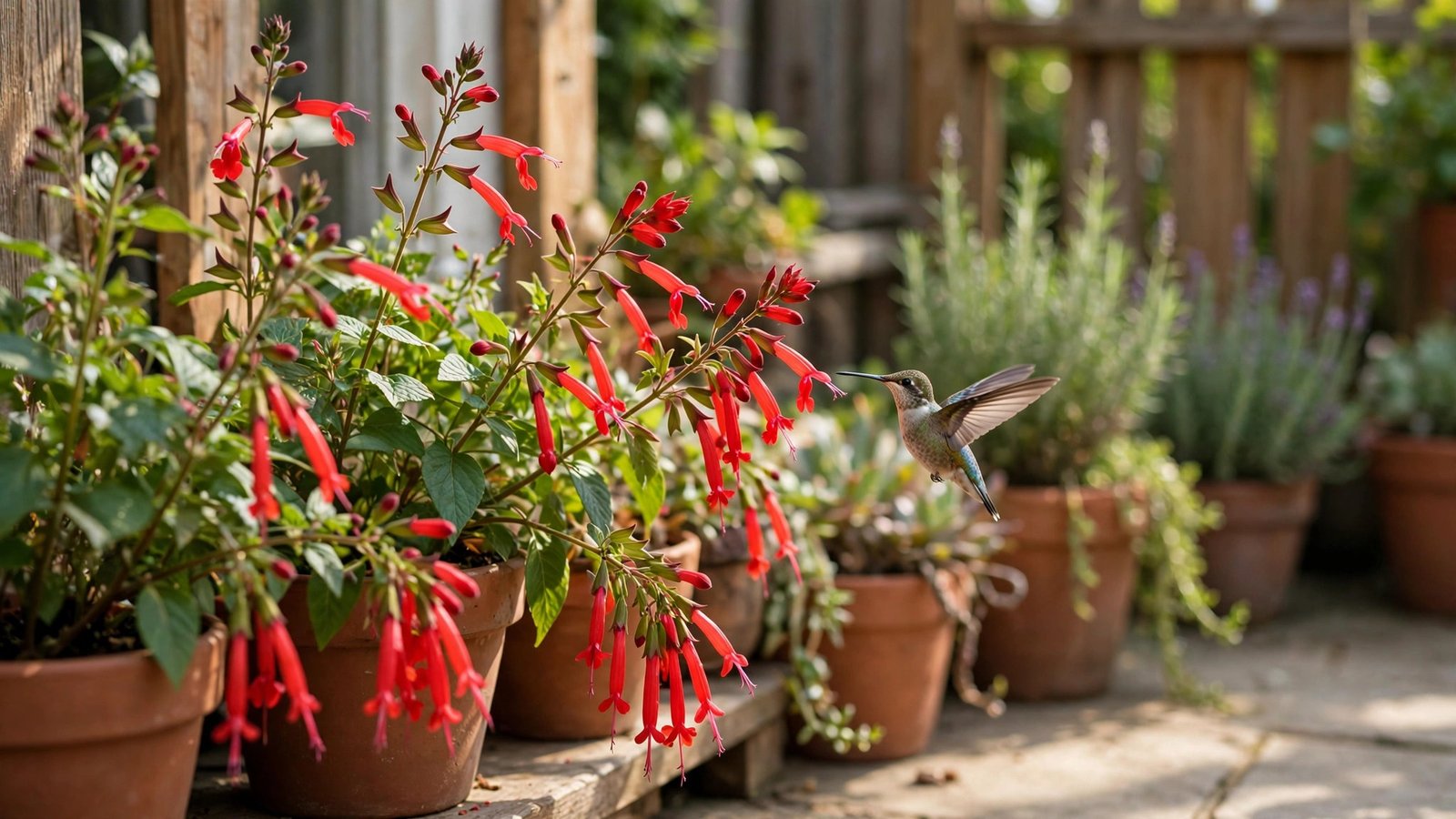
You do not need a sprawling backyard meadow to attract hummingbirds. These tiny birds are fearless explorers that routinely investigate balconies, fire escapes, and postage-stamp patios — if the right signals are there. A single well-placed feeder or a few pots of the right flowers can turn the smallest urban patio into a regular hummingbird stop, sometimes within days of setup. The trick is understanding what hummingbirds actually look for: high-energy nectar, the color red, safe perches, and reliability. Get those four things right, and you will be watching iridescent visitors hover inches from your chair all summer.
Think Like a Hummingbird: What They Actually Want
A hummingbird lives life at a metabolic extreme — its heart can beat over a thousand times per minute in flight, and it must consume roughly half its body weight in sugar daily just to survive. That means every foraging decision is about energy economics: maximum calories for minimum effort, from sources it can trust to be there tomorrow. Your patio wins when it offers dense, easy calories in a predictable spot. Red and orange tubular flowers are the visual billboard; hummingbirds see red exceptionally well and associate it with nectar-rich blooms. But color alone is not enough — the birds also need to feel safe. A patio with nearby shrubs or small trees for perching and quick escape routes beats an exposed concrete slab every time. And consistency matters enormously: a feeder that is full and fresh every day trains birds to include your patio in their daily route, while one that sits empty for days teaches them to skip you.
The Best Patio Plants for Hummingbirds
On a small patio, every pot must earn its place, so choose plants that bloom heavily and continuously. Top-tier container choices include salvia (especially Salvia guaranitica and scarlet sage), fuchsia for shadier patios, lantana, vermillionaire (cuphea), petunias bred for tubular throats, and mandevilla on a small trellis. Prioritize varieties in red, coral, and hot pink, and favor single blooms over doubles — doubles often hide or eliminate the nectar the birds want. Plant for succession: combine early, mid, and late bloomers so something is always flowering from spring through fall. Even three to five well-chosen pots clustered together create a target hummingbirds can spot from a surprising distance. Native plants like trumpet vine (in a large container with support), bee balm, and cardinal flower are magnets if you have room for bigger pots. Deadhead spent blooms regularly to keep the nectar coming, and skip pesticides entirely — a sprayed flower is a poisoned bird feeder. The National Audubon Society’s hummingbird gardening tips offer excellent plant lists organized by region.
Feeders Done Right: The Details That Matter
A feeder is the fastest way to get hummingbirds’ attention, but only if it is done properly. Make your own nectar — it is cheaper, safer, and takes two minutes: one part plain white table sugar dissolved in four parts water. That is it. Never add red dye, honey, brown sugar, or artificial sweeteners; dye is unnecessary (the feeder’s red parts provide the attraction) and the rest can harm or kill the birds. Boiling the water first helps the sugar dissolve and slows spoilage, then cool it completely before filling. In summer heat, change the nectar every two to three days — fermented, cloudy nectar grows mold that causes a fatal tongue infection in hummingbirds. Scrub the feeder with hot water and a bottle brush at every refill; a quick vinegar rinse handles stubborn mold. Hang the feeder in partial shade to slow spoilage, near your flowers but with open flight space around it. Start with one feeder; add a second out of sight of the first if a dominant male starts guarding it aggressively, which gives shyer birds a chance to feed.
Water, Perches, and Shelter Seal the Deal
Flowers and feeders bring hummingbirds in; the supporting habitat makes them stay. Hummingbirds rarely drink from deep birdbaths, but they love moving water — a small solar fountain, a mister attachment on a hose, or even a dripper over a shallow dish gives them drinking and bathing opportunities. They bathe by flying through fine mist, which is delightful to watch. Provide perches: a thin dead branch staked in a pot, a small trellis, or even a wire gives them a place to rest and preen between feeding bouts, and perched birds are far easier to observe and photograph. Some shelter from wind matters too — a patio umbrella, a trellis with vines, or positioning pots against a wall creates calmer air where tiny birds can hover efficiently. If your patio is on an upper floor, do not worry: hummingbirds happily visit high-rise balconies, sometimes preferring the safety from ground predators. Keep cats indoors, since even well-fed cats are lethal to hummingbirds.
Timing, Migration, and Patience
Set up early. In most of the United States, ruby-throated hummingbirds arrive between April and May, and having feeders and early blooms ready when scouts arrive dramatically increases your chances of becoming a regular stop. Keep everything going through fall — a persistent myth says feeders prevent migration, but migration is triggered by daylight length, not food availability, and late migrants desperately need the calories. Take feeders down only after you have seen no hummingbirds for two full weeks, typically late October or November depending on your region. Do not be discouraged if nothing appears the first week; it can take time for birds to discover a new food source, especially early in the season. Once one bird finds you and the setup stays reliable, word spreads fast in hummingbird terms — regular visitors often return to the same patios year after year, sometimes within days of the same date. The Smithsonian’s hummingbird spotlight has fascinating detail on migration timing and behavior by species.
Hummingbirds find small patios fast when you offer red tubular flowers, fresh homemade nectar in a clean feeder, moving water, and safe perches. Set up before spring migration, keep nectar fresh every two to three days, and stay consistent — reliable patios become permanent stops on their daily routes.
Conclusion
Attracting hummingbirds to a small patio is less about square footage and more about signal quality. Cluster red, tubular, nectar-rich flowers in containers, hang one clean feeder with fresh homemade sugar water, add a mister or small fountain plus a perch, and keep the whole setup relentlessly consistent through the season. Skip the red dye, skip the pesticides, and be patient those first weeks. Do this, and your morning coffee will come with aerial acrobats. For more wildlife-friendly gardening ideas, explore our gardening guides, learn who we are, or tell us about your patio visitors.
Frequently Asked Questions
How long does it take for hummingbirds to find a new feeder?
Anywhere from a few days to a few weeks. Early in the season, when scouts are actively searching, discovery can be fast. Placing the feeder near red flowers, keeping it visible from above, and hanging something red nearby all speed things up. Once one bird finds it and the nectar stays fresh, visits become regular quickly.
Is homemade sugar water really safe for hummingbirds?
Yes — a 1:4 ratio of plain white table sugar to water closely mimics natural flower nectar and is the recipe ornithologists recommend. Avoid honey (which grows dangerous fungus), brown or raw sugars, and any red dye. Change it every two to three days in heat and scrub the feeder at each refill.
Will a feeder stop hummingbirds from migrating?
No. Migration is triggered by changing daylight, not food supply. Keeping feeders up through fall actually helps late migrants fuel up for their journey. Take feeders down after two full weeks with no sightings rather than on an arbitrary date.
Why is one hummingbird chasing all the others away?
Males aggressively defend rich food sources — it is natural territorial behavior, not a problem you caused. The fix is adding a second feeder out of sight of the first (around a corner or on the other side of the patio) so subordinate birds can feed unguarded.
Can hummingbirds visit a high-rise balcony?
Absolutely. Hummingbirds routinely visit feeders and flowers on balconies many stories up, and the height can actually make them feel safer from predators. The same rules apply: red tubular flowers, fresh nectar, water, and consistency.
Leave a Reply