
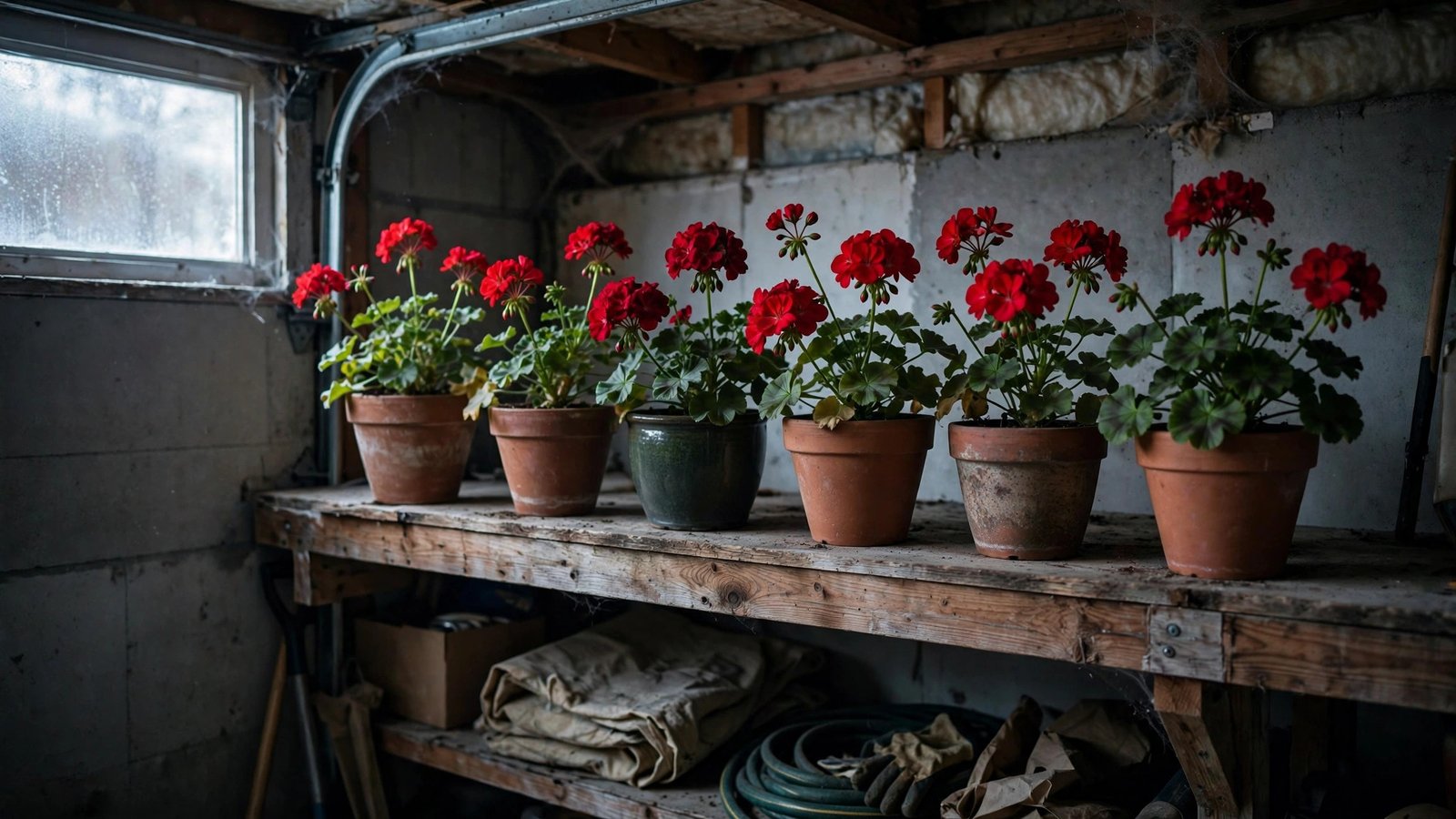
Geraniums are the workhorses of summer containers, blooming relentlessly from May until frost — and then, heartbreakingly, most gardeners toss them on the compost pile in October and buy new ones in spring. That is an expensive habit, because those same plants can live for years. Geraniums (technically pelargoniums) are tender perennials that simply cannot survive a freezing winter outdoors, but a cold garage is actually close to ideal for overwintering them. With one of three proven methods — keeping them potted, storing them bare-root dormant, or rooting cuttings — you can carry your favorite plants through winter and have big, blooming specimens months ahead of anything you could buy in spring.
First, Know Your Garage’s Real Temperature
Everything depends on how cold your garage actually gets. Geraniums survive winter storage best between about 45 and 55°F — cool enough to stay semi-dormant, warm enough to avoid freeze damage. An attached garage that shares a wall with the house often stays in this sweet spot all winter. A detached, uninsulated garage in Minnesota might plunge well below freezing, which will kill stored geraniums outright. Before you commit, put a simple min-max thermometer in the garage for a week in late fall and check the overnight lows. If temperatures regularly dip below freezing, you will need to insulate the storage spot — a cardboard box lined with old blankets around the plants, placed against the warmest wall, can buy several degrees of protection. If the garage stays above 60°F all winter, the plants will try to keep growing weakly, which leads to leggy, pale growth; in that case the potted method with supplemental light works better than dormant storage. Knowing your numbers takes the guesswork out of the whole project.
Method 1: Keep Them Potted and Growing Slowly
The simplest approach is to bring the pots indoors before the first hard frost and keep the plants alive, just barely, through winter. Cut each plant back by about one-third to one-half — be brave, since leggy summer growth will only get leggier indoors. Check carefully for insects and spray with insecticidal soap before bringing them in; whiteflies and aphids love to hitchhike. Place the pots in your brightest spot: a south-facing window or under a simple shop light or LED grow light for 12 to 14 hours a day. Water sparingly — only when the top inch or two of soil is dry — because cool, dim conditions plus wet soil equals rot. Do not fertilize at all until late winter. Expect some yellowing leaves and a tired look by February; that is normal. The payoff comes in March, when you resume normal watering and feeding and the plants explode into growth weeks ahead of store-bought seedlings. This method suits gardeners with good window space or a basic grow light, and it preserves the exact plant, flowers and all.
Method 2: Bare-Root Dormant Storage
If you are short on window space, the old-fashioned bare-root method lets you store dozens of geraniums in a cardboard box. Before the first frost, dig up the plants or pull them from containers and shake off all the soil. Trim the plants back hard, leaving a few inches of stem, and let them dry for a day or two in a shaded spot so any nicks callus over. Then pack them loosely in a ventilated cardboard box or paper bag — some gardeners layer them with shredded newspaper — and stash the box in your cool garage. The key detail most guides gloss over: check them monthly. If stems look shriveled, soak the roots in lukewarm water for an hour or two, let them dry, and repack. If you see mold, improve air circulation and remove affected material. Come late winter, pot up the survivors in fresh mix, water well, and place in bright light. Not every plant makes it — expect 70 to 80 percent survival — but the method costs nothing and takes almost no space. University of Wisconsin Extension’s overwintering geraniums guide walks through this traditional storage technique in detail.
Method 3: Take Cuttings in Late Summer
For many gardeners, cuttings are the sweet spot: small, clean, and space-efficient. In late August or September, while plants are still vigorous, snip 4- to 6-inch healthy stem tips, strip the lower leaves, and let the cut ends dry for a few hours. Stick them in moist perlite, vermiculite, or a light seed-starting mix — skip the rooting hormone, since geraniums root eagerly without it. Cover loosely with a clear plastic dome or bag to hold humidity, keep them in bright indirect light, and roots typically form in two to three weeks. Once rooted, pot each cutting into a 4-inch pot and grow them on a sunny windowsill all winter. By spring you have compact, bushy young plants — arguably better than overwintered old ones, since geraniums bloom most freely on younger wood. Take twice as many cuttings as you need to allow for losses, and label varieties if you grow several. This method also gives you extras to share with gardening friends in spring, which never fails to make you popular.
Waking Them Up in Spring
Timing the wake-up is as important as the winter storage. About six to eight weeks before your last frost date, move stored plants into warmth and bright light and resume regular watering. Prune away any dead or weak stems, cutting back to firm green growth. Repot bare-root survivors and potted plants into fresh potting mix — last year’s mix is exhausted and may harbor pests. Begin feeding with a balanced liquid fertilizer at half strength once new growth is a few inches long, moving to full strength as spring progresses. Harden plants off gradually over one to two weeks before moving them outside permanently: a few hours of sheltered outdoor time at first, increasing daily. Do not rush them into cold spring nights — one late frost undoes months of careful storage. By the time garden centers are selling tiny geranium seedlings, your overwintered plants will already be large, bushy, and budding. The Royal Horticultural Society’s pelargonium growing guide offers excellent advice on spring care and ongoing cultivation.
A cold garage between 45 and 55°F is ideal for overwintering geraniums. Keep them potted in bright light with minimal water, store them bare-root and dormant in a ventilated box, or root cuttings in fall — then wake them six to eight weeks before your last frost for big, early-blooming plants.
Conclusion
Overwintering geraniums in a cold garage is one of gardening’s best-kept money savers. Check your garage temperature first, then pick the method that fits your space: potted plants for the brightest windows, bare-root dormant storage for the space-constrained, or fall cuttings for the most vigorous spring plants. All three beat buying replacements every May, and overwintered plants bloom weeks earlier than new seedlings. Whichever method you choose, the monthly check-in during winter is the habit that separates success from a box of dead stems. For more season-stretching techniques, browse our gardening guides, meet the people behind them, or ask us your overwintering questions.
Frequently Asked Questions
What is the lowest temperature geraniums can survive in a garage?
Dormant stored geraniums tolerate brief dips to around 40°F, but sustained freezing kills them. The ideal storage range is 45 to 55°F. If your garage drops below freezing regularly, insulate the storage area with blankets or move plants to a basement. A min-max thermometer tells you exactly what you are dealing with.
Should I water geraniums stored bare-root in a box?
Not on a schedule. Check monthly: if stems look shriveled and dry, soak the roots in lukewarm water for an hour or two, let them air-dry, and repack. Most garages have enough ambient humidity that many plants need no water at all until late winter. Over-wetting stored plants causes mold and rot.
Why are my overwintered geraniums leggy and pale?
Insufficient light combined with too-warm temperatures causes weak, stretched growth. Move potted plants to your brightest window or add a grow light for 12 to 14 hours daily, keep them cool (55 to 65°F is fine for growing plants), and prune leggy stems back hard in late winter — they will branch out bushier.
When should I take geranium cuttings for overwintering?
Late August through September, while the parent plants are still vigorous and before cool nights slow growth. Cuttings taken too late root slowly in declining light. Take 4- to 6-inch stem tips, root them in perlite or light mix, and you will have sturdy young plants by spring.
Can I overwinter geraniums in a dark basement instead?
Yes, if it stays in the 45 to 55°F range — the bare-root dormant method works in any cool, dark, frost-free spot. Potted growing plants need light, so a dark basement only suits dormant storage. Check stored plants monthly for shriveling or mold regardless of location.
Leave a Reply