
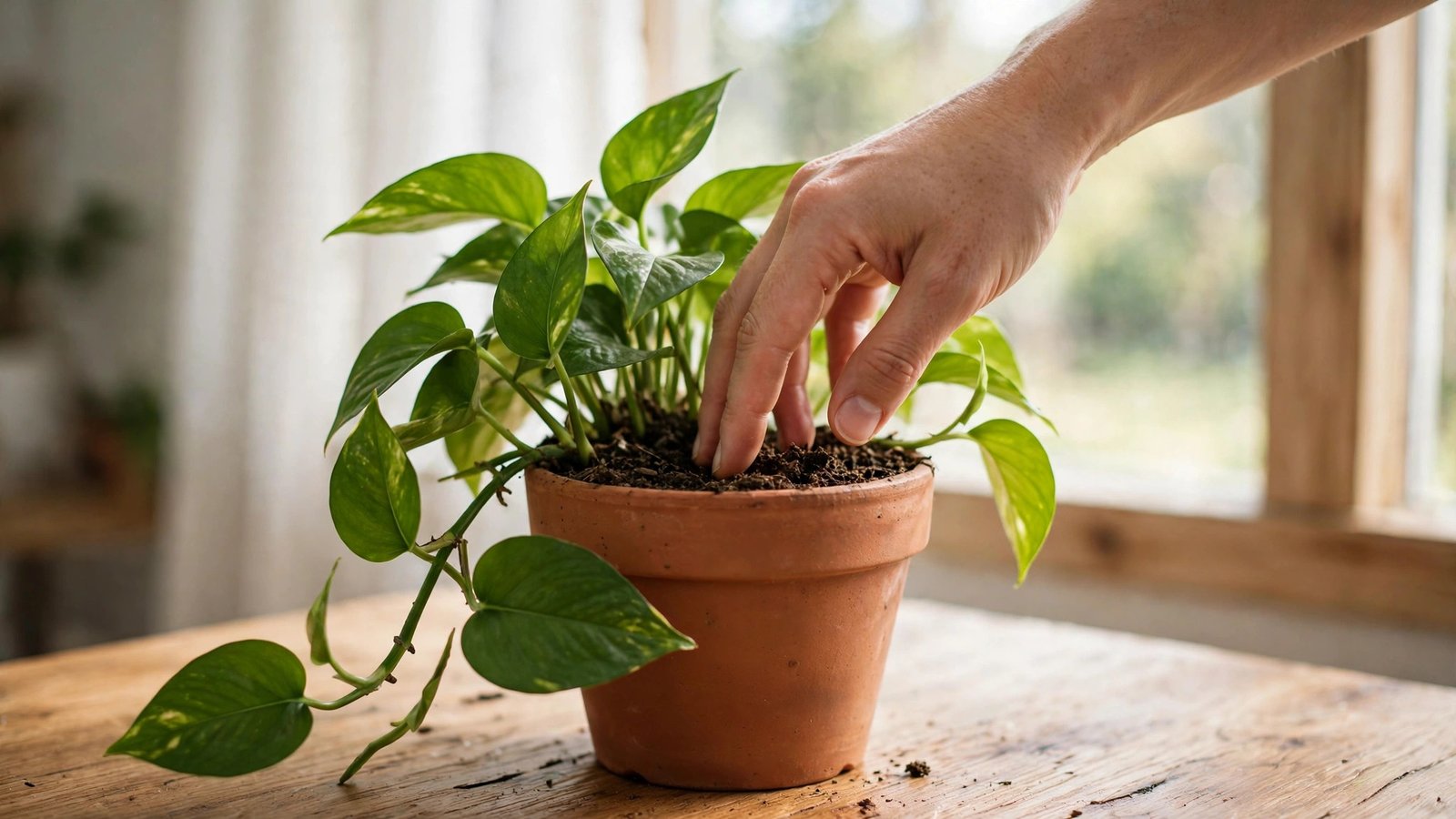
That sad, drooping houseplant is sending an ambiguous message: wilting leaves and yellowing edges can mean it is parched and begging for water, or that its roots are drowning and rotting underground. The cruel part is that the fix for one kills the plant suffering from the other. Telling them apart takes five minutes with your finger, your nose, and a little patience — and getting it right is the single most important skill in indoor gardening, because watering mistakes kill more houseplants than pests, disease, and low light combined — most plant parents water on a schedule instead of checking the soil first.
The Finger Test Beats Every Watering Schedule
Watering on a calendar schedule is how most houseplant trouble begins — plants drink according to light, temperature, humidity, and season, not timetables. Push your index finger two inches into the soil: cool and moist means no water needed, no matter what the calendar says; dry and crumbly means water now. For large pots, check three to four inches deep, since surfaces dry faster than root zones. A University of Minnesota Extension guide to watering indoor plants explains why checking moisture directly beats guessing from the surface — and why this one habit prevents the vast majority of watering-related plant deaths.
Readers can also follow related coverage through London Big News.
What a Thirsty Plant Actually Looks Like
A thirsty plant shows specific symptoms: soil pulling away from the pot edges, a noticeably lighter pot when lifted, and leaves that go limp, thin, and papery with crispy edges. The oldest lower leaves yellow first, then turn brown and crunchy. In severe cases the whole plant flops dramatically — terrifying to see, but encouraging, because a plant that perks up within hours of watering was simply dry. If the finger test says dry, water thoroughly until it drains from the bottom and watch it recover.
What Root Rot Looks Like Above the Soil
Root rot tells a different story: yellowing leaves feel soft and mushy rather than crispy, leaves drop while still yellow or green, and stems feel soft near the soil line. The soil stays wet for days after watering, and you may see mold, algae, or fungus gnats. In advanced cases the plant wobbles because rotted roots no longer anchor it. The definitive check: slide the plant out and look at the roots — healthy roots are white and firm, rotted ones brown or black, slimy, and foul-smelling. If you see that, watering more is the worst thing you can do.
The Smell Test and the Drainage Check
Your nose is a good diagnostic tool: healthy soil smells earthy and fresh, while rotting roots smell sour or musty. Also check drainage, the root cause of most rot. Does the pot have drainage holes? Many decorative pots do not, and pooled water creates a root-killing swamp. Is the pot far too large for the root ball? Oversized pots keep huge volumes of soil wet for weeks — a classic beginner trap. The Missouri Botanical Garden’s indoor plant care guide covers how proper containers and soil mixes prevent the soggy conditions rot needs.
How to Rescue a Plant in Each Situation
For a thirsty plant, water slowly and deeply until it drains freely, then empty the saucer after fifteen minutes. If shrunken soil lets water run down the gap, set the pot in room-temperature water for twenty to thirty minutes so the root ball absorbs from below. Remove fully crispy leaves, and expect perk-up within hours.
For root rot, unpot and rinse roots under lukewarm water. With sterilized scissors, cut away every brown, black, or mushy root — be ruthless, since rot spreads. Repot into fresh, dry, well-draining mix in a clean pot with drainage holes, sized to the remaining healthy roots. Then do not water for several days so trimmed roots can callus. Keep the plant in bright indirect light and skip fertilizer until new growth appears.
Set Yourself Up So You Never Have to Guess Again
Prevention is about pot and soil: always use drainage holes, match pot size to the root ball, and choose fast-draining mix with added perlite. Empty saucers after watering so roots never sit in water. Learn the lift test — the weight difference between wet and dry pots becomes second nature. And cut back watering in fall and winter when growth slows; a summer watering habit is the number-one winter killer. Browse our gardening guides for more plant-by-plant care walkthroughs.
A drooping plant with dry, crumbly soil and crispy leaf edges is thirsty — water it deeply. A drooping plant with soggy soil, mushy yellow leaves, and a sour smell has root rot — stop watering, trim the rotted roots, and repot in fresh dry mix. When in doubt, check the roots: white and firm means alive, brown and slimy means rot.
Conclusion
Telling thirst apart from root rot comes down to three checks: the finger test for soil moisture, the look and feel of the leaves, and the smell of the soil. Dry soil plus crispy leaves means water; wet soil plus mushy leaves and a sour smell means rot, and more water will only make it worse. Match the rescue to the diagnosis — a deep soak for the thirsty plant, root surgery and fresh dry soil for the rotted one — and then fix the underlying setup with drainage holes, right-sized pots, and fast-draining mix so the question rarely comes up again. Most houseplants are tougher than they look, and a correctly diagnosed plant usually recovers. If you are still unsure after checking, send us a photo and your plant questions — and meet the team behind these guides.
Frequently Asked Questions
Can a plant recover from root rot?
Yes, if caught early with the stem base still firm. Trim mushy roots with sterilized scissors, repot in fresh dry mix, and wait a few days before watering. If the stem itself is mushy at the soil line, recovery is unlikely.
How deep should I check soil moisture with my finger?
About two inches deep for small to medium pots — push your finger to the second knuckle. For pots larger than ten inches, check three to four inches down, since the surface dries faster than the root zone. The surface can look bone-dry while the roots still have plenty of moisture.
Why do the leaves turn yellow in both cases?
Yellowing is a general stress response, which is exactly why it confuses people. The texture tells the story: underwatered yellow leaves feel dry, thin, and crispy, usually starting with the oldest lower leaves. Root-rot yellow leaves feel soft, limp, or mushy and may drop while still yellow or green.
Should I water a plant with root rot at all?
No — not until treated and repotted, since water feeds the rot organisms. After repotting in fresh dry mix, wait several days before the first light watering.
Do moisture meters actually work?
Simple probe-style moisture meters work well enough for most houseplants and are great training wheels while you learn the finger and weight tests. Push the probe into the root zone, not just the surface, and water when it reads in the dry zone for most plants. They are inexpensive and available at any garden center.
Leave a Reply