
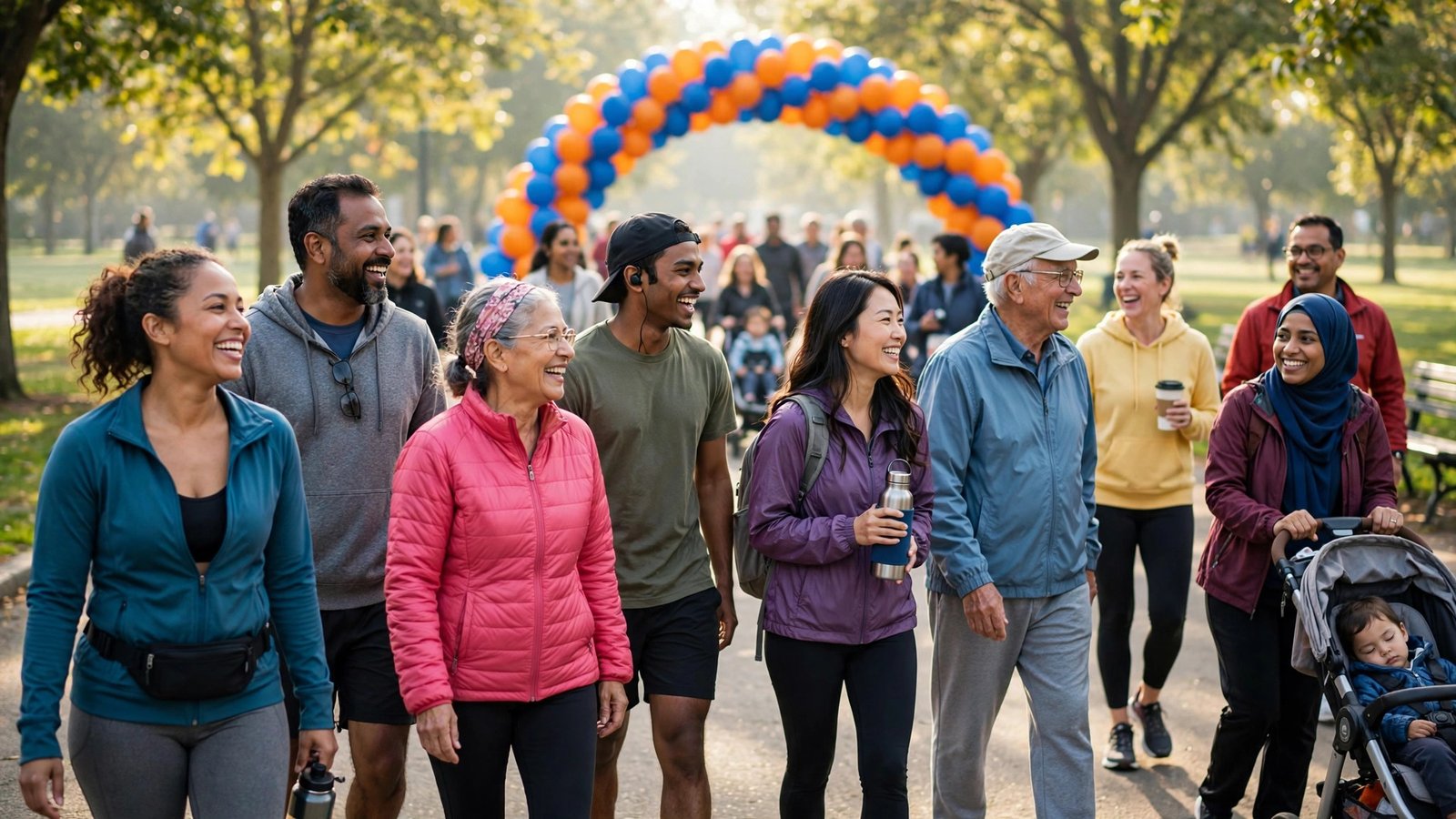
You’re walking your first 5K — 3.1 miles, no running required — and you’re wondering what to bring, what to wear, and whether you’ll look like you don’t belong. Here’s the truth: walkers are the backbone of community 5Ks, race directors love you (you paid the same entry fee), and nobody is judging your pace. But showing up unprepared — wrong shoes, no water, chafing in mile two — can turn a fun morning into a miserable one. This checklist covers everything a first-time 5K walker actually needs, and nothing you don’t.
The Non-Negotiables: What You Must Bring
Broken-in walking shoes: Not new shoes — shoes you’ve worn for at least a few weeks. New footwear on race day is the number one cause of first-5K blisters. Proper walking or running shoes with cushioning and support; broken-in sneakers beat brand-new anything. Your race bib: Pick it up at the expo or race morning as instructed — pin it to the front of your shirt (timing chips are often attached; don’t bend or fold it). Moisture-wicking clothing: A technical shirt and comfortable shorts, leggings, or pants — not cotton, which holds sweat and chafes. Dress for 15–20 degrees warmer than the thermometer says; you’ll heat up fast.
Water: Bring a bottle for before and after, even though most 5Ks have aid stations — lines and nerves make self-sufficiency smart. Phone: For photos, music, emergency contact, and the race app if there is one. ID and a little cash/card: For post-race food vendors and emergencies. Sunscreen and hat/sunglasses: If the race is outdoors and sunny — applied before you leave home. That’s the complete mandatory list; everything below is comfort optimization. The Road Runners Club of America publishes first-race checklists built on these essentials.
Comfort Upgrades Worth Packing
Anti-chafe balm: Apply to inner thighs, underarms, sports-bra lines, and anywhere skin rubs — chafing is the silent race-ruiner that strikes around mile 2. A light snack: A banana, energy bar, or gel for 30–60 minutes before the start — walking 3.1 miles burns real calories, and low blood sugar makes the last mile miserable. Layers: A throwaway sweatshirt or trash bag for chilly pre-race waiting (many races collect discarded layers for charity). A small towel and change of shirt: For the ride home — you’ll appreciate it more than you expect.
Safety pins (extras): Races provide them, but spares in your pocket prevent bib disasters. Hand sanitizer and tissues: Porta-potty lines are real; be prepared. A fanny pack or running belt: Keeps phone, water, and snacks accessible without hand-carrying everything for an hour. None of this is required — but each item eliminates one potential annoyance, and annoyances compound over 3.1 miles.
Walker-Specific Strategy: Pace, Etiquette, and Mindset
Start at the back. Seed yourself behind the runners at the start line — it’s etiquette (faster participants shouldn’t weave around you) and psychology (you won’t get swept into an unsustainable pace). There’s no shame in the back; there’s wisdom. Walk your own pace from the first step. The number one walker mistake is starting too fast on adrenaline, then fading painfully. If you can hold a conversation, your pace is right.
Course etiquette: Stay to the right so runners can pass on the left. At aid stations, grab water and move aside — don’t stop dead in the middle of the table zone. If you need to stop, step off the course. Thank the volunteers — they’re the reason the event exists. Mindset: You’re not “just walking” — you’re completing a 5K, which puts you ahead of everyone on the couch. Walk-run intervals are completely legitimate if you want to mix in jogging; there’s no purity test. Your only competition is the voice saying you don’t belong — and it’s wrong.
Race Morning Timeline
2 hours before: Eat your familiar breakfast (oatmeal, banana, toast — nothing new). 90 minutes before: Final bathroom stop at home, dress, apply sunscreen and anti-chafe. 60 minutes before: Arrive, pick up bib if needed, pin it on, scope out bathrooms, bag check, and the start area. 30 minutes before: Light warmup walk (10 minutes easy), sip water, use the bathroom again (lines peak now). 15 minutes before: Head to the start, position at the back, take a breath, enjoy it.
After finishing: keep walking for 5–10 minutes (don’t stop abruptly), grab water and the post-race snacks, stretch gently, take the photo, and savor it. Check results later — most races post them online within hours. And sign up for the next one within a week, while the glow lasts; the second 5K is where the habit forms. Many walkers find that training resources for beginners help them progress from walking to walk-run to running — if they want to. No pressure either way.
What Not to Bring (Or Do)
Leave at home: brand-new shoes or clothing (blister and chafe factories), heavy backpacks (you’re walking 3.1 miles, not hiking the Appalachians), valuables you don’t need, and expectations of a specific finish time for your first race. Don’t: try a new energy gel mid-race, skip the pre-race bathroom (twice), start at the front, or compare yourself to runners. Do: smile for the photographers, high-five the kids at the sidelines, and thank every volunteer you pass. The 5K community runs on encouragement — you’ll get plenty, and soon you’ll be giving it to the next first-timer.
For your first 5K as a walker, bring: broken-in shoes, your bib, moisture-wicking clothes (not cotton), water, phone, ID, sunscreen, anti-chafe balm, and a pre-race snack. Start at the back, walk your own conversational pace, stay right for passing runners, and enjoy it — you’re not “just walking,” you’re finishing a 5K.
Conclusion
Your first 5K as a walker needs less gear than you fear and more preparation than you think — the right shoes, the right clothes, anti-chafe balm, water, and a race-morning plan. Start at the back, walk your pace, follow basic course etiquette, and soak in an experience designed to be fun. Thousands of walkers line up every weekend; this weekend, you’re one of them. For more beginner race guidance, browse our sports section, meet our team, or ask your training questions.
Frequently Asked Questions
Can I really walk an entire 5K? Is that allowed?
Absolutely — walkers are welcome and expected at virtually all community 5Ks. Many events have dedicated walking divisions. You’ll finish in 45–75 minutes depending on pace, well within typical course time limits (check yours, but 5Ks rarely close early).
What should I wear for my first 5K walk?
Moisture-wicking shirt and comfortable bottoms — no cotton, which causes chafing when sweaty. Broken-in walking shoes. Dress for 15–20°F warmer than the air temperature, and bring a throwaway layer for pre-race waiting.
How fast should I walk a 5K?
Whatever conversational pace feels comfortable — typically 15–20 minutes per mile, finishing in 45–60+ minutes. Don’t chase a time goal on your first one; finishing comfortably and wanting to do another is the only target that matters.
Should I bring water if there are aid stations?
Yes — bring your own bottle anyway. Aid stations can have lines, run dry, or sit at inconvenient spots for walkers. Self-sufficiency eliminates variables, and you’ll want water before the start and after the finish regardless.
What if I can’t finish?
Almost everyone finishes — 3.1 miles of walking is achievable for most reasonably mobile adults, and you can rest at any point. If you truly need to stop, sag wagons or course marshals assist; there’s zero shame in it. But with sensible pacing, stopping is rarely necessary.
Leave a Reply