
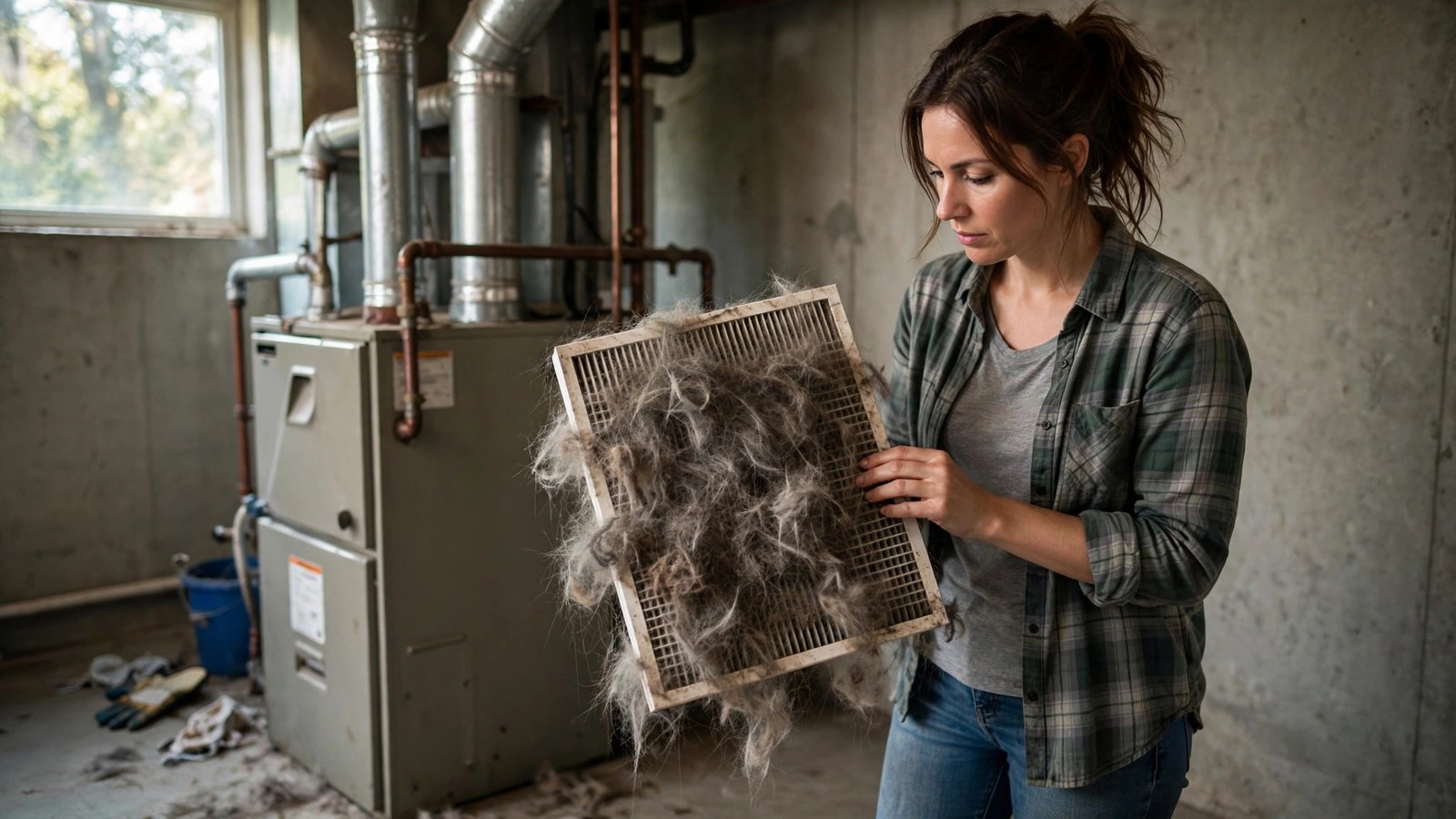
The standard advice says replace your HVAC filter every 90 days — but that advice was written for a home without a golden retriever blowing its coat twice a year. Pet hair and dander clog filters dramatically faster than normal household dust, restricting airflow, forcing your system to work harder, and recirculating allergens through every room. If you share your home with dogs or cats, the 90-day rule does not apply to you. Here is how often to actually replace your filter, which filters handle pets best, and the simple habits that keep your system breathing easy.
The Short Answer: Every 30 to 60 Days
For most pet households, replace the HVAC filter every 30 to 60 days — not 90. One medium-shedding dog or a couple of cats: every 60 days is usually enough. Multiple pets, heavy shedders like huskies or long-haired cats, or anyone in the home with allergies or asthma: every 30 days. Homes with small low-shedding pets and no allergy sufferers can sometimes stretch to 90 days, but verify by checking the filter monthly until you learn your home’s pattern. Seasonal shedding in spring and fall clogs filters fastest, so tighten the schedule during those months. The Department of Energy’s HVAC maintenance guidance emphasizes that dirty filters are among the most common causes of wasted energy and system strain — and pet homes hit “dirty” far sooner than the standard guidance assumes.
Why Pets Destroy Filters So Fast
It is not just the visible hair. Pet dander — microscopic skin flakes — is the real filter-killer: it is tiny enough to penetrate deep into filter media, sticky enough to cling, and produced constantly. A single dog sheds thousands of dander particles per minute. Add tracked-in dirt and pollen from paws, plus the general dust load of an active household, and a pet home’s filter loads up two to three times faster than a pet-free home’s. The filter does not just look dirty sooner; the restricted airflow raises static pressure, which makes the blower motor work harder, reduces heating and cooling efficiency, and can eventually freeze evaporator coils or overheat heat exchangers. A $15 filter replaced on time protects a $10,000 system — the economics are not close.
Choosing the Right Filter for a Pet Home
Filter choice matters more with pets. Pleated filters with a MERV rating of 8 to 12 hit the sweet spot: they capture dander and fine particles without strangling airflow. Cheap flat fiberglass filters (MERV 1 to 4) are nearly useless against dander — they protect the equipment minimally and do nothing for air quality. On the other end, very high-MERV filters (13+) or thick HEPA-style filters can restrict airflow too much for standard residential systems, especially if the ductwork is marginal; check your system’s specs before going above MERV 12. Look for filters marketed for pet owners — they typically combine decent MERV ratings with more surface area to hold hair without clogging as fast. Whatever you choose, buy in bulk multi-packs; the per-filter cost drops sharply and you will actually replace them on schedule when a fresh one is sitting by the furnace. The EPA’s indoor air quality resources explain how filtration fits into whole-home allergen control.
Signs Your Filter Needs Changing Now
Do not wait for the calendar if the filter tells you otherwise. Pull it out monthly and hold it up to the light — if you cannot see light through it, it is done regardless of age. Visible matting of pet hair on the intake side means it is overdue. Performance symptoms include weak airflow from vents, longer heating or cooling cycles, rooms that never quite reach the thermostat setting, a musty or “pet” smell when the system runs, and a fine layer of dust reappearing on surfaces days after cleaning. Allergy symptoms flaring indoors point at filtration failure too. Make the check a habit: the first of the month, pull the filter, glance, decide. Thirty seconds of attention prevents most filter-related service calls.
Stretching Filter Life: Grooming and Cleaning Habits
You cannot eliminate dander, but you can reduce what reaches the filter. Brush dogs and long-haired cats regularly — ideally outside — during shedding season; a deshedding tool session twice a week captures an astonishing amount of undercoat before it becomes airborne. Vacuum with a HEPA-filter vacuum at least weekly, focusing on the rooms with return vents, since returns are where airborne hair gets sucked toward the filter. Wash pet bedding every one to two weeks; it is a dander reservoir. Keep the area around the return vents clear and vacuum the vent grilles themselves. Some homeowners add a cheap pre-filter or cut-to-fit filter media over the main return grille to catch the big hair before it hits the real filter — replace the pre-filter often and the main filter lasts noticeably longer.
What Happens If You Ignore It
Chronic filter neglect in a pet home follows a predictable path: first higher energy bills as the system strains, then comfort problems as airflow drops, then component damage — frozen coils in summer, cracked heat exchangers in winter, burned-out blower motors year-round. Any of those repairs costs hundreds to thousands of dollars, and technicians can tell at a glance that a clogged filter caused it, which can complicate warranty claims. There is also the air you breathe: a saturated filter stops capturing dander and can even shed what it caught back into the airstream. Set a phone reminder, buy filters in bulk, and treat the 30-to-60-day swap as non-negotiable home maintenance — like changing the oil in your car. For more home maintenance schedules, see our home improvement guides.
With pets in the home, replace your HVAC filter every 30 to 60 days instead of the standard 90 — monthly for multiple or heavy-shedding pets and allergy sufferers. Use pleated MERV 8-12 filters, check monthly by holding the filter to the light, and extend filter life with regular pet grooming, HEPA vacuuming, and washing pet bedding. A $15 filter on schedule protects a $10,000 system.
Conclusion
Pets and the 90-day filter rule do not mix. Check monthly, replace every 30 to 60 days depending on your pet load, choose pleated MERV 8-12 filters bought in bulk, and cut the dander at the source with grooming and vacuuming. It is the cheapest, easiest HVAC maintenance you can do — and the most commonly skipped in pet homes. More home maintenance questions? Meet our team or send them our way.
Frequently Asked Questions
Can I just vacuum my HVAC filter and reuse it?
Vacuuming the surface hair extends life slightly, but it does not restore the filter — embedded dander stays trapped in the media and airflow stays restricted. Disposable filters are meant to be replaced. Reusable washable filters exist but need thorough monthly washing and drying to work properly.
Is a higher MERV rating always better with pets?
No. MERV 8 to 12 is the sweet spot for most homes. Higher ratings capture smaller particles but also restrict airflow more, which can strain standard residential systems. Check your HVAC manual before going above MERV 12.
Do I need to change the filter more often in shedding season?
Yes. Spring and fall coat-blowing can clog a filter in weeks. Tighten to a 30-day schedule during heavy shedding, brush pets outside regularly, and check the filter visually rather than trusting the calendar.
Why does my house still smell like pets with a new filter?
The filter captures airborne particles, but odors also live in carpets, upholstery, and pet bedding. Wash bedding regularly, deep-clean soft furnishings, and consider that the ductwork itself may need professional cleaning if odors persist with fresh filters.
Where is my HVAC filter located?
Common spots: in the return air grille on a wall or ceiling, in a slot on the furnace or air handler itself, or in the blower compartment. If you have never changed it, check all three — some homes have filters in more than one location.
Leave a Reply