
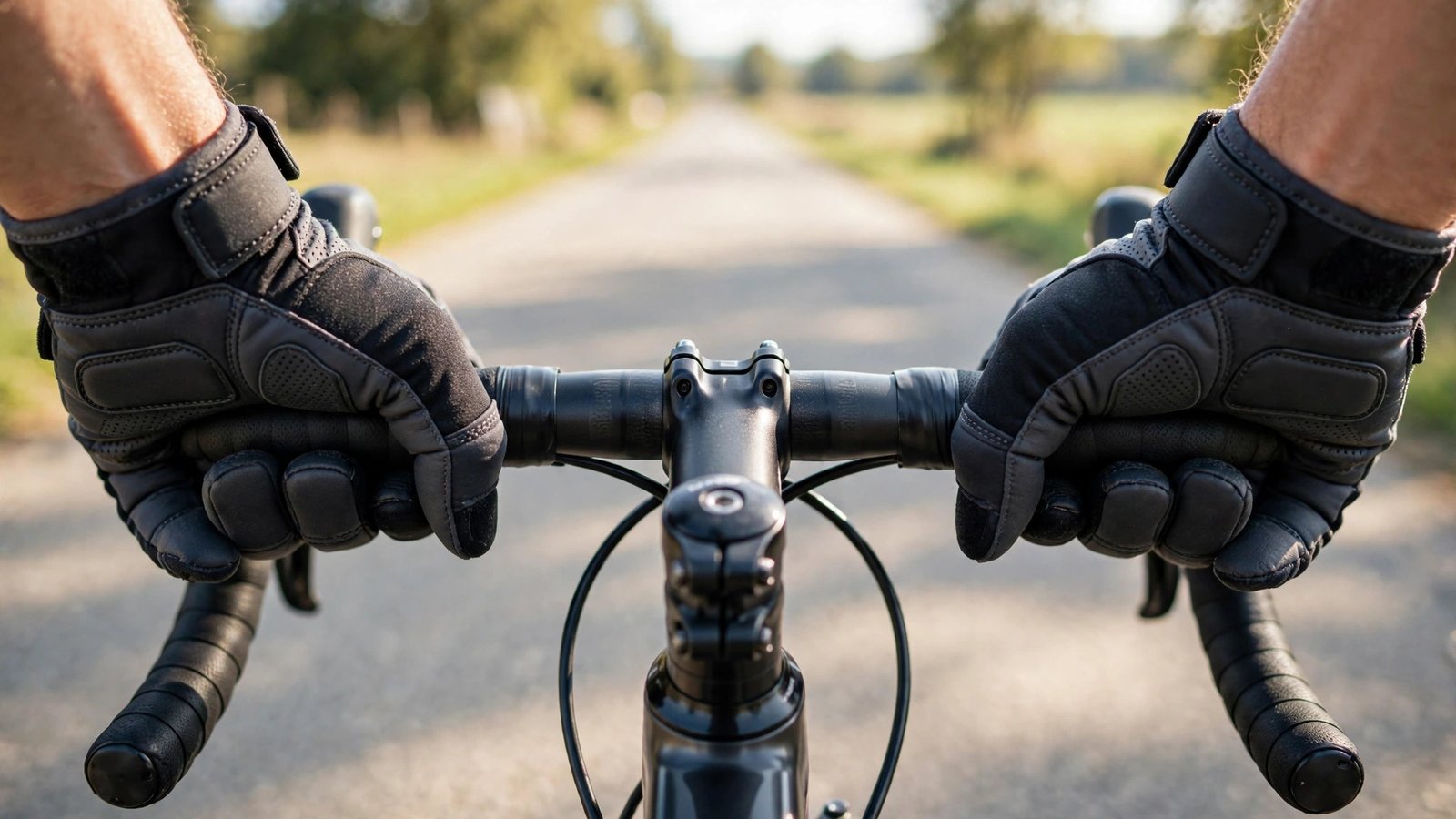
Forty-five minutes into your ride, your pinky and ring finger start tingling. By the hour mark, both hands feel like they belong to someone else, and you are shaking them out at every stoplight. Numb hands are one of the most common complaints in cycling — and one of the most fixable. The numbness is almost always a mechanical problem, not a medical one: pressure on the ulnar and median nerves where they pass through your wrist and palm, caused by how your weight, your handlebars, and your body position interact. Here is what is actually happening in your hands, the fit and technique fixes that resolve it for most riders, and the signs that mean it is time to see a doctor instead of adjusting your stem.
What Is Actually Going Numb: The Two Nerves Involved
Two nerves run through high-pressure zones in a cyclist’s hand. The ulnar nerve passes through Guyon’s canal at the base of the palm — compression here numbs the pinky and ring finger, the classic “cyclist’s palsy” or handlebar palsy. The median nerve passes through the carpal tunnel at the wrist — compression here numbs the thumb, index, and middle fingers, essentially cycling-induced carpal tunnel symptoms. Which fingers go numb tells you which nerve is complaining, and that points at the cause: ulnar symptoms usually mean too much pressure on the heel of the palm (drops or flat bars with no padding variation), while median symptoms often mean a bent-back wrist position (hoods ridden with wrists kinked). Both are pressure-over-time problems, which is why symptoms take 30 to 60 minutes to appear and resolve minutes after you stop gripping.
Fit Fix #1: Take Weight Off Your Hands
The root cause for most riders is simple: too much body weight resting on the hands. This usually traces to bike fit — a saddle tilted nose-down slides you forward onto the bars, a saddle set too high rocks your pelvis and pushes weight forward, or handlebars set too low and too far away force a constant push-up position. The checks: your saddle should be level (use a phone level app), saddle height should allow a slight knee bend at the bottom of the stroke, and you should be able to ride with a light grip — if removing your hands for a second feels like falling forward, your fit is dumping weight onto your palms. Core strength matters too: a weak core cannot support your torso, so your arms become structural columns. The test riders love: can you comfortably tap your fingers on the bars while riding? If not, fit first, gloves second.
Fit Fix #2: Handlebar Position, Gloves, and Grip
Once weight distribution is reasonable, optimize the contact points. Rotate hand positions every few minutes — tops, hoods, drops — because the numbness is time-under-pressure, and movement is the antidote. Padded cycling gloves genuinely help by distributing pressure across the palm, but they are a supplement to fit, not a substitute; a $40 glove cannot fix a $0 fit problem. Consider bar tape with more cushion or gel inserts under the tape at the pressure points. For flat-bar riders, ergonomic grips with a winged platform spread load across the whole palm instead of concentrating it on the ulnar nerve zone — many chronic numbness cases resolve with this single change. And check your wrist angle: wrists should be roughly straight, not bent back like a waiter carrying a tray. If your brake hoods force a kinked wrist, rotating the bars or adjusting hood position flattens it.
Technique: Relax the Death Grip
Watch tense riders and you will see white knuckles — gripping the bars as if the bike might escape. That constant isometric contraction compresses nerves directly and fatigues the forearms, compounding the fit problem. Consciously relax: bend your elbows slightly (locked elbows transmit every bump straight to the hands and shoulders), keep a firm-but-light grip, and wiggle your fingers periodically. On rough roads, let the elbows act as suspension. Many riders find that dropping the death grip alone delays numbness by 30 minutes or more. It also helps to stand and pedal for 15 to 20 seconds every ten minutes on longer rides — it unloads the hands completely, restores circulation, and gives the nerves a pressure break. Think of it as the cycling equivalent of getting up from your desk.
When Numbness Is Not Just a Fit Problem
Most cycling hand numbness is mechanical and resolves with the fixes above within a few rides. See a doctor if numbness persists for hours after riding, occurs off the bike (typing, sleeping, driving), involves weakness like dropping objects, or affects only one hand asymmetrically — these patterns suggest true nerve entrapment or a cervical spine issue rather than handlebar pressure. Also seek evaluation if you develop persistent neck pain with the hand symptoms, which can indicate a pinched nerve root in the neck referring downward. A sports medicine physician or hand specialist can sort this out quickly, and early treatment of genuine carpal tunnel or ulnar neuropathy prevents permanent nerve damage. The American Academy of Orthopaedic Surgeons has excellent patient guides on both ulnar nerve and carpal tunnel issues, and the American Society for Surgery of the Hand covers handlebar-related nerve compression in depth.
Numb hands while cycling are almost always pressure on the ulnar or median nerves from too much weight on the bars, a poor fit, or a death grip — not a fitness problem. Level the saddle, take weight off your hands, move hand positions often, and relax your grip. If numbness persists off the bike, get checked.
The Professional Bike Fit: Worth Every Penny
If you have adjusted the basics and numbness persists past the hour, get a professional fit — typically $150 to $300 for a comprehensive session. A fitter will measure your flexibility, observe you pedaling under load, and adjust saddle position, stem length and height, handlebar width, and cleat position as a system. Hand numbness is one of the most common complaints fitters resolve, often with changes the rider would never have tried alone (a shorter stem, a saddle moved back 5 millimeters). Many shops credit part of the fit cost toward parts. Given that the alternative is months of miserable rides or a medical bill, the fit is the highest-ROI purchase in cycling after the helmet.
Conclusion
Hands going numb on hour-long rides is your body’s fit complaint, not a life sentence. Identify which fingers go numb, take weight off your hands with proper saddle and bar position, rotate hand positions, relax your grip, and consider ergonomic grips or a professional fit if the basics do not solve it. Most riders fix this completely within a couple of weeks of adjustments. And if numbness follows you off the bike, let a doctor take a look — nerves deserve respect. For more cycling-smart guidance, explore our sports section, meet the team behind these guides, or send us your cycling question anytime.
Frequently Asked Questions
Why do only my pinky and ring finger go numb when cycling?
That pattern points to the ulnar nerve, compressed at the base of the palm (Guyon’s canal) — classic handlebar palsy. It usually means too much pressure on the heel of your palm from weight distribution or hand position. Padded gloves, ergonomic grips, and taking weight off your hands typically resolve it.
Will padded cycling gloves stop hand numbness?
They help by distributing palm pressure, but they cannot fix a fit problem. Think of gloves as a supplement: get saddle position, bar height, and weight distribution right first, then add gloves for the remaining pressure. Many riders need both.
How should I position my wrists on the handlebars?
Keep wrists roughly straight and neutral — not bent sharply back or kinked down. On drop bars, this usually means riding the hoods with forearms nearly level; on flat bars, ergonomic grips help maintain the neutral angle. Bent wrists compress the carpal tunnel and cause thumb-side numbness.
Is hand numbness from cycling dangerous?
Temporary numbness that resolves minutes after riding is almost always benign pressure-related irritation. It becomes concerning if numbness lasts hours, happens off the bike, involves weakness or dropping things, or is sharply one-sided — those warrant a medical evaluation for true nerve entrapment.
How much does a professional bike fit cost?
A comprehensive fit runs $150 to $300 and typically takes 1-2 hours. For persistent numbness, pain, or anyone riding regularly, it is the best money in cycling — fitters resolve hand numbness complaints routinely with adjustments riders would not find alone.
Leave a Reply