
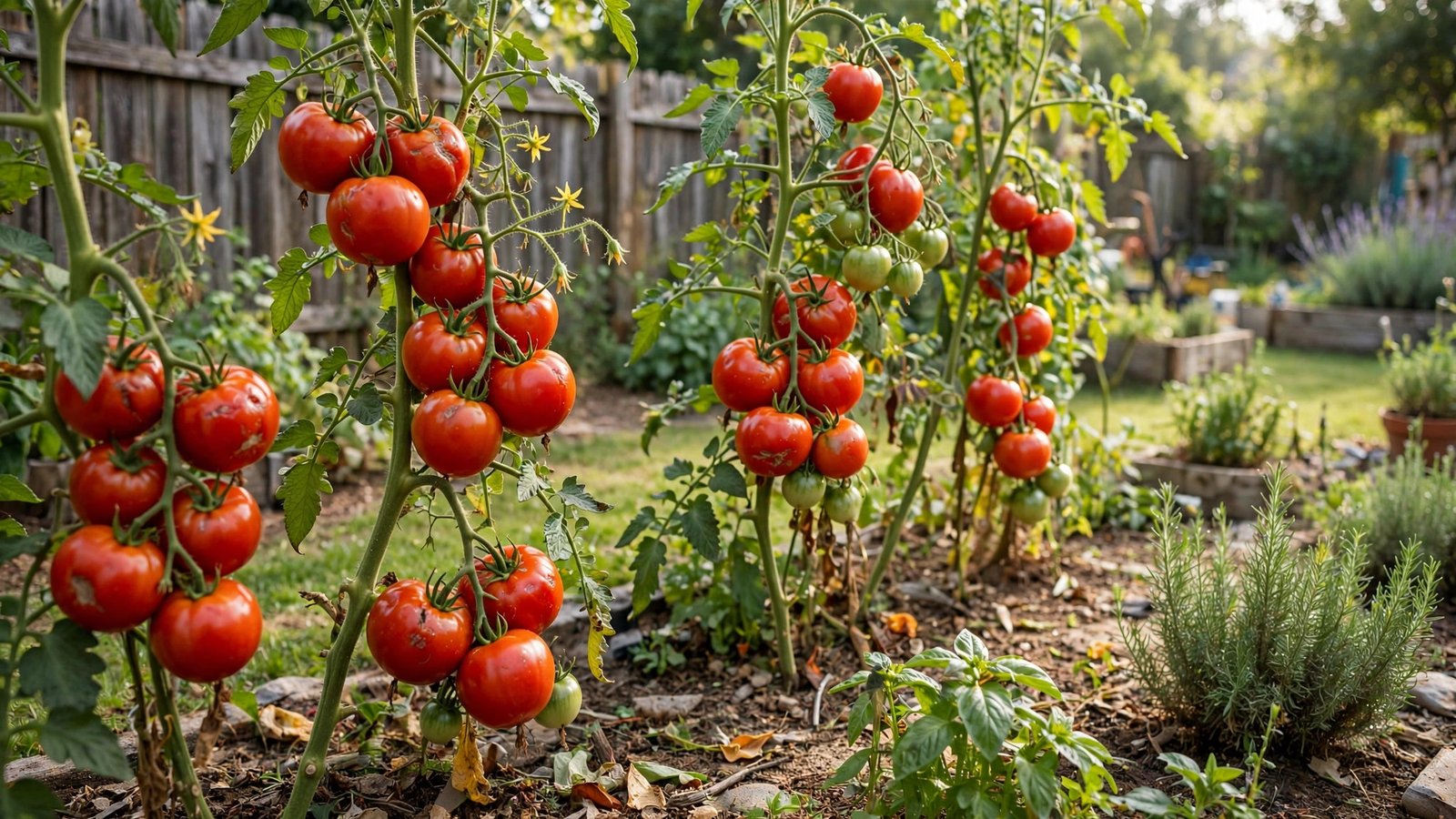
The difference between a tomato picked at the perfect moment and one picked a day too early is the difference between summer in your mouth and a red water balloon. Tomatoes develop their full flavor — the sugars, the acids, and the hundreds of aromatic compounds that make a homegrown tomato taste like anything at all — only in the final stretch of ripening. Pick too early and the fruit never quite catches up; pick too late and it turns mealy. Here is how to read your tomatoes like a farmer and harvest each one at its absolute peak.
What “Ripe” Actually Looks Like
A tomato at peak flavor gives you three signals at once: color, feel, and smell. Color should be full and even for the variety — deep red for a Beefsteak, golden for a Yellow Pear, nearly black-purple for a Cherokee Purple. Check the shoulders near the stem, which ripen last; if they are still green, give it another day or two. Feel matters just as much: the fruit should yield slightly to gentle pressure, like the fleshy part of your palm below the thumb. Rock-hard means unripe; mushy means overripe. And smell the stem end — a ripe tomato releases a strong, sweet, earthy tomato-leaf fragrance. No smell usually means not ready, no matter what the color says.
The Breaker Stage: Your Insurance Policy
Commercial growers pick tomatoes at the “breaker stage” — when the first blush of color appears — and ripen them with ethylene gas. Home gardeners can do better, but the breaker stage is still useful knowledge: a tomato picked at first blush and ripened indoors at room temperature will develop decent flavor, roughly 80 to 90 percent of vine-ripened quality. Why does this matter? Because a tomato left fully ripening on the vine is a sitting duck for birds, squirrels, cracking after rain, and blossom-end pests. Many experienced gardeners pick at breaker stage or just past it — full color developing but still firm — and finish ripening on the kitchen counter. You dodge the pests and lose only a whisper of flavor. For peak eating, let cherry tomatoes go fully vine-ripe (birds bother them less); for big slicers in pest-heavy areas, breaker-plus is the smart play.
Pick in the Morning for the Best Flavor
Time of day genuinely affects taste. Tomatoes accumulate sugars during the day through photosynthesis, but they also lose moisture and aromatic compounds in afternoon heat. Picking in the cool morning — after the dew dries but before the sun gets strong — captures the fruit at its most flavorful and firmest. Afternoon-picked tomatoes, especially on scorching days, can taste comparatively flat. This is one of those small habits that separates good garden tomatoes from unforgettable ones, and it costs nothing. Bring a shallow basket or bowl rather than a deep bucket so the bottom fruits do not get crushed.
Water Less Before Harvest
Here is the counterintuitive trick behind intensely flavored tomatoes: mild water stress concentrates everything good. A tomato plant that gets slightly less water in the final days before harvest produces fruit with higher sugar and acid concentration — more flavor per bite. Overwatered tomatoes, especially after a heavy rain, taste diluted and are more prone to splitting. Ease off watering a few days before you plan a big harvest, and always harvest before a forecasted downpour if the fruits are near ripe — that sudden gulp of water is what cracks skins. University of Minnesota Extension’s tomato growing guide covers watering practices that balance plant health with fruit quality.
Ripening Indoors the Right Way
Sometimes you must pick early — an early frost is coming, or pests found your patch. To ripen indoors, keep tomatoes at room temperature, stem-side down, out of direct sunlight (sunlight heats unevenly and can cause blotchy ripening). A paper bag with a ripe banana or apple speeds things along: those fruits release ethylene gas, the natural ripening hormone. Check daily and pull each tomato as it reaches full color and slight give. What you should never do is refrigerate unripe tomatoes — cold below about 50°F permanently damages the flavor-producing enzymes, and no amount of counter time afterward fully restores them. The Cornell food science research on tomato flavor has shown that chilling injury to fresh tomatoes is irreversible, which is why the fridge is flavor’s enemy.
Handle the Harvest Gently
A perfectly timed tomato can be ruined in the basket. Twist or snip the fruit with a bit of stem attached rather than yanking, which can tear the plant. Do not stack them deep — the weight bruises the bottom layer, and bruises turn to rot spots within a day or two. At the peak of season, harvest daily or every other day; a tomato can go from perfect to overripe in 48 hours of hot weather. And taste as you go. The single best ripeness indicator ever invented is your own mouth — sample one from each plant when you think they are ready, and calibrate from there.
End of Season: Do Not Waste the Green Ones
When frost threatens, strip every tomato with a hint of size — even fully green ones. Mature green tomatoes (full-sized, with a waxy sheen) will ripen indoors over one to three weeks if kept at 65 to 70°F; wrap them individually in newspaper and check weekly, removing any that soften or spot. Truly immature tiny ones will not ripen, but they make excellent fried green tomatoes, green tomato salsa, or chow-chow relish. A frost deadline is not the end of your harvest — it is just a change of venue.
Peak tomato flavor lives in a narrow window: full variety color, slight give under gentle pressure, and a strong sweet fragrance at the stem. Pick in the cool morning, ease off water before harvest, and never refrigerate a tomato you plan to eat fresh.
Conclusion
Maximum tomato flavor is not luck — it is timing. Watch for full color, test the gentle give, smell the stem end, and pick in the morning after easing off the water. Use the breaker stage as your pest insurance, ripen early picks at room temperature with a banana nearby, and keep every fresh-eating tomato far from the refrigerator. Do this consistently and your harvest will taste like the reason you planted in the first place. For more garden and kitchen guidance, browse our food section, meet the team, or send us your gardening questions.
Frequently Asked Questions
Should I pick tomatoes when they first turn red or wait?
Wait until the color is full and even for the variety, the fruit yields slightly to gentle pressure, and the stem end smells sweet and tomatoey. Picking at first blush is fine if pests are a problem — the tomato will ripen indoors to about 80–90% of vine-ripened flavor.
Why do my homegrown tomatoes taste bland?
Common causes: picking too early, overwatering near harvest (which dilutes sugars), refrigerating fresh tomatoes (cold permanently damages flavor enzymes), or a variety bred for shipping rather than taste. Pick at full ripeness in the morning and ease off water before harvest.
Can tomatoes ripen after picking?
Yes, if picked at the breaker stage (first blush of color) or later. Ripen at room temperature, stem-side down, optionally in a paper bag with a banana to supply ethylene. Fully green, immature tomatoes generally will not ripen properly indoors.
Why do my tomatoes crack near the stem?
Cracking comes from sudden water uptake — typically a heavy rain or deep watering after a dry spell — when fruits are near ripe. Harvest before forecasted rain, water consistently rather than in bursts, and pick cracking-prone varieties slightly early to finish indoors.
Should I store ripe tomatoes in the refrigerator?
No, not if you plan to eat them fresh. Temperatures below about 50°F destroy the enzymes that create tomato flavor, and the damage is irreversible. Keep ripe tomatoes at room temperature and eat within a few days. Only refrigerate to prevent spoilage once fully ripe, and accept some flavor loss.
Leave a Reply