
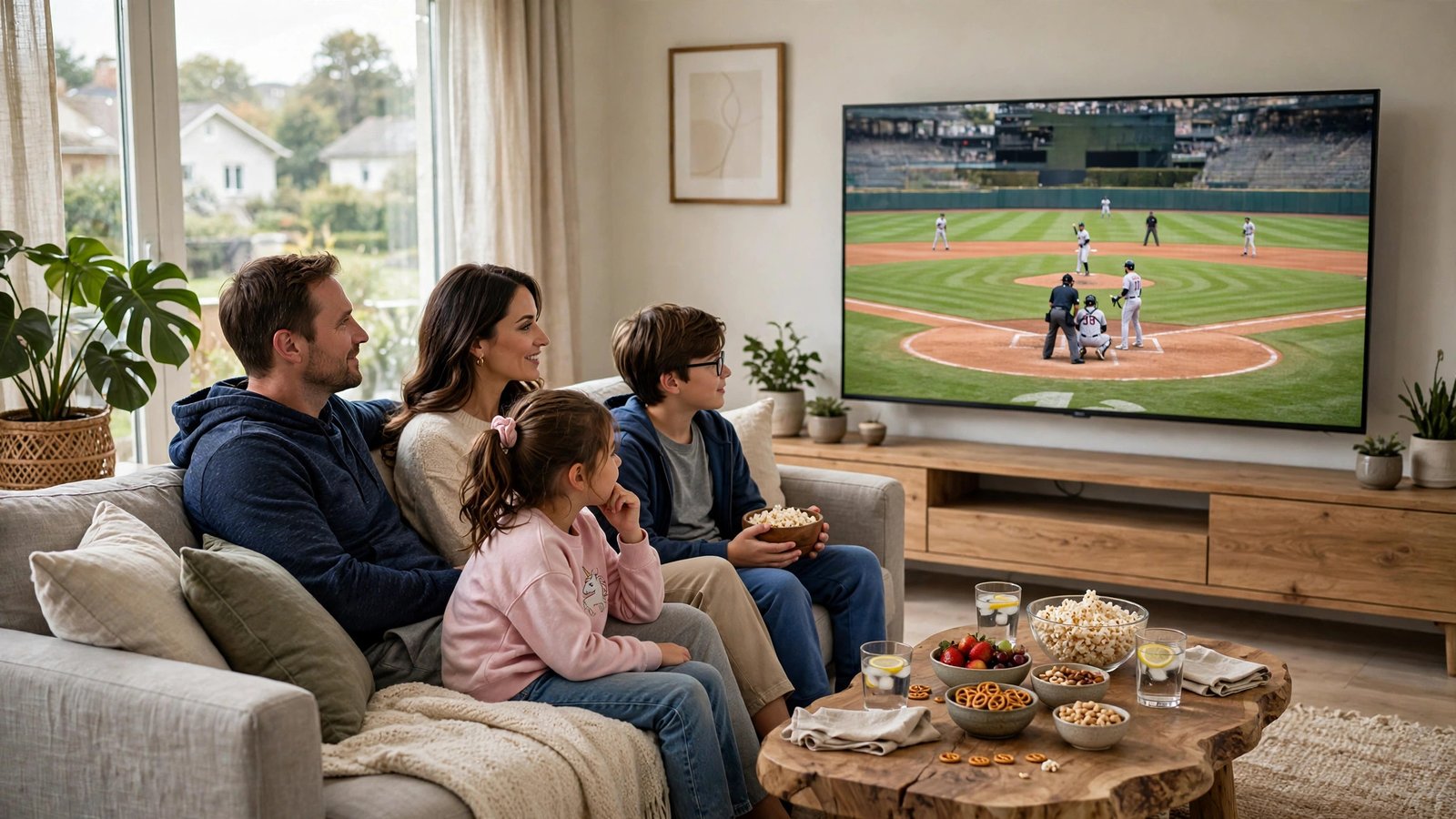
You live forty minutes from the ballpark, you pay for MLB.TV, and when your team plays at home the screen says “this game is blacked out in your area.” It is the most maddening sentence in sports streaming — paying for baseball and being blocked from watching your own team. Local blackouts exist because regional sports networks (RSNs) paid billions for exclusive local broadcast rights, and MLB enforces those territories ruthlessly. But the landscape has shifted dramatically: RSNs are collapsing, teams are launching their own streaming options, and there are more legitimate paths to watching your local nine than ever before. Here is every real option, ranked from simplest to most creative.
Understand What You Are Actually Blacked Out From
First, precision matters. MLB.TV blacks out games based on your location relative to each team’s territory — if you live inside your team’s designated region, their games are blacked out on MLB.TV (home and away), because your local RSN or broadcaster owns those rights. National games on ESPN, Fox, or Apple TV+ are blacked out on MLB.TV everywhere, since those networks own the national window. The blackout is determined by your IP address or GPS location, and MLB’s territories are notoriously broad — fans in Iowa have famously been blacked out from six teams. Knowing which blackout applies to you determines the fix: in-market blackouts need a local solution; national blackouts just need you to watch on the national network. Check your status on MLB’s official streaming and blackout information before spending money on any workaround.
Option 1: The Team’s Own Streaming Service (The New Best Answer)
The collapse of the Diamond Sports/Bally RSN empire has pushed teams toward direct-to-consumer streaming, and this is now the cleanest solution for many fans. Multiple teams now offer in-market streaming packages — typically $100 to $200 per season or $20 to $30 per month — that stream every local game with no blackouts, no cable required. The Yankees (YES), Dodgers (Spectrum SportsNet LA), and a growing list of others have launched or announced these options, and MLB itself now produces and streams games for teams whose RSN deals collapsed. Check your team’s official site first: if they offer an in-market package, it is the simplest, fully legal, highest-quality answer. This market is evolving fast — a team without an option this season may have one next season — so re-check every spring.
Option 2: A Live TV Streaming Service With Your RSN
If your team’s games still air on a functioning RSN, a live TV streaming bundle that carries it solves the blackout completely. The main players: DIRECTV STREAM (the priciest, but historically the most reliable for RSNs), Fubo (strong sports lineup including many RSNs), and in some markets Hulu + Live TV or YouTube TV. Expect $75 to $110 per month. The math: if you only care about baseball, six months of a streamer costs $450 to $660 — compare that against the team’s direct package above, which is usually far cheaper for baseball-only fans. But if you also want the local NBA, NHL, and everything else on that RSN, the bundle starts making sense. Warning: RSN carriage changes constantly — verify your specific RSN is currently carried before subscribing, because streaming services drop channels mid-season with minimal notice.
Option 3: The Antenna + National Games Combo
Do not overlook the free option. Many local games air on broadcast TV: Fox’s Saturday games, ESPN’s Sunday Night Baseball, and any postseason games are all free with a $25 to $40 over-the-air antenna in most markets. Some teams also still air a package of games on local broadcast stations. An antenna plus MLB.TV (for out-of-market games, $150-$170/season) covers a huge percentage of the season for a one-time $30 hardware cost plus the MLB.TV sub. You will miss the RSN-exclusive weeknight games, but you will watch every national broadcast in crisp free HD, and many fans find the 60-70 games they do get plenty. For the budget-conscious fan, this combo is unbeatable value.
What About VPNs? The Honest Answer
You will see VPNs recommended everywhere for beating blackouts: connect to a server outside your team’s territory, and MLB.TV thinks you are out-of-market. Technically, this often works — briefly. Honestly, though: it violates MLB.TV’s terms of service, MLB actively detects and blocks many VPN IP addresses (an endless cat-and-mouse game), and you are paying $150+ for a service you are using against its rules. Some fans accept that trade; others find the constant VPN troubleshooting ruins the experience. This guide cannot recommend violating terms of service, but you deserve to know the full landscape: the legitimate options above have gotten good enough that most fans no longer need the gray-area route. The trend is clearly toward teams selling directly to local fans — the blackout era is slowly ending on its own. The FCC’s history of sports blackout rules explains the regulatory backdrop that shaped these policies.
The blackout-free path in 2026: check whether your team sells its own in-market streaming package first — it’s the cheapest fully legal option. No team package? A live TV streamer with your RSN, or an antenna plus MLB.TV for out-of-market games, covers nearly everything without gray-area workarounds.
Radio, Highlights, and the Underrated Alternatives
Two options deserve more respect. MLB radio broadcasts — free through the MLB app or At Bat — are never blacked out, and baseball on the radio remains one of life’s great pleasures; many fans pair the radio call with the MLB Gameday pitch tracker for a surprisingly rich free experience. And if you are time-shifted anyway, MLB.TV’s archive of every game (available 90 minutes after completion, blackout-free) means night owls and busy parents can watch full games on demand. Combine the archive with avoiding spoilers and you have effectively beaten the blackout with patience. Neither replaces live weeknight viewing, but both are legitimate, cheap, and often overlooked.
Conclusion
Local MLB blackouts are a legacy of the cable era colliding with the streaming era — frustrating, but increasingly solvable. Start with your team’s own streaming package, fall back to a live TV bundle or the antenna-plus-MLB.TV combo, and keep an eye on the market, because teams are launching direct options every season. The days of needing cable to watch your local team are ending. For more sports viewing guides, check our sports section, learn about who writes these guides, or ask us your streaming question — we read every message.
Frequently Asked Questions
Why are local MLB games blacked out on MLB.TV?
Regional sports networks paid billions for exclusive local broadcast rights, and MLB enforces those territories by blocking in-market fans on MLB.TV. The blackout is based on your location (IP/GPS) relative to each team’s designated territory. National games on ESPN, Fox, and others are blacked out everywhere for the same reason.
Can I watch my local MLB team without cable?
Yes, increasingly so. Many teams now sell in-market streaming packages ($100-$200/season) with no blackouts. Otherwise, live TV streamers like DIRECTV STREAM or Fubo carry most RSNs, and an antenna gets you all national broadcasts free. Check your team’s official site first for their direct option.
How much does MLB.TV cost and what does it include?
MLB.TV runs roughly $150-$170 per season for all out-of-market games live and on demand, plus every game archived 90 minutes after completion. Local team games are blacked out live in-market, but become available archived. It is the best deal in sports streaming for fans who follow non-local teams.
Do VPNs work for MLB blackouts?
They often work technically but violate MLB.TV’s terms of service, and MLB actively blocks known VPN IPs — expect an ongoing cat-and-mouse game. With teams now selling legitimate in-market streaming packages, most fans have better legal options than they did a few years ago.
Are MLB blackouts going away?
Slowly, yes. The RSN business model is collapsing, and teams are increasingly selling games directly to local fans via their own streaming packages. MLB has stated it wants a more fan-friendly future. The trend favors fans, but change is happening team by team, season by season.
Leave a Reply