
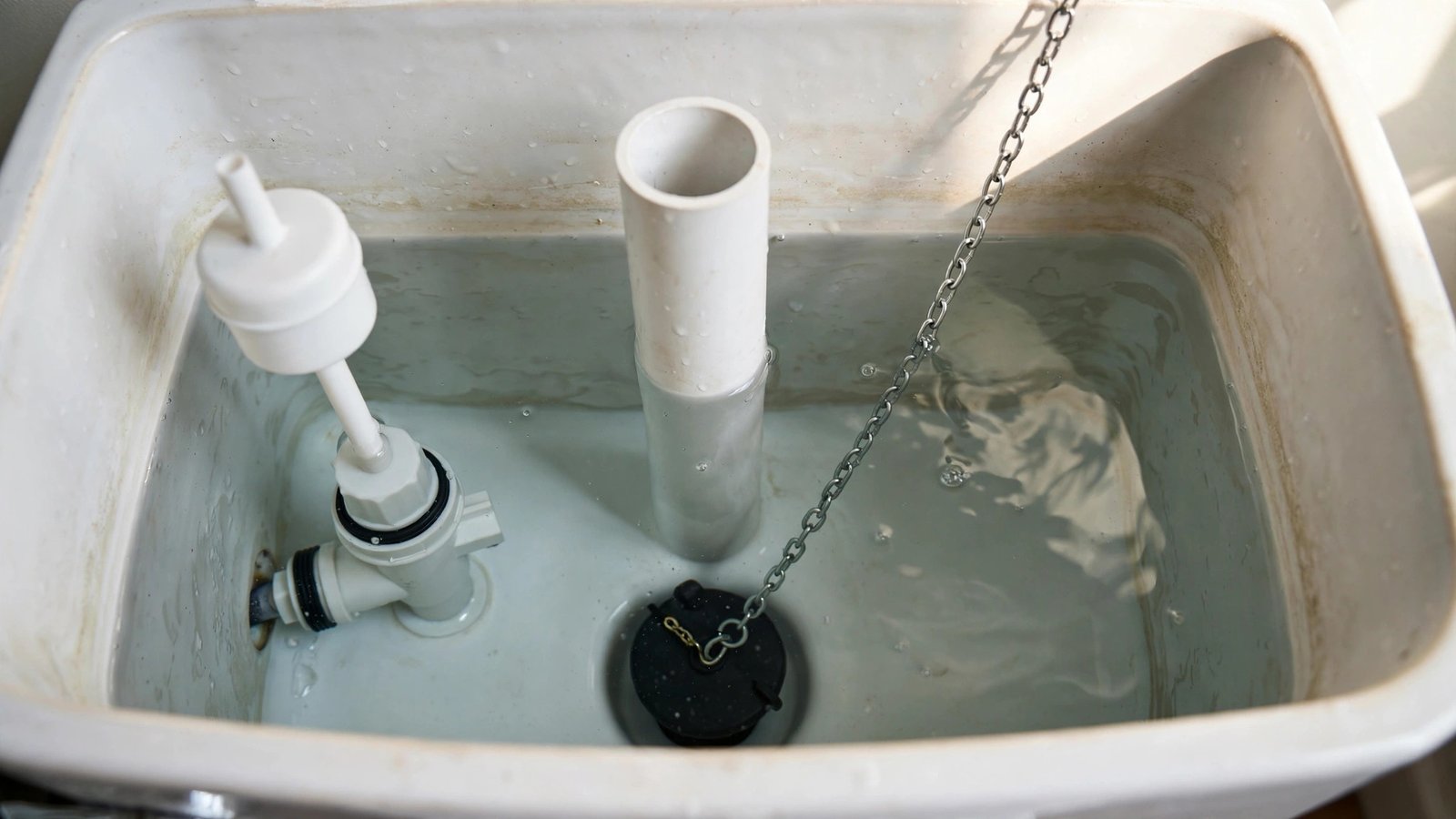
A toilet that runs constantly — that endless hissing from the tank — is almost always a failed flapper. The flapper is the rubber seal at the bottom of the tank that lifts when you flush and settles back to hold water in. After 3 to 5 years, chlorine and minerals make it warp, crack, or go soft, and water leaks silently into the bowl around the clock. A running toilet wastes up to 200 gallons a day — and the fix is a $5 part, no tools beyond your hands, and genuinely under 10 minutes. This is the easiest plumbing repair in your home. Here is the whole thing.
Confirm the Flapper Is the Problem (1 Minute)
Before buying parts, verify the diagnosis with the food-coloring test: put a few drops of food coloring (or a dye tablet) in the tank water, wait 15 minutes without flushing, then check the bowl. Colored water in the bowl means tank water is leaking past the flapper — confirmed. While you are looking, check two flapper mimics: the water level (if it is above the overflow tube, water drains constantly — lower the float instead) and the fill valve (if water runs continuously into the overflow tube, the fill valve needs adjusting or replacing, a separate $12 repair). But nine times out of ten, the dye test points at the flapper. Also note your flapper’s type while you are in there: most are the standard 2-inch rubber flappers with side ears that hook onto the overflow tube pegs, but some newer toilets use 3-inch flappers or tower-style flush valves — snap a phone photo so you buy the right replacement. The EPA’s WaterSense program notes that a running toilet is among the largest residential water wasters, making this tiny repair disproportionately valuable.
Buy the Right Flapper ($3–$8, 5 Minutes at the Store)
Take your photo to the hardware store’s plumbing aisle. Match three things: size (2-inch is standard; measure the flush valve opening if unsure — 3-inch valves need 3-inch flappers), attachment style (side ears that hook onto pegs vs. a ring that slides over the overflow tube), and brand compatibility (universal flappers work on most toilets, but Kohler and some American Standard models need brand-specific parts). The Korky and Fluidmaster universal flappers ($5 to $8) fit the vast majority of toilets and even let you adjust flush volume with a dial — a nice water-saving bonus. While you are there, consider grabbing a fill valve too ($12) if yours is old — they fail on a similar timeline, and replacing both at once means not reopening the tank for years. Total parts cost for the full refresh: under $20.
The 10-Minute Replacement
Turn off the water supply valve behind the toilet (clockwise), then flush to empty the tank — hold the handle down to drain as much as possible, and sponge out the last inch of water (or skip the sponging; a little water will not hurt). Unhook the old flapper: detach the chain from the flush lever, then slide the flapper’s ears off the overflow tube pegs (or slide the ring up and off). It will likely feel slimy and degraded — that is the failure you are fixing. Install the new flapper in reverse: ears onto pegs, chain to the lever. The critical adjustment is chain slack: with the flapper seated, the chain should have about half an inch of slack — too tight and the flapper cannot seal (toilet runs); too loose and the chain tangles under the flapper (toilet runs). Most new flappers have an adjustable chain hook; set it so the flapper lifts fully on flush and seats flat afterward. Turn the water back on, let the tank fill, and flush twice to verify: full flush, clean seal, silence. The Family Handyman’s toilet repair guides have close-up photos of the chain adjustment if you want a visual check.
Troubleshooting: When the New Flapper Does Not Fix It
If the toilet still runs after a correct flapper replacement, work this list: the flush valve seat (the rim the flapper seals against) may be rough, pitted, or mineral-crusted — feel it with your finger; if it is not smooth, sand it gently with fine emery cloth or replace the seat (some are replaceable rings, others require a flush valve replacement, $15 part, 30-minute job). The chain may be catching — watch a full flush cycle with the tank lid off. The water level may be set too high — adjust the float so water sits about an inch below the overflow tube top. Or the fill valve itself is failing — if water continuously trickles into the overflow tube, replace the fill valve. In rare cases the overflow tube is cracked (water leaks through the crack below the flapper line) — that requires flush valve replacement. Work the list in order; the vast majority resolve at the seat or chain step.
A constantly running toilet is almost always a worn $5 flapper. Confirm with the food-coloring test, buy the matching size and style, swap it in 10 minutes (water off, old flapper off, new flapper on), and set the chain with half an inch of slack. If it still runs, check the valve seat smoothness and the water level next.
Conclusion
Replacing a broken toilet flapper is the definitive 10-minute home repair: a $5 part, no special tools, and an instant end to the running-water symphony — plus up to 200 gallons a day in water savings. Diagnose with the dye test, match the part, mind the chain slack, and troubleshoot the valve seat if needed. It is the repair that makes first-time DIYers realize how much of homeownership is just this simple. For more quick plumbing wins, browse our home improvement section, meet the team, or send us your questions.
Frequently Asked Questions
How do I know if my toilet flapper is bad?
The food-coloring test: dye the tank water, wait 15 minutes without flushing — color in the bowl confirms a flapper leak. Physical signs include a flapper that feels soft, warped, or slimy, and a toilet that runs constantly or “phantom flushes” (brief refills on its own).
Are toilet flappers universal?
Mostly — universal 2-inch flappers fit the majority of toilets. But size (2″ vs 3″), attachment style (ears vs. ring), and some brand-specific designs (certain Kohler and American Standard models) matter. Bring a photo or the old flapper to match exactly.
How much water does a running toilet waste?
Up to 200 gallons per day for a fully running toilet — that is 6,000 gallons a month, enough to double many households’ water bills. Even a slow flapper leak (“phantom flushing”) wastes hundreds of gallons monthly.
How tight should the flapper chain be?
About half an inch of slack when the flapper is seated. Too tight prevents sealing (constant running); too loose lets the chain tangle under the flapper (also constant running). Most replacement flappers have an adjustable hook for fine-tuning.
Should I replace the fill valve at the same time?
If it is the same age as the flapper (3–5+ years), yes — the $12 part takes 15 extra minutes and prevents reopening the tank soon. Signs of fill valve failure: water continuously trickling into the overflow tube, slow tank refills, or hissing that persists after flapper replacement.
Leave a Reply