
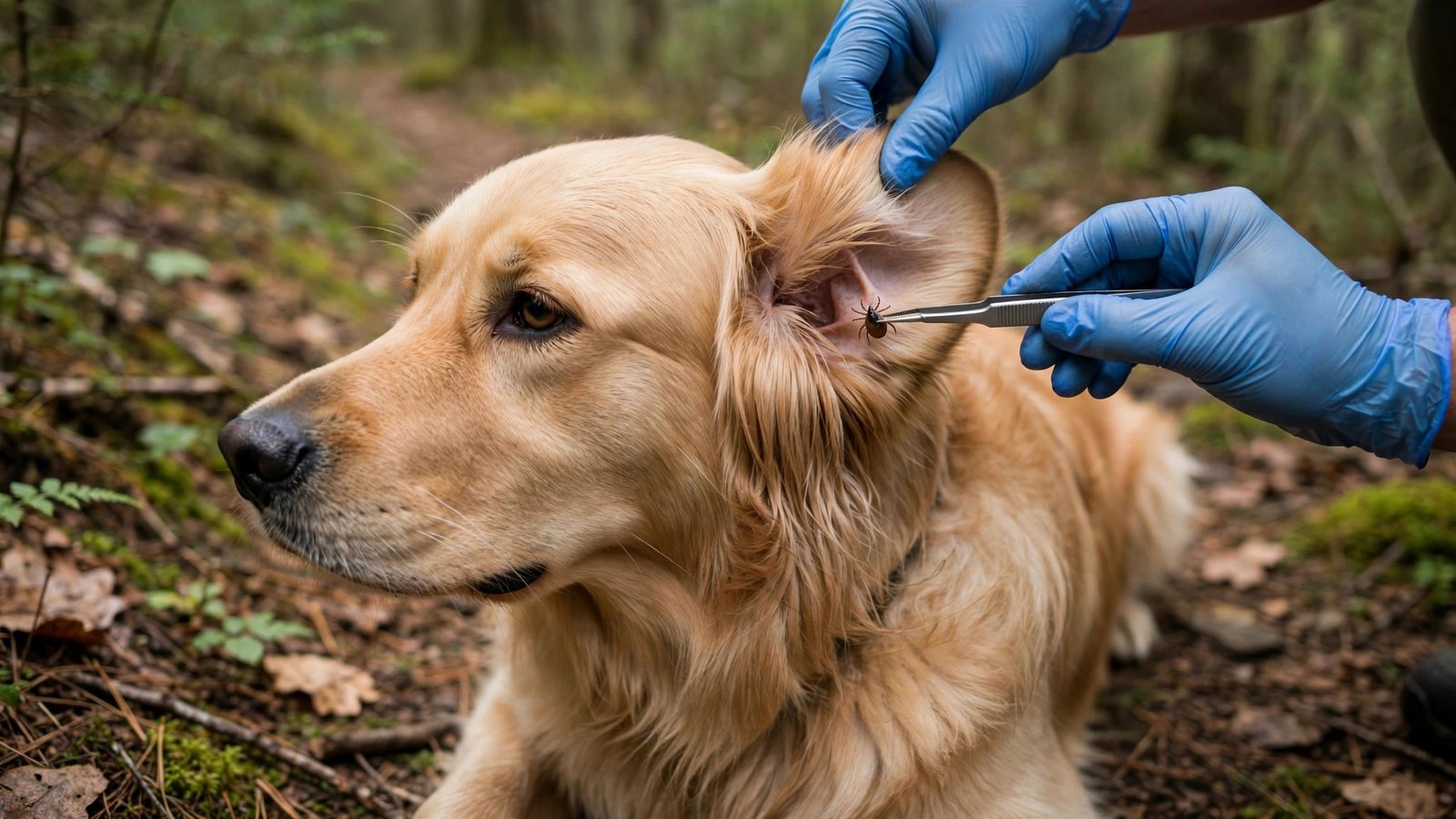
You get home from a great hike, your dog is happily exhausted, and then you spot it: a small dark bump on the inside of your dog’s ear that was not there this morning. A tick. Your first instinct might be to grab it with your fingers and yank — do not. Ticks removed the wrong way can leave mouthparts embedded, squeeze bacteria into the bite, or stress a dog into snapping. Removing a tick from a dog’s ear is straightforward and safe if you do it methodically, and the ear location adds a few specific considerations worth knowing before you start.
Before You Touch the Tick: What to Gather
You need four things: fine-tipped tweezers (not the blunt household kind — pointed precision tweezers grip the tick’s head without crushing its body), disposable gloves, rubbing alcohol or an antiseptic wipe, and a small sealed container or jar with a bit of rubbing alcohol in it for the tick. If you do not have fine-tipped tweezers, a purpose-made tick removal tool works well and costs a few dollars at any pet store; keep one in your hiking kit going forward.
Set yourself up in good light — the ear is shadowed, and you need to see exactly what you are gripping. Have a helper hold and calm your dog if possible; ear work makes many dogs head-shy, and a second pair of hands prevents sudden head shakes at the worst moment. Offer a high-value treat or a lick mat with peanut butter to keep your dog still and associate the process with good things. If your dog is in pain, snapping, or will not let you near the ear, stop and call your vet — a struggling dog plus tweezers near the ear canal is a bad combination.
Step-by-Step: Removing the Tick from the Ear
First, part the fur and get a clear look. Ticks on the ear are usually on the inner flap (the pinna) or around the base of the ear — if it is deep inside the ear canal where you cannot see the attachment point clearly, do not dig for it; that is a vet visit. Put on your gloves. With the fine-tipped tweezers, grasp the tick as close to your dog’s skin as possible — you want the head and mouthparts, not the swollen body. This is the most important part of the entire process.
Pull straight outward with steady, even pressure. Do not twist, jerk, or yank — twisting can break off the mouthparts, and jerking startles the dog. Drop the tick into your jar of rubbing alcohol, which kills it and preserves it for identification if your dog develops symptoms later. Then clean the bite area on the ear with rubbing alcohol or an antiseptic wipe, and wash your hands thoroughly even though you wore gloves.
What not to do matters as much as what to do. Never burn the tick with a match, smother it with nail polish or petroleum jelly, or crush it with your fingers — all the folk remedies either fail or increase the risk of the tick regurgitating bacteria into the bite. The CDC’s tick removal guidance is explicit: fine-tipped tweezers, steady pull, clean the area. No shortcuts.
Ear-Specific Concerns Worth Knowing
The ear flap has thin skin with a rich blood supply, which is exactly why ticks love it — but it also means the area bleeds more freely than you might expect and can bruise. A little bleeding after removal is normal; apply gentle pressure with clean gauze for a minute or two. The ear is also sensitive, so expect your dog to flinch — work calmly and quickly, and keep sessions short. If the tick was attached for a long time, the ear tissue around it may be red and swollen for a day or two; watch that it improves rather than worsens.
Ticks on the ear can sometimes trigger a small local reaction that looks alarming — a firm little lump at the bite site that persists for a week or more. This is usually a granuloma, a harmless inflammatory response to leftover tick saliva, and it typically resolves on its own. But a lump that grows, oozes, or is hot to the touch needs a vet’s eyes. Also note: the same hike that put one tick on your dog’s ear probably put others elsewhere. Do a full-body check after every hike — between the toes, under the collar, in the armpits and groin, and around the tail base are the classic hiding spots.
After Removal: What to Watch For Over the Next Weeks
Most tick bites cause nothing more than brief local irritation. But ticks can transmit serious diseases — Lyme disease, ehrlichiosis, anaplasmosis, and Rocky Mountain spotted fever among them — and symptoms can take days to weeks to appear. Watch for lethargy, loss of appetite, fever, shifting leg lameness, swollen joints, or unusual bleeding. Lyme disease in particular can show up as intermittent limping that moves from leg to leg. The American Veterinary Medical Association’s tick disease resources describe the warning signs in detail.
Save the tick in its alcohol jar, labeled with the date and where you were hiking, for at least a month. If your dog gets sick, the vet can identify the species, which narrows down which diseases to test for — different ticks carry different pathogens, and knowing the species genuinely helps. Your vet may recommend a tick-borne disease blood test four to six weeks after the bite, since antibodies take time to develop; a test done the day after the bite will miss an infection. This is also the moment to ask about the Lyme vaccine if you hike in tick-heavy areas regularly.
Preventing the Next One: Post-Hike Tick Strategy
Removal is damage control; prevention is the real game. Talk to your vet about a tick preventive that fits your region and hiking habits — options include monthly oral chews, topical treatments, and tick collars, each with different coverage and considerations. No product is 100 percent, which is why the post-hike routine matters: check your dog within a couple of hours of getting home, because ticks that have not attached yet are easy to brush off, and attached ticks transmit more disease the longer they feed.
Remove an ear tick with fine-tipped tweezers, gripping as close to the skin as possible and pulling straight out with steady pressure — no twisting, burning, or folk remedies. Save the tick in rubbing alcohol labeled with the date, watch your dog for lethargy or limping over the next few weeks, and set up a vet-approved tick preventive plus a post-hike check routine.
Conclusion
Finding a tick on your dog’s ear after a hike is unsettling, but it is a solvable problem, not an emergency — as long as you remove it correctly. Fine-tipped tweezers, a steady straight pull, antiseptic cleanup, and saving the tick for identification cover the immediate job. The longer game is monitoring for symptoms over the following weeks and building a prevention routine with your vet so the next hike ends with just tired legs and a happy dog. Quick, calm, methodical — that is the whole technique. For more pet health guidance, browse our health section, learn about our editorial standards, or tell us your own post-hike tick stories.
Frequently Asked Questions
What if the tick’s head breaks off in my dog’s ear?
Try once more with the tweezers to grasp the remaining mouthparts. If you cannot get them, do not dig — clean the area and let the skin heal; the body usually expels small fragments on its own. See your vet if redness, swelling, or discharge develops, which can signal infection.
Should I twist the tick when pulling it out?
No. Pull straight outward with steady, even pressure. Twisting can snap off the mouthparts and leave them embedded in the skin, and jerking risks startling your dog into a sudden head movement. Constant gentle tension releases the tick’s grip within seconds.
How long does a tick need to be attached to transmit disease?
It varies by pathogen, but for Lyme disease the tick generally needs to feed for 36 to 48 hours before transmission becomes likely. That is why prompt removal matters so much — a tick found and removed the same day as the hike is far less risky than one discovered days later.
My dog will not let me near its ear. What should I do?
Do not force it. A stressed, snapping dog plus tweezers near the ear canal risks injury to both of you. Call your vet — they remove ticks routinely, can sedate lightly if needed, and can check for additional ticks and discuss preventive treatment in the same visit.
Is a lump at the bite site normal after tick removal?
A small firm lump that appears in the days after removal is often a harmless granuloma — an inflammatory reaction to tick saliva — and it usually fades within a week or two. See your vet if the lump grows, feels hot, oozes, or your dog shows signs of illness.
When should my dog get a tick-borne disease test after a bite?
Wait four to six weeks after the bite, since antibodies take time to develop — testing immediately after removal will miss a new infection. Save the tick with the date and location so your vet can identify the species and know which diseases to screen for.
Leave a Reply