
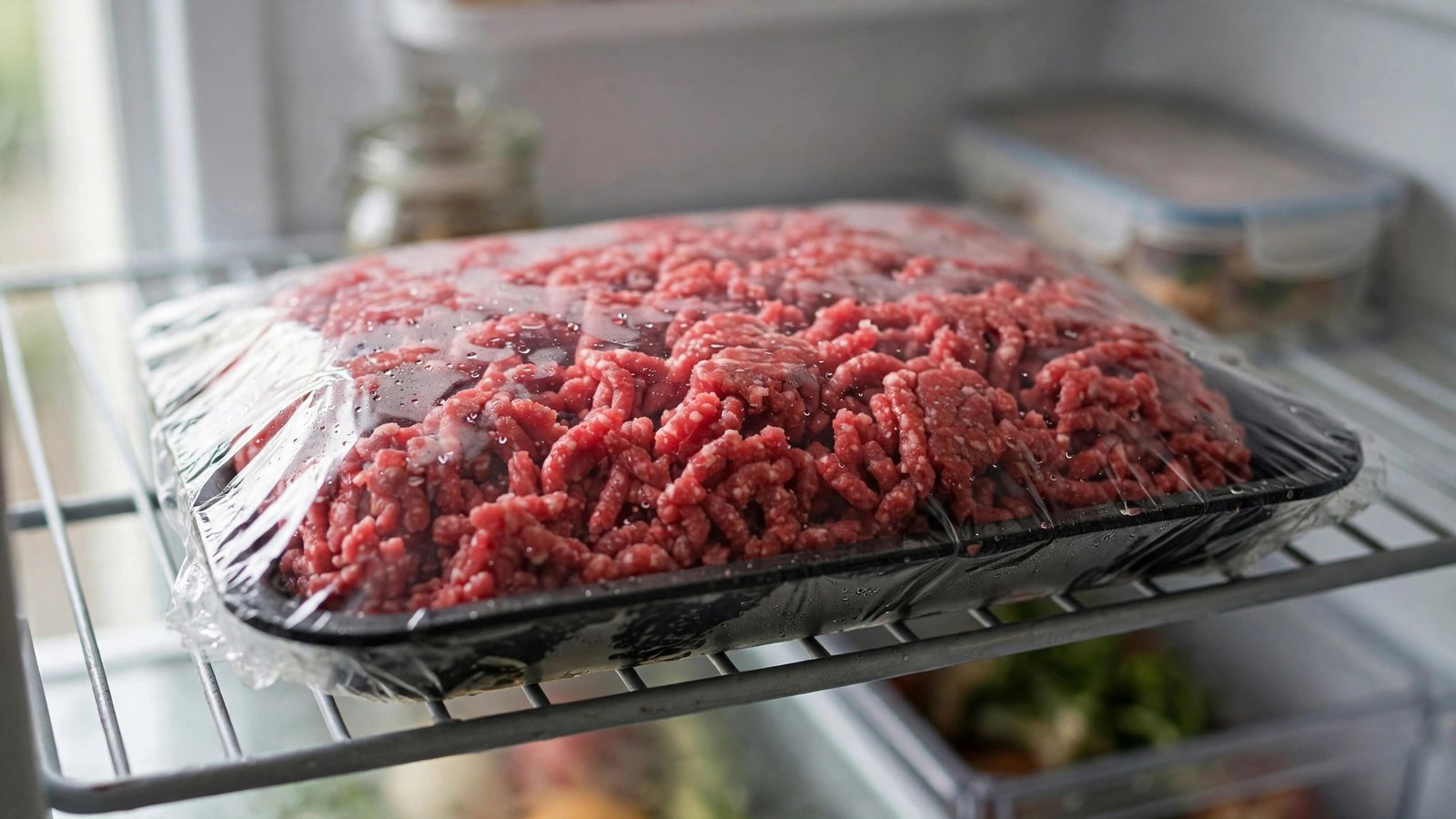
Standing in front of the fridge, holding a package of ground beef you bought a few days ago, and wondering whether it is still safe — that moment of doubt is one every home cook knows. Food poisoning from bad beef is no joke: the CDC estimates millions of Americans get sick from contaminated food each year, and ground meat is one of the riskier items because grinding spreads bacteria through the entire batch. The good news is that your senses — especially your nose — are remarkably reliable spoilage detectors. Here is exactly how to tell if ground beef has gone bad, in the order you should check.
The Smell Test Is Your Most Reliable Tool
Fresh ground beef has a very mild, almost neutral smell — slightly metallic, like iron, and nothing more. Spoiled ground beef smells unmistakably wrong: sour, rotten, or like ammonia or sulfur. If you open the package and the odor hits you immediately, or even if a faint sour note lingers after the first whiff, do not taste it and do not try to “cook it out.” That sour smell comes from bacteria breaking down the meat, and while cooking kills many bacteria, some produce heat-stable toxins that survive high temperatures. Trust your nose here — it evolved for exactly this job. A package that smells off belongs in the trash, not in the skillet.
What Color Changes Actually Mean
Color confuses more people than any other spoilage sign, so let us clear it up. Fresh ground beef is bright cherry red on the outside, but the inside of the package is often grayish-brown — and that is completely normal. The red color comes from myoglobin reacting with oxygen; where oxygen cannot reach, like the center of a tightly packed tray, the meat stays darker. That brown patch in the middle is not spoilage.
What actually matters is gray or brown color spreading across the entire surface, especially when combined with other signs. If the whole package has turned an even grayish-brown and the meat looks dull and lifeless rather than vibrant, the meat is oxidizing and aging — possibly still okay if it just happened and the smell and texture check out, but use it today or discard it. If you see green, blue, or iridescent patches, or any visible mold, the decision is made for you: throw it out. Green discoloration means bacterial activity has gone far past the point of safety.
The Texture Check: Slimy Means Spoiled
Fresh ground beef feels slightly moist but not sticky. Spoiled ground beef develops a slimy, tacky film on the surface — a bacterial biofilm that you can feel before you can always see it. Wash your hands, press a finger into the meat, and pull away. If your finger feels coated with a slick, mucous-like residue that washes off only with soap, the meat has turned. Fresh meat may leave a little moisture on your fingers, but it should rinse away easily and never feel gluey. Texture alone can condemn a package even when the smell seems borderline, so do not skip this step.
Date Labels: What “Sell By” and “Use By” Really Mean
The dates on meat packaging cause a lot of unnecessary waste — and occasionally, false confidence. In the United States, “sell by” dates are set for the store, not for you: they tell the retailer when to pull the package from the shelf. Ground beef is typically good for one to two days past the sell-by date if it has been kept at or below 40°F the whole time. A “use by” date is the manufacturer’s estimate of peak quality and safety, and for ground beef you should respect it more closely — but even then, the sniff and texture tests are the final word.
The USDA’s beef safety guidance is explicit: ground beef should be refrigerated and used within one to two days of purchase, regardless of what the label says. If you are not sure how long a package has been sitting in your fridge, err on the side of caution. The FoodSafety.gov FoodKeeper guidelines back this up with specific storage timelines for every common meat.
How Long Ground Beef Actually Lasts in the Fridge
Here are the numbers worth memorizing. Raw ground beef: one to two days in the refrigerator at 40°F or below. Cooked ground beef: three to four days. Frozen ground beef: three to four months at peak quality, and safe indefinitely as long as it stays at 0°F — though texture declines over time. These timelines assume your fridge is actually cold enough; many home refrigerators run warmer than the dial suggests, especially older ones or ones that get opened constantly. A cheap fridge thermometer is one of the best ten-dollar food safety investments you can make. If your fridge has been above 40°F for more than two hours — after a power outage, for example — perishables including ground beef should be discarded, because bacteria double roughly every twenty minutes in the “danger zone” between 40°F and 140°F.
How to Store Ground Beef So It Lasts Longer
If you want your ground beef to make it safely to the full two days, storage matters. Keep it in the coldest part of the fridge — usually the back of the bottom shelf, not the door, where temperatures swing with every opening. Leave it in its original sealed packaging until you are ready to use it; if the package is torn, transfer it to an airtight container or wrap it tightly in plastic wrap to slow oxidation. Never leave ground beef on the counter to thaw — thaw it in the fridge overnight, in cold water changed every thirty minutes, or in the microwave followed by immediate cooking. And once you have cooked it, get leftovers into the fridge within two hours, or one hour if the kitchen is above 90°F in summer.
What to Do If You Are Not Sure
When in doubt, throw it out. This sounds wasteful, and it stings when a three-dollar package of beef goes in the trash — but a single bout of food poisoning costs far more in misery, missed work, and potential medical bills. The bacteria that make ground beef dangerous — E. coli O157:H7, Salmonella, Listeria — do not always produce obvious smell or appearance changes early on, which is exactly why the one-to-two-day rule exists as a backstop for your senses. If the beef passes the smell, color, and texture tests and is within the safe window, cook it thoroughly to 160°F internal temperature, verified with a food thermometer. That temperature kills the pathogens that matter. If any single test fails, do not negotiate with it — discard the meat, wash your hands, and sanitize anything the package touched.
Smell is the strongest spoilage signal, color is the most misunderstood (brown inside the package is normal), and slime is an automatic no. Combined with the one-to-two-day rule, those three checks will keep you safe every time.
Conclusion
Knowing how to tell if ground beef has gone bad comes down to three senses and one rule: it should smell mild, look reasonably red on the surface, feel moist but not slimy, and be used within one to two days of purchase. Respect the 40°F threshold, store it in the coldest part of the fridge, and never try to salvage meat that smells sour or feels tacky — cooking cannot fix what bacteria have already done. For more practical kitchen and food safety know-how, explore our food guides, learn about our team, or send us your food safety questions — we answer them all.
Frequently Asked Questions
Can I cook ground beef that smells slightly sour to make it safe?
No. While thorough cooking to 160°F kills most bacteria, some bacteria produce heat-stable toxins that survive cooking. A sour or off smell means bacterial breakdown has already happened — discarding it is the only safe choice.
Is brown ground beef in the middle of the package safe to eat?
Yes, this is normal. The red color comes from myoglobin reacting with oxygen, so the oxygen-starved center of a packed tray stays grayish-brown. Judge the whole package by smell, surface color, and texture instead.
How long can ground beef sit in the fridge past the sell-by date?
About one to two days past the sell-by date if it was kept at or below 40°F continuously. The sell-by date is for the store, but ground beef is highly perishable, so do not push it further — use the smell and texture tests to confirm.
What temperature should my fridge be for storing ground beef?
At or below 40°F. Between 40°F and 140°F, bacteria can double every 20 minutes. Use a fridge thermometer to verify, since many refrigerators run warmer than the dial suggests.
Can I freeze ground beef that is about to go bad?
Freezing stops bacterial growth but does not reverse spoilage. If the beef still passes the smell, color, and texture tests, freeze it for later — but if it already smells off or feels slimy, freezing will not make it safe. Discard it.
Leave a Reply