
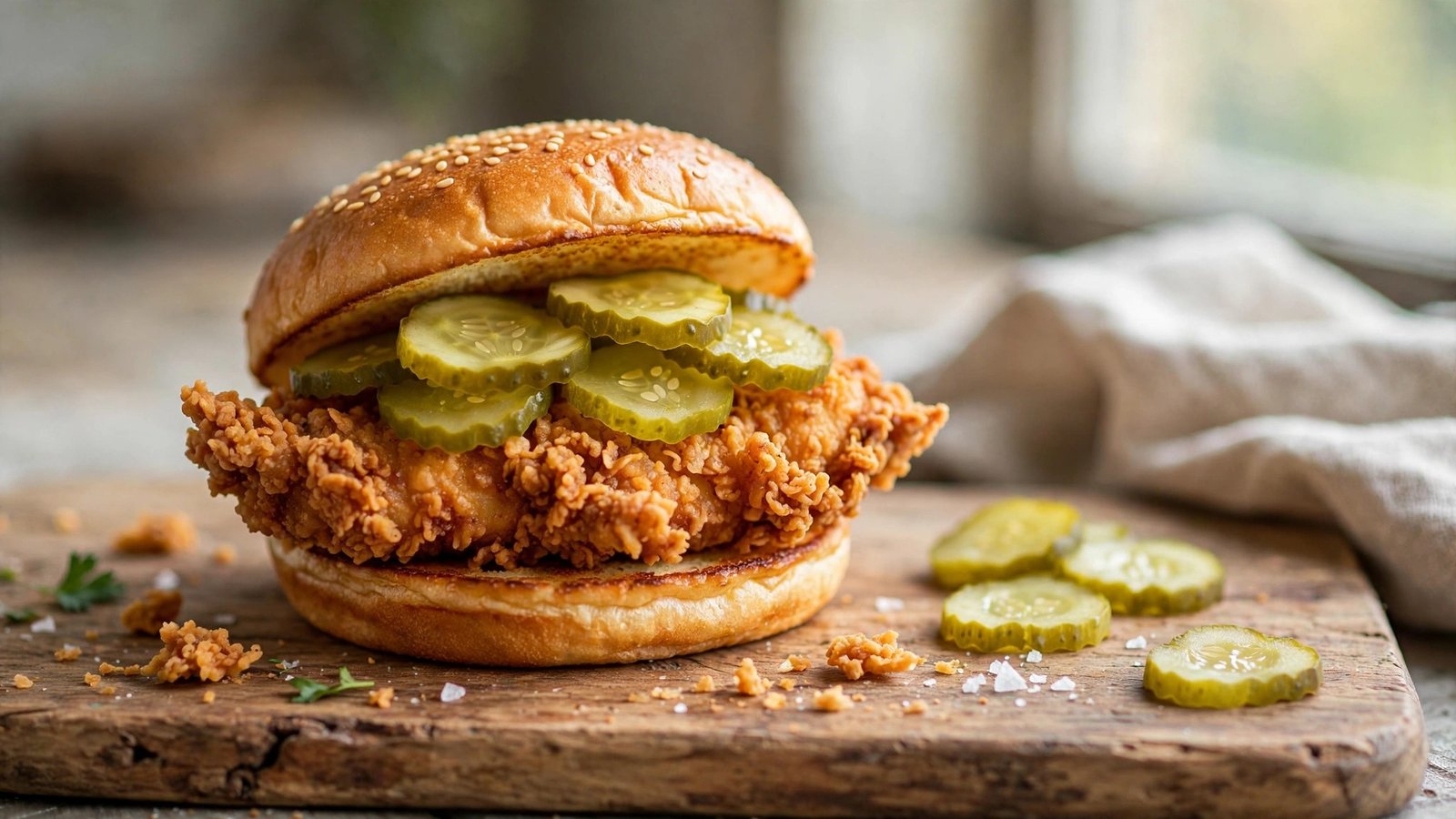
Every Sunday, Chick-fil-A’s closed doors launch a thousand cravings — and a thousand home attempts at that shatteringly crisp, juicy, pickle-kissed chicken sandwich. The good news is that the sandwich is reverse-engineerable: its magic comes down to four things anyone can replicate, a pickle-juice brine, a seasoned flour dredge, a quick double-coating, and a hot peanut-oil fry. Nail those four and your homemade version will stand shoulder to shoulder with the drive-thru original. Here is the full method, with the details that separate a good copycat from a great one.
The Pickle Brine: The Non-Negotiable First Step
The signature tang in every bite starts long before the fryer. Submerge your chicken breasts in dill pickle juice — straight from the jar — for at least four hours, or overnight in the refrigerator. The acidic brine does two things: it seasons the meat all the way through, and it begins to tenderize the protein so the finished chicken stays juicy. Use thin-cut chicken breasts or pound thicker ones to an even half-inch thickness so they cook through quickly without drying out; uneven breasts are the top reason homemade versions come out dry in the middle or raw near the bone-side. If you are out of pickle juice, a brine of water, salt, sugar, and a splash of vinegar works, but real pickle juice is the authentic flavor — save the juice from every pickle jar from now on.
The Egg Wash With a Secret
After brining, pat the chicken dry and dip it in an egg wash — one beaten egg thinned with a tablespoon or two of milk. Here is the detail most copycat recipes miss: whisk a splash of the pickle juice into the egg wash too. It reinforces that background tang and helps the breading cling. Some dedicated copycats also add a teaspoon of the dry seasoning mix to the egg wash, which layers flavor into the coating rather than leaving it all in the outer crust. Let the excess drip off for a few seconds; a thick, gloppy egg layer makes the breading slide off in the fryer.
The Seasoned Flour Dredge
The breading is seasoned flour, and the seasoning blend is where you tune the flavor. Start with all-purpose flour and add paprika (for color and warmth), garlic powder, onion powder, salt, black pepper, and a pinch of cayenne for background heat. The much-discussed “secret” ingredient in many copycat circles is a small amount of powdered sugar — it aids browning and adds the faint sweetness people detect in the original. Dredge each brined, egg-washed breast thoroughly, pressing the flour on firmly, then — and this is the crunch multiplier — dip it back in the egg wash and dredge a second time. That double coating builds the craggy, extra-crispy crust. Let the coated chicken rest on a rack for ten to fifteen minutes before frying; the resting step hydrates the flour so the coating adheres instead of falling off in the oil.
The Fry: Peanut Oil at the Right Temperature
Chick-fil-A famously cooks in peanut oil, and it matters: peanut oil has a high smoke point and a clean, neutral flavor that lets the chicken shine. Heat about an inch and a half of peanut oil in a heavy skillet or Dutch oven to 350°F — use a thermometer, because temperature is everything here. Too cool and the coating absorbs oil and turns greasy; too hot and the crust burns before the interior cooks. Fry the breasts for three to four minutes per side until deeply golden and the internal temperature hits 165°F. Do not crowd the pan — frying more than two breasts at once drops the oil temperature and steams the coating instead of crisping it. Drain on a wire rack set over a sheet pan, not on paper towels, which trap steam and soften the crust you just built.
The Assembly: Simplicity Is the Point
The original sandwich is almost aggressively simple: a toasted, buttered bun, two dill pickle chips, and the chicken breast. That is it — no lettuce, no tomato, no sauce. Toast the buns in butter until golden, which adds richness and a barrier against sogginess. Use crinkle-cut dill pickle chips for authenticity, placed directly on the bottom bun so their brine kisses the chicken. If you want the spicy version, add cayenne and a touch of extra paprika to the dredge rather than adding hot sauce — the heat should live in the crust. Serve immediately; a fried chicken sandwich waits for no one, and the crust is at its peak in the first ten minutes out of the oil. Serious Eats’ fried chicken sandwich method validates the double-dredge and resting technique for maximum crunch.
Make-Ahead and Reheating Tips
Brine the chicken up to 24 hours ahead — longer than that and the acid starts to make the texture mushy. You can also bread the chicken, rest it, and refrigerate the coated breasts on a rack for a few hours before frying; some cooks swear the chilled coating fries up even crispier. Leftovers reheat best in a 400°F oven or air fryer for eight to ten minutes, which re-crisps the coating — the microwave turns it rubbery and should be avoided. Cooked chicken keeps three to four days refrigerated, per FoodSafety.gov storage guidelines, and the brined raw chicken should be cooked within two days.
The copycat formula is four steps: pickle-juice brine for tang and juiciness, seasoned double-dredge flour for the craggy crust, peanut oil at 350°F for the fry, and a buttered bun with pickle chips for assembly. Rest the coating before frying and drain on a rack, not paper towels.
Conclusion
A great copycat Chick-fil-A sandwich is not about one secret ingredient — it is about executing four simple steps well. Brine in pickle juice, double-dredge in seasoned flour with a rest, fry in 350°F peanut oil to 165°F internal, and assemble on a buttered toasted bun with dill pickle chips. Master that sequence and Sundays will never feel like a deprivation again. For more restaurant copycats and kitchen guides, explore our food section, meet the team, or send us your recipe requests.
Frequently Asked Questions
How long should I brine chicken in pickle juice?
At least 4 hours, ideally overnight (8–12 hours), refrigerated. Do not go past 24 hours — the acid will start breaking down the meat’s texture and turn it mushy instead of juicy.
Can I use an air fryer instead of deep frying?
You can, but the crust will not be identical. Spray the breaded chicken generously with oil and air fry at 400°F for about 12–15 minutes, flipping halfway. The coating crisps well but lacks the deep, even crunch of a true peanut-oil fry.
What oil is best for frying the copycat sandwich?
Peanut oil, matching the original — high smoke point, neutral flavor. If peanut allergies are a concern, refined canola or vegetable oil works; avoid olive oil, whose low smoke point and strong flavor do not suit this fry.
Why does my breading fall off in the fryer?
Three usual causes: the chicken was too wet going into the flour, you skipped the 10–15 minute resting step that hydrates the coating, or the oil was not hot enough (below 325°F), which steams the crust loose instead of setting it fast.
Can I make the spicy version at home?
Yes — add extra cayenne pepper and paprika to the flour dredge so the heat lives in the crust, the way the original does. Start with a teaspoon of cayenne per cup of flour and adjust to your heat tolerance.
Leave a Reply