
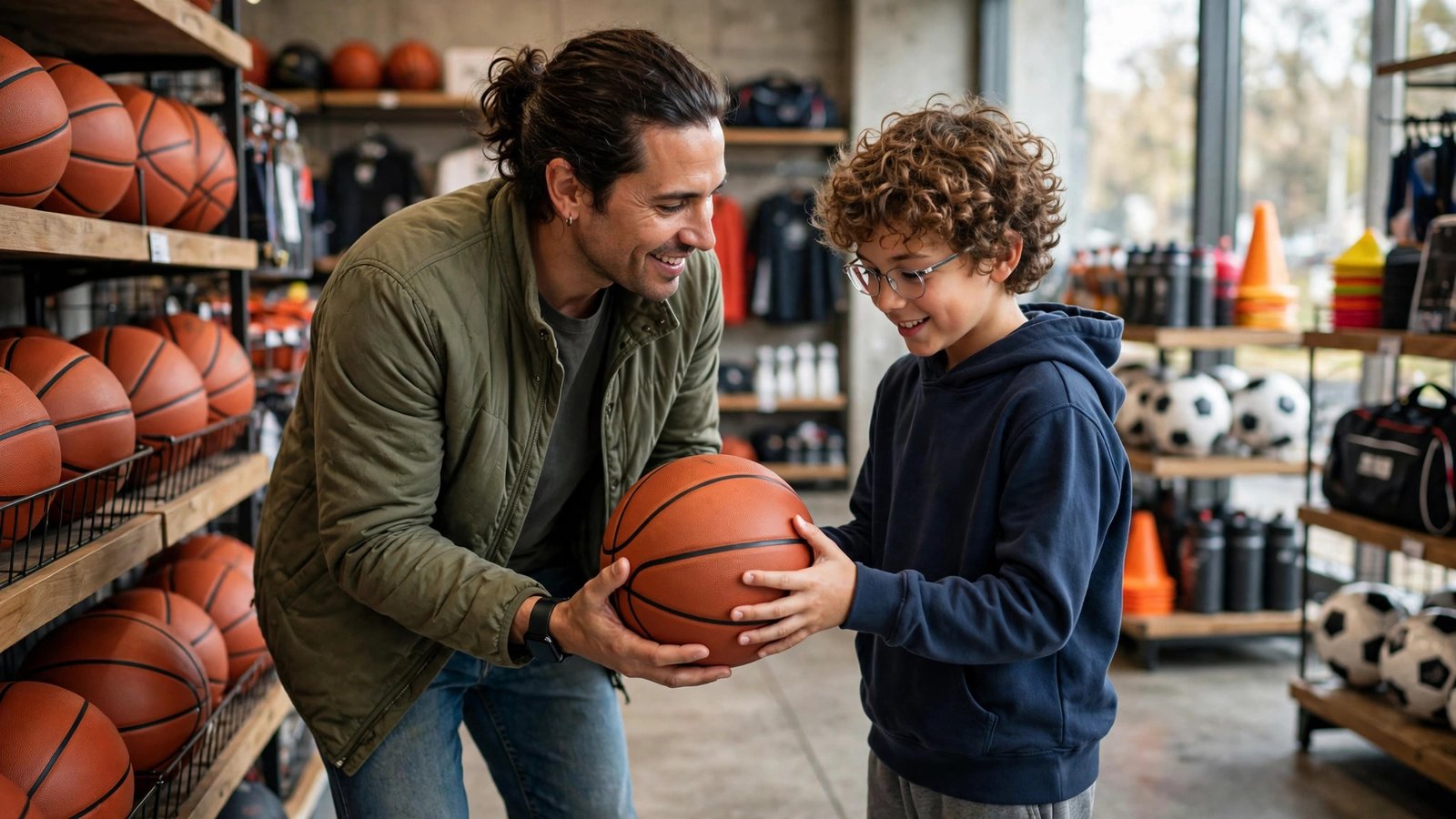
Buy the wrong size basketball for your 10-year-old and you’ll watch them struggle: heaving a too-big ball with two hands, developing bad shooting form that takes years to fix. Buy the right size and everything clicks — proper shooting mechanics, better ball handling, more confidence, more fun. The good news: youth basketball sizing is standardized, the right answer for a 10-year-old is clear, and it costs the same as the wrong answer. Here’s how to get it right the first time.
The Youth Basketball Size Chart
Basketballs come in numbered sizes, and each maps to an age range. Size 7 (29.5-inch circumference) is the official men’s ball — too big for a 10-year-old. Size 6 (28.5 inches) is the intermediate or youth ball, standard for boys ages 9–11 and for girls ages 12 and up (it’s also the official women’s game ball). Size 5 (27.5 inches) is the junior ball, typically for ages 9 and under. Size 4 and 3 are for very young beginners.
For a 10-year-old, size 6 (28.5″) is the answer in the vast majority of cases — it’s what youth leagues use for this age group, and it’s the ball your child’s coaches expect them to practice with. The USA Basketball youth development guidelines standardize these sizes across affiliated leagues precisely so kids develop proper mechanics at each stage. If your 10-year-old is notably small for their age and struggling with a size 6, a size 5 is an acceptable bridge — but treat it as temporary, since leagues will use size 6 in games.
Why the Right Size Matters for Development
This isn’t about comfort — it’s about mechanics that become permanent. A ball that’s too big forces young players to shoot with two hands pushing from the chest instead of the proper one-hand release with guide hand, to dribble with slapping palms instead of fingertips, and to muscle passes instead of snapping them. These compensations harden into habits that coaches spend years undoing. The right-size ball lets a 10-year-old reach proper shooting range with correct form, handle the ball with control, and build strength gradually instead of straining.
There’s a confidence dimension too. Kids who can actually shoot, dribble, and pass with their ball practice more, enjoy it more, and stick with the sport. A child constantly short-arming shots with an adult ball concludes they’re “bad at basketball” when the equipment is the problem. Youth sports research consistently shows that appropriately sized equipment is one of the biggest factors in whether kids stay in a sport past the first season.
Indoor vs. Outdoor: Pick the Right Cover
Size is the first decision; cover material is the second. Indoor basketballs use composite leather or genuine leather — softer, grippier, better for gym floors, but they wear out fast on concrete. Outdoor balls use rubber or durable composite built to survive asphalt. If your 10-year-old plays mostly on the driveway, buy an outdoor or indoor/outdoor ball; if it’s mostly gym and league play, an indoor composite ball performs better.
For most families, an indoor/outdoor composite size 6 is the practical sweet spot — good grip in the gym, durable enough for the driveway, and reasonably priced ($20–$40 for quality youth balls from major brands). Avoid the cheapest rubber balls if your child plays in a league: they’re bouncy and slick, and the feel difference versus game balls is large enough to matter. And skip genuine leather for a 10-year-old — it’s for serious competitive play and needs breaking in.
Fit Check: The Hands-On Test
Before buying, do the 30-second fit test with your child. Have them hold the ball with one hand, fingers spread — they should be able to palm-grip it reasonably (not necessarily palm it like an NBA player, but control it). Have them shoot a few free throws: with the right size, they can reach the rim with proper form from the free-throw line (youth leagues often use lower rims or closer lines for this age). Have them dribble: fingertips, controlled bounce, no chasing.
Red flags for too big: two-handed chest-push shots, inability to dribble without looking down constantly, complaints about wrist or finger pain. Red flags for too small: the ball looks toy-like, they dominate handling drills suspiciously easily versus game balls. When in doubt between sizes at age 10, choose the 6 — it’s the league standard, and mild challenge builds more skill than an undersized ball. Check your specific league’s rules, since some rec leagues have their own sizing requirements by division.
Care, Inflation, and When to Size Up
Keep the ball properly inflated — the recommended PSI is printed near the valve (usually 7.5–8.5 PSI for youth balls). An underinflated ball plays dead and teaches bad touch; overinflated, it’s uncontrollable. A $10 pump with a needle is a worthwhile accessory. Store it indoors; heat and sun degrade covers and bladders, especially outdoor rubber.
Your 10-year-old will likely move to a size 7 around age 13–14 (boys) — girls typically stay with size 6 through high school and beyond, as it’s the official women’s size. Don’t rush the jump: moving up too early recreates all the mechanical problems you’re avoiding now. Let the coach’s recommendation and the league’s standard guide the transition, and expect a brief adjustment period of clanked shots while hands adapt to the bigger ball.
For a 10-year-old, buy a size 6 basketball (28.5-inch circumference) — the youth league standard. The right size builds proper shooting and dribbling mechanics instead of compensating bad habits, and an indoor/outdoor composite cover handles both gym and driveway. Test the fit hands-on, keep it properly inflated, and size up only when the league does.
Conclusion
Choosing the right basketball for your 10-year-old is a five-minute decision with multi-year consequences: size 6, composite indoor/outdoor cover, proper inflation, and a quick hands-on fit test. Get it right and you’re not just buying a ball — you’re buying correct mechanics, confidence, and a better shot at them loving the game. For more youth sports guidance, browse our sports section, meet our team, or ask us your questions.
Frequently Asked Questions
What size basketball does a 10-year-old need?
Size 6 (28.5-inch circumference) — the intermediate/youth ball and the standard for boys ages 9–11 in organized leagues. It’s also the official women’s game ball, so girls typically use it from age 12 through adulthood.
Can a 10-year-old use a size 7 official ball?
Not recommended. The 29.5-inch men’s ball is too big for most 10-year-olds’ hands, forcing two-handed shots and poor dribbling mechanics that become lasting bad habits. Wait until around 13–14 (or the league’s transition) to size up.
What’s the difference between indoor and outdoor basketballs?
Indoor balls use softer composite leather for grip on gym floors but wear quickly on concrete. Outdoor balls use tougher rubber or composite for asphalt durability. An indoor/outdoor composite ball is the best all-around choice for a 10-year-old who plays both.
How much should I spend on a youth basketball?
$20–$40 buys a quality size 6 composite ball from a major brand that will last a season or more of regular use. Avoid ultra-cheap rubber balls for league players — the feel difference versus game balls is significant.
When should my child move up to a bigger ball?
Boys typically transition to size 7 around ages 13–14 when leagues require it; girls generally stay with size 6. Follow your league’s standard and your coach’s recommendation rather than rushing — early jumps rebuild the mechanical problems proper sizing avoids.
Leave a Reply