
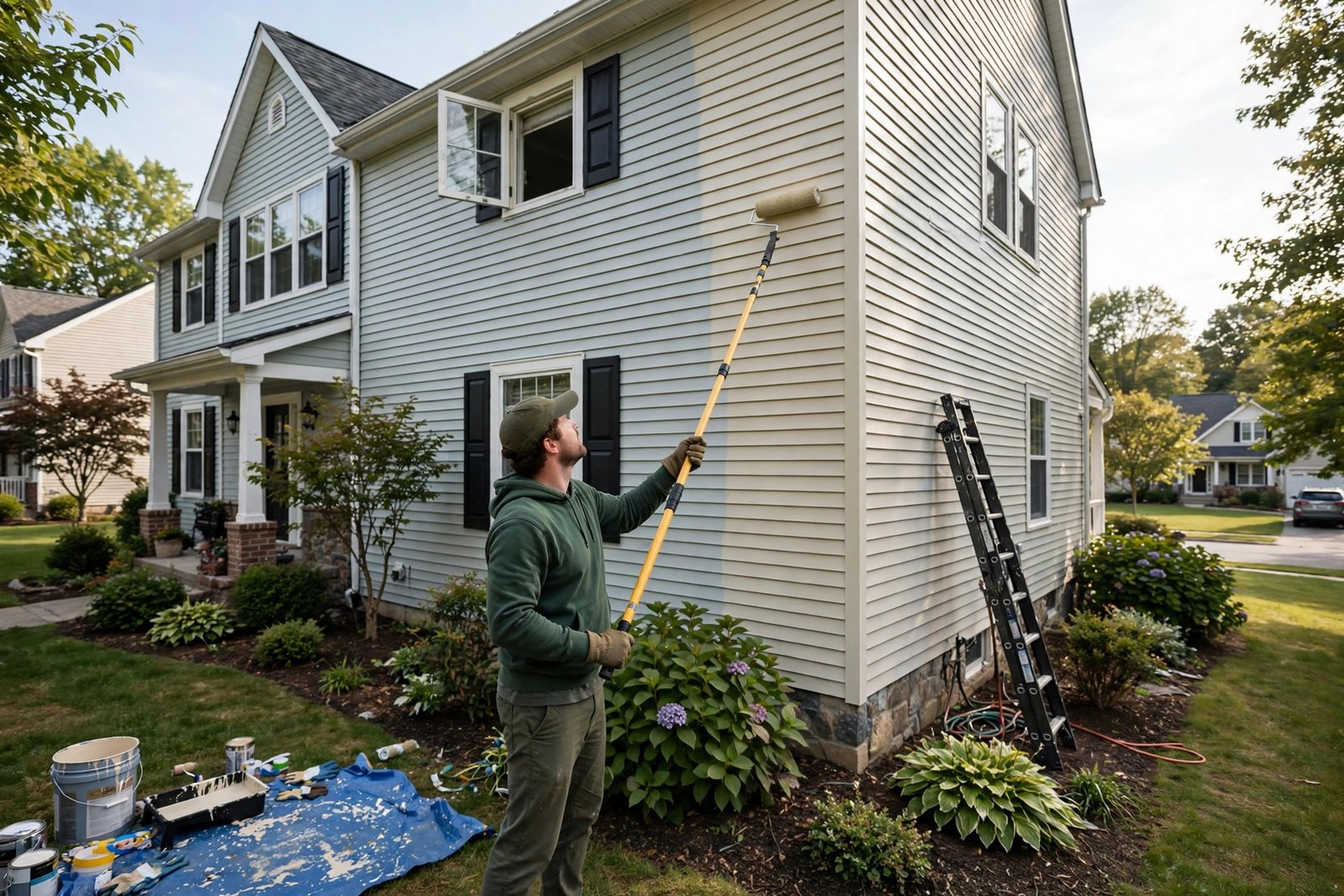
Exterior paint is your house’s armor — and in Ohio, that armor takes a beating. Freeze-thaw cycles, humid summers, lake-effect moisture in the north, and UV exposure all punish paint that was applied in the wrong conditions. Paint applied too cold will not cure; applied too hot it dries before bonding; applied in humidity it blisters. Timing the project to Ohio’s weather windows is the difference between a paint job that lasts 10 years and one that peels in two. Here is when to paint, when to absolutely not, and how to work Ohio’s climate instead of fighting it.
The Prime Window: Late May Through September
For most of Ohio, the ideal exterior painting season runs from late May through September — with June and September as the twin sweet spots. What makes paint cure properly: air temperatures between 50°F and 85°F (check your specific paint’s label — most latex paints require 50°F minimum, including overnight lows), relative humidity below 70 percent, and no rain for 24 to 48 hours after application. June offers warm, settled weather with long daylight; September brings cooler, drier air with lower humidity — many professional painters consider early fall the single best painting weather in the Midwest. July and August work fine but bring challenges: high humidity slows drying, and painting in direct 90°F sun causes the paint to skin over before it bonds (lap marks and poor adhesion). The National Weather Service’s Cleveland and regional forecasts are worth checking for a 3-day dry window before you start — never begin exterior painting without one.
Months to Avoid (and Why)
October through April is the danger zone in Ohio. Late October brings overnight lows below 50°F — paint applied in a 60°F afternoon that drops to 40°F overnight will not cure properly, leading to cracking and peeling within a year or two. November through March is simply out: freezing temperatures, snow, and constant moisture make painting impossible. April is tempting but treacherous — Ohio Aprils swing wildly, with 70°F days followed by frost warnings, plus frequent rain. Early May can work in southern Ohio (Cincinnati area) but remains risky in Cleveland and Toledo. The cost of painting in marginal weather is not just a bad paint job — it is paying for the entire project twice, because failed paint must be scraped and redone. One proper paint job in June beats two failed attempts in October and April.
Regional Differences: Cleveland vs. Cincinnati vs. Columbus
Ohio’s north-south span creates real timing differences. Cleveland and the Lake Erie shore: shorter season (late May to mid-September), lake-effect humidity and sudden weather changes — watch forecasts obsessively and favor September’s drier air. Columbus and central Ohio: the standard late-May-through-September window applies cleanly. Cincinnati and the Ohio River valley: the longest season (mid-May through early October), but the most humid summers — morning painting (after dew dries, before peak heat) works best, and dehumidifying weather patterns in September are ideal. Everywhere in Ohio: avoid painting the north side of the house late in the day (it stays damp and cool), and never paint in direct afternoon sun on south and west walls — follow the shade around the house, painting each wall in morning shade for the most even cure.
Daily Timing: The Painter’s Schedule
Within a good-weather week, daily timing matters enormously. Start after the morning dew has fully dried — typically 10 AM — because painting over damp siding traps moisture under the film. Stop by mid-afternoon on hot days so the final coats are not baking in peak sun, and always stop early enough that the paint has hours to set before evening dew falls (dew on fresh paint causes surfactant leaching — those brownish streaks on new paint). Do not paint when rain is forecast within 24 hours (48 for oil-based paints). Wind matters too: breezy days are good for drying, but gusty days blow debris into wet paint and accelerate drying on one side. The ideal Ohio painting day: 65–78°F, humidity under 60%, light breeze, overcast or morning shade — which describes a remarkable number of September days. The This Old House exterior painting guides detail the shade-following technique professionals use to keep every wall in optimal conditions.
Prep and Paint Choice for Ohio Weather
Timing is half the battle; the other half is using the window well. Ohio homes need thorough prep: scrape all loose paint, sand feather-edges, caulk gaps (but never caulk the bottom edge of siding — it needs to breathe and drain), and prime all bare wood — skipping primer is the number-one cause of early peeling. Use 100% acrylic latex paint (never cheap vinyl-acrylic for exteriors); premium lines from Sherwin-Williams, Benjamin Moore, or Behr Marquee flex with Ohio’s temperature swings instead of cracking. Two coats are non-negotiable — the second coat is what delivers the rated lifespan. Budget realistically: DIY painting a typical Ohio home costs $500 to $1,500 in materials; professional painting runs $3,000 to $8,000 depending on size and condition. A pro crew also brings the scheduling flexibility to chase weather windows that a weekend DIYer lacks — worth considering in Ohio’s changeable climate.
The best time to paint a house exterior in Ohio is late May through September — with June and September as the prime months (50–85°F, humidity under 70%, no rain for 48 hours). Avoid October through April entirely; cold-applied paint fails within a year or two. Follow the shade around the house, and never skip primer and two coats.
Conclusion
Painting your Ohio home’s exterior is a weather-timing project first and a painting project second: target late May through September, favor June and September, respect the 50°F minimum and the 48-hour dry window, follow the shade, and invest in premium 100% acrylic paint with full prep. Get the timing right and the paint job protects your home for a decade; get it wrong and you will be scraping and repainting in two years. Watch the forecast, be patient, and let Ohio’s early fall do the work for you. For more exterior home guides, browse our home improvement section, meet the team, or send us your questions.
Frequently Asked Questions
What temperature is too cold for exterior painting in Ohio?
Below 50°F (including overnight lows) for most latex paints — check your specific product’s label, as some premium paints allow down to 35°F. Paint applied in cold weather will not cure properly and typically peels within 1–2 years.
Can I paint my house exterior in October in Ohio?
It is risky. Early October can work during a warm spell, but overnight lows regularly drop below 50°F and rain becomes frequent. Late October is firmly in the danger zone. If you must paint in fall, September is far safer than October.
How long should exterior paint dry before rain?
Most latex paints need 24 hours minimum, 48 hours ideally, without rain after application. Oil-based paints need longer. Always check a 3-day forecast before starting — a surprise shower on fresh paint causes streaking, spotting, and adhesion failure.
Should I paint in direct sunlight?
No — paint the shaded side of the house, following the shade around throughout the day. Direct hot sun causes paint to skin over before bonding (poor adhesion, lap marks). Morning shade on each wall gives the most even cure.
How long does exterior paint last in Ohio?
A properly prepped, primed, two-coat job with premium 100% acrylic paint lasts 8–12 years on Ohio homes. South and west exposures weather fastest (UV + storms); sheltered north walls last longest. Paint applied in marginal weather may fail in 2–3 years regardless of quality.
Leave a Reply