
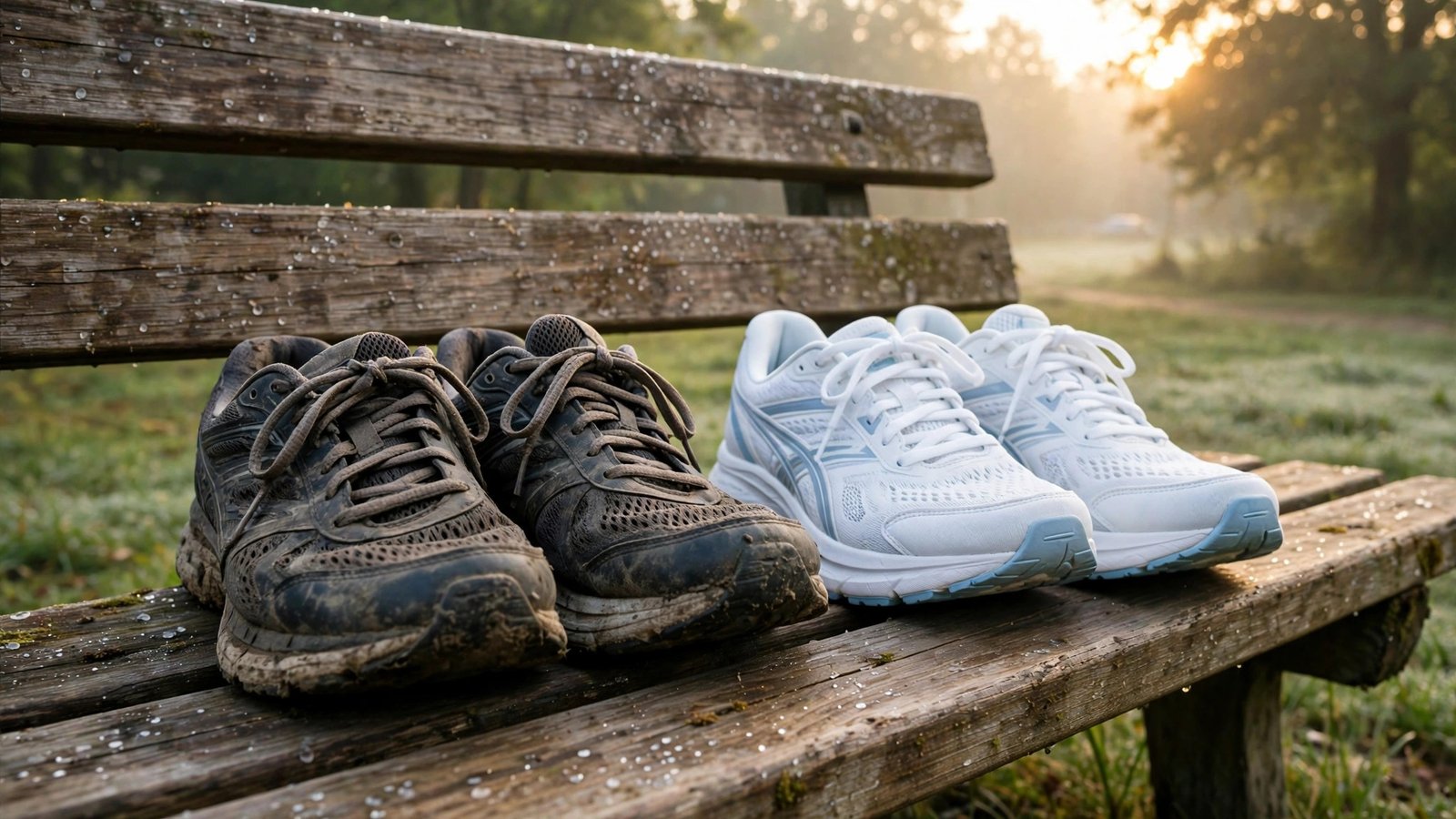
At 20 miles a week, you are putting roughly 1,000 miles a year on your running shoes — well past what any pair is designed to handle. Yet most runners in this mileage range replace their shoes far too late, running hundreds of miles on dead cushioning and wondering why their knees, shins, or feet have started complaining. The 20-mile-a-week runner sits in a specific zone: serious enough that shoe wear genuinely affects your body, but not so high-mileage that replacement is obvious. Here is exactly when to retire your shoes and how to tell.
The Mileage Rule: 300 to 500 Miles, and What That Means for You
The industry-standard guidance is to replace running shoes every 300 to 500 miles, and it exists for a reason: the EVA foam that cushions your stride permanently compresses with repeated impact, losing its shock absorption long before the upper looks worn. At 20 miles per week, 300 miles arrives in about 15 weeks — under four months — and 500 miles in about six months. If you bought your shoes in January and it is now June, they are done, even if they look fine.
Where you fall in the 300–500 range depends on your body and your shoes. Heavier runners compress foam faster and should lean toward 300. Lighter runners with efficient form can stretch toward 500. Maximalist shoes with thick foam stacks tend to last longer than minimal racers; trail shoes wear differently than road shoes. Track your mileage per pair — most running apps and watches let you tag shoes to workouts, which removes all guesswork. The Runner’s World’s shoe lifespan guidance aligns with this range and explains the biomechanics of foam breakdown, and REI’s running shoe replacement advice covers the same mileage benchmarks.
Reading the Wear: Physical Signs Your Shoes Are Done
Mileage is the primary clock, but your shoes and body give confirmatory signals. Press your thumb into the midsole: fresh foam springs back; dead foam stays dented or feels hard and unresponsive. Check the outsole for worn-through patches, especially under the heel and forefoot — once you are through to the midsole, cushioning and traction are compromised. Look at the shoes on a flat table from behind: if they lean or tilt to one side, the midsole has compressed unevenly, which can subtly alter your gait.
Your body is the most honest wear indicator. New aches that appear without training changes — achy knees after easy runs, shin tightness, foot soreness, or lower back complaints — are classic dead-shoe symptoms. Many runners discover their shoes were the problem only when the aches vanish within a week of switching to a fresh pair. The tricky part is that foam death is gradual, so you adapt to the declining cushioning without noticing — which is why the mileage log matters more than feel. If you are at 450 miles and everything feels fine, replace them anyway; the damage from worn shoes accumulates silently.
The Rotation Strategy: Why Two Pairs Beat One
At 20 miles a week, the single smartest move is rotating two pairs. Foam needs roughly 24 to 48 hours to fully rebound between runs; running daily in the same pair never lets the cushioning recover, which shortens its life noticeably. Rotation extends each pair’s lifespan, and it gives you a built-in comparison — when the older pair starts feeling flat next to the newer one, you have your answer without any mileage math.
Rotation also lets you specialize: a cushioned daily trainer for most miles and a lighter or more responsive shoe for tempo days, or a road pair and a trail pair if your routes vary. Buy the second pair when the first hits half its life, so you always have a broken-in backup and never face the “everything hurts and I need shoes today” emergency purchase. Staggering purchases this way also spreads the cost — two pairs a year at 20 miles a week is the realistic budget, roughly $240 to $360 annually depending on the models.
Choosing the Replacement: Same Model or Something New?
If your current shoes treated you well — no persistent aches, no hot spots, no blisters — the simplest and safest choice is the same model in the current version. Shoe companies update models yearly, usually with small changes, so try the new version on before assuming identical fit. If you had problems (recurring blisters, black toenails, knee pain), treat replacement as a reset: get a proper fitting at a running specialty store, where they will watch you run and match the shoe to your gait.
For 20-mile-a-week runners, the daily trainer category is the workhorse: models like the Brooks Ghost, Nike Pegasus, ASICS Gel-Cumulus, Saucony Ride, or Hoka Clifton offer the cushioning-durability balance this mileage demands. Replace insoles if yours are aftermarket — worn insoles in new shoes defeat the purpose. And break in the new pair gradually: alternate old and new for a week or two rather than debuting fresh shoes on a long run, even though modern shoes need far less break-in than the old wisdom suggested.
Extending Life and Knowing the Exceptions
A few habits stretch your shoes’ useful life: untie them before removing (yanking them off breaks down the heel counter), let them air-dry fully between runs (never put them in the dryer or on a radiator — heat destroys foam), and reserve running shoes for running (walking the dog in them burns mileage that does not show in your log). Rotate, rest, and respect the mileage cap, and you will consistently get the upper end of the range.
The exceptions: racing flats and carbon-plated super shoes have shorter lifespans (often 200 miles or less for the plate’s pop), while some maximalist trainers genuinely last past 500 for light runners. Trail shoes may need earlier replacement if the lugs wear smooth, even with live foam — traction is a safety issue, not a comfort one. And if you change your training significantly (jumping from 20 to 35 miles a week, adding marathon training), recalculate: the calendar shrinks fast when the mileage grows.
At 20 miles a week, replace your running shoes every 300 to 500 miles — roughly every 4 to 6 months — because the cushioning foam dies long before the shoes look worn. Track mileage per pair with your running app, rotate two pairs so foam rebounds between runs, and treat new unexplained aches as a retirement signal. Budget for about two pairs a year.
Conclusion
Running 20 miles a week on dead shoes is one of the most common and most fixable causes of runner aches. Log your mileage, respect the 300–500 mile window, rotate two pairs, and replace on schedule rather than on feel — your knees, shins, and feet will notice the difference even if your eyes cannot see it. Shoes are the cheapest injury prevention in running; a fresh pair every few months costs far less than a single physical therapy visit. For more running and fitness guidance, explore our fashion section for gear guides, learn about our approach, or tell us your shoe rotation.
Frequently Asked Questions
How many miles do running shoes last?
Most running shoes last 300 to 500 miles before the cushioning foam permanently compresses. Heavier runners and minimal shoes trend toward 300; lighter runners in maximalist trainers can reach 500. The upper often looks fine long after the foam is dead.
How often should I replace shoes running 20 miles a week?
About every 4 to 6 months — 300 miles arrives in roughly 15 weeks at 20 miles per week, 500 miles in about 25 weeks. Plan on roughly two pairs per year and track each pair’s mileage in your running app.
What are the signs my running shoes are worn out?
Midsole foam that stays dented when pressed, worn-through outsoles, shoes that tilt when placed on a flat surface, and — most tellingly — new aches in knees, shins, feet, or back that appear without training changes and vanish when you switch shoes.
Does rotating two pairs of running shoes really help?
Yes. Foam needs 24–48 hours to fully rebound between runs, so rotation extends each pair’s life. It also gives you a constant comparison — when the older pair feels flat next to the newer one, it is time to retire it.
Should I buy the same model again or try something new?
If your current shoes caused no problems, buying the same model (trying the current version for fit) is the safest choice. If you had recurring blisters, pain, or fit issues, get a professional fitting at a running specialty store and treat replacement as a fresh start.
Can I extend my running shoes’ lifespan?
Untie them before removing, air-dry fully between runs, never use dryer or radiator heat, reserve them for running only, and rotate pairs. These habits consistently push shoes toward the upper end of the 300–500 mile range.
Leave a Reply