
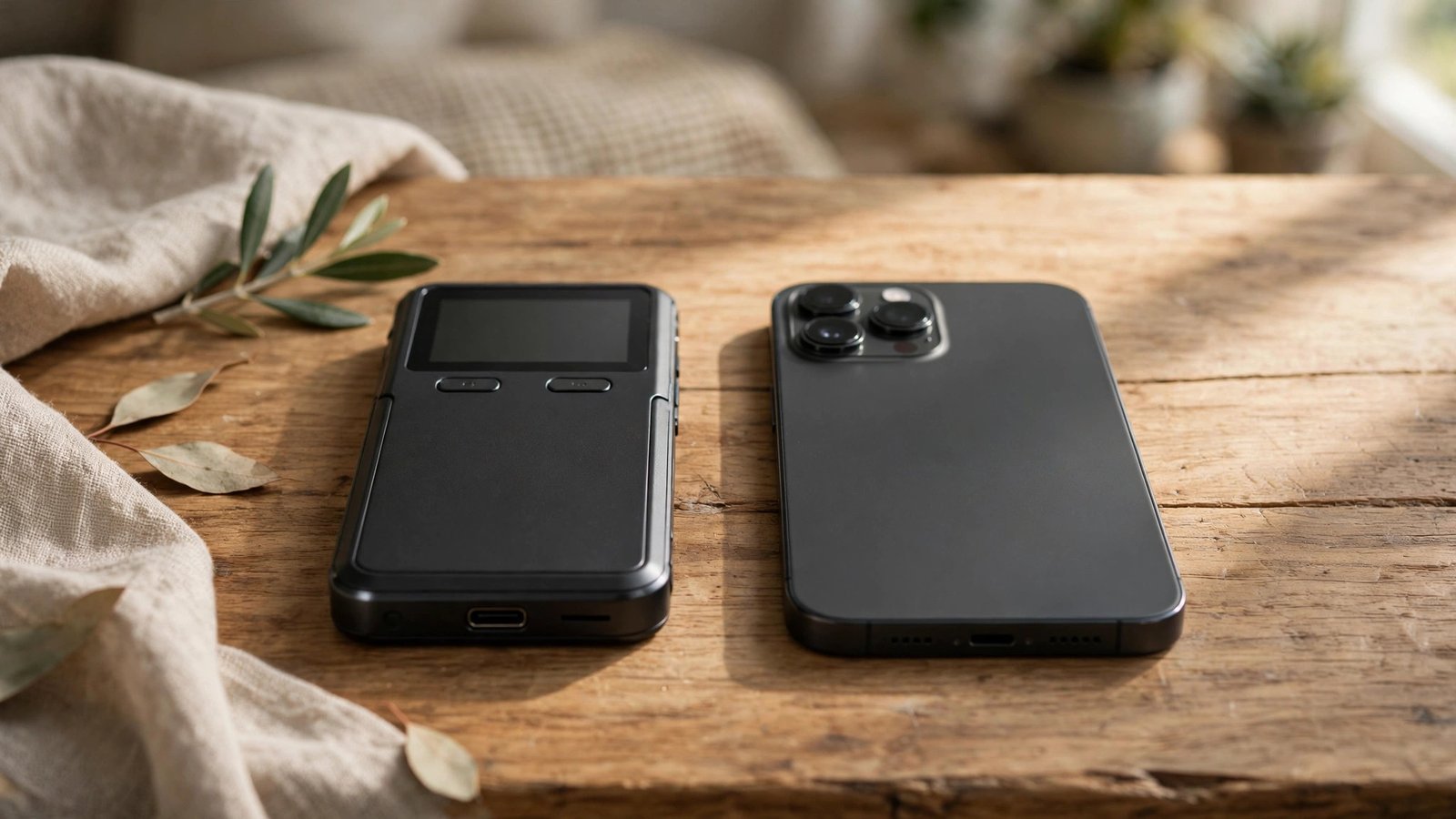
Every crypto guide mentions “hot” and “cold” wallets, usually assuming you already know the difference. Here is the plain-English version: a hot wallet is connected to the internet, a cold wallet is not — and that single distinction drives everything about security, convenience, and which one you should use. This guide explains both from zero, compares them honestly, and gives you the setup most beginners should actually use.
The One-Sentence Difference (and Why It Matters)
A hot wallet stores your crypto keys on an internet-connected device — your phone, browser, or an exchange’s servers. A cold wallet keeps keys on something disconnected — a hardware device or paper — that only touches the internet briefly to sign transactions. Hot equals convenient but exposed; cold equals secure but slower. Every other difference flows from this: hackers can reach hot wallets remotely, while cold wallets require physical access plus your PIN.
Think of it like cash: a hot wallet is the wallet in your pocket — easy to spend, vulnerable to pickpockets. A cold wallet is a safe bolted to your floor — annoying for daily purchases, excellent for savings. Neither is “better” universally; they solve different problems. The mistake beginners make is using one for everything — daily-spending convenience for life savings, or vault-level hassle for coffee money. The right answer is almost always both, in the right proportions.
Hot Wallets: Convenient, Connected, and Compromisable
Hot wallets come in three flavors. Exchange wallets (Coinbase, Kraken) are the easiest — you do not manage keys at all — but you trust the company completely, and history says that is risky. Mobile and software wallets (MetaMask, Phantom, Trust Wallet) give you your own keys on your phone: convenient for DeFi and daily use, but exposed to phone malware, phishing, and cloud-backup mistakes. Browser extension wallets sit in between — handy for web3, but living inside your most-attacked software.
The risks are real but manageable for small amounts: phishing sites mimicking wallet interfaces, fake apps in app stores, clipboard malware swapping addresses, and the classic — storing your seed phrase in a notes app or photo that syncs to the cloud. Hot wallets are right for funds you use actively: trading floats, DeFi experiments, small spending amounts. Rule of thumb: keep in hot wallets only what you would be upset — not devastated — to lose.
Cold Wallets: Offline, Deliberate, and Very Safe
Cold wallets keep keys offline. Hardware wallets (Ledger, Trezor) are small devices that sign transactions internally — the key never touches your computer, even while connected via USB. Paper wallets (keys printed and stored physically) are the old-school version: maximally offline, but fragile and unforgiving — lose the paper or let it degrade, and the funds are gone. Proper cold storage means the keys have never touched an internet-connected device.
The trade-off is friction: every transaction requires the physical device, PIN entry, and on-screen verification. That is the point — friction is the security. Cold wallets suit savings you will not touch for months: the bulk of a long-term stack. Costs run $50–$150 for reputable hardware, plus the discipline of safeguarding a recovery phrase offline. For holdings over a few hundred dollars that you do not actively trade, cold storage is not paranoia — it is the industry standard. The Bitcoin.org wallet guide walks through the options.
The Real-World Setup Most People Should Use
Here is the setup that works for most beginners: keep 5–10% of your crypto in a hot wallet (mobile app or exchange) for active use, and 90–95% in a cold hardware wallet for savings. Buy on an exchange, move the savings portion to cold storage (with a test transaction first), and leave a small float for whatever you are actually doing — trading, DeFi, or just learning. Revisit the split as holdings grow; the dollar amounts matter more than the percentages.
This two-tier system gives you both superpowers: the convenience to act quickly when opportunity appears, and the security to sleep when exchanges make headlines. The most common failure mode is laziness — leaving everything on the exchange “for now” for two years. Schedule the cold-storage move like a bill: same day each month, move anything above your float threshold. Future you, reading about the next exchange collapse, will be grateful. The Ledger Academy has excellent beginner security courses.
Common Mistakes Beginners Make With Both
Mistake one: photographing your seed phrase. Every “my wallet got drained” story with a hot wallet seems to involve a screenshot, a notes app, or cloud backup. Write phrases on paper or metal, store offline, never digitize. Mistake two: buying a hardware wallet from a marketplace reseller — tampered devices exist; buy direct from the manufacturer. Mistake three: keeping everything in one place, hot or cold — diversify across the two tiers.
Mistake four: never testing recovery. A backup you have not tested is a hope, not a plan — practice restoring your wallet with the phrase before funding it seriously. Mistake five: ignoring software updates on hot wallets while fearing firmware updates on cold ones — keep both current, via official apps only. For more beginner walkthroughs, explore our crypto guides, meet the team, or ask us your wallet questions — no question is too basic.
Hot wallets are for spending money; cold wallets are for keeping money. Use both: a small hot float for active use, cold hardware storage for savings — and never digitize your recovery phrase.
Conclusion
The hot-versus-cold decision is not a personality test — it is an allocation decision. Internet-connected wallets give you speed at the cost of exposure; offline wallets give you security at the cost of convenience. Split your holdings accordingly, guard your recovery phrase like the master key it is, and buy hardware direct from the maker. Do that, and you have implemented better security than the vast majority of crypto holders — most losses come from skipped basics, not sophisticated hacks.
Frequently Asked Questions
Can a hot wallet ever be as safe as a cold wallet?
No — an internet-connected key is fundamentally more exposed than an offline one. Good practices (hardware 2FA, address allowlists, small balances) narrow the gap but cannot close it. That is why allocation matters more than hardening.
Is keeping crypto on Coinbase a hot wallet?
Yes — an exchange account is a custodial hot wallet: convenient, but you do not hold the keys. “Not your keys, not your coins” applies fully. It is fine for a trading float, risky for life savings.
What’s the cheapest legitimate cold wallet?
Reputable hardware wallets start around $49–$79. Below that, be skeptical — ultra-cheap devices may lack security certifications. Never buy used or from third-party resellers.
Can I use a cold wallet for DeFi?
Yes — hardware wallets connect to DeFi apps via WalletConnect or browser bridges, signing transactions on-device. You get DeFi access with cold-storage key security. It is slightly slower but far safer than a pure hot wallet.
What happens if my hardware wallet breaks?
Nothing, if you kept your recovery phrase — buy a new device, enter the phrase, and the funds reappear. The wallet is replaceable; the phrase is not. This is why phrase storage matters more than the device.
Leave a Reply