
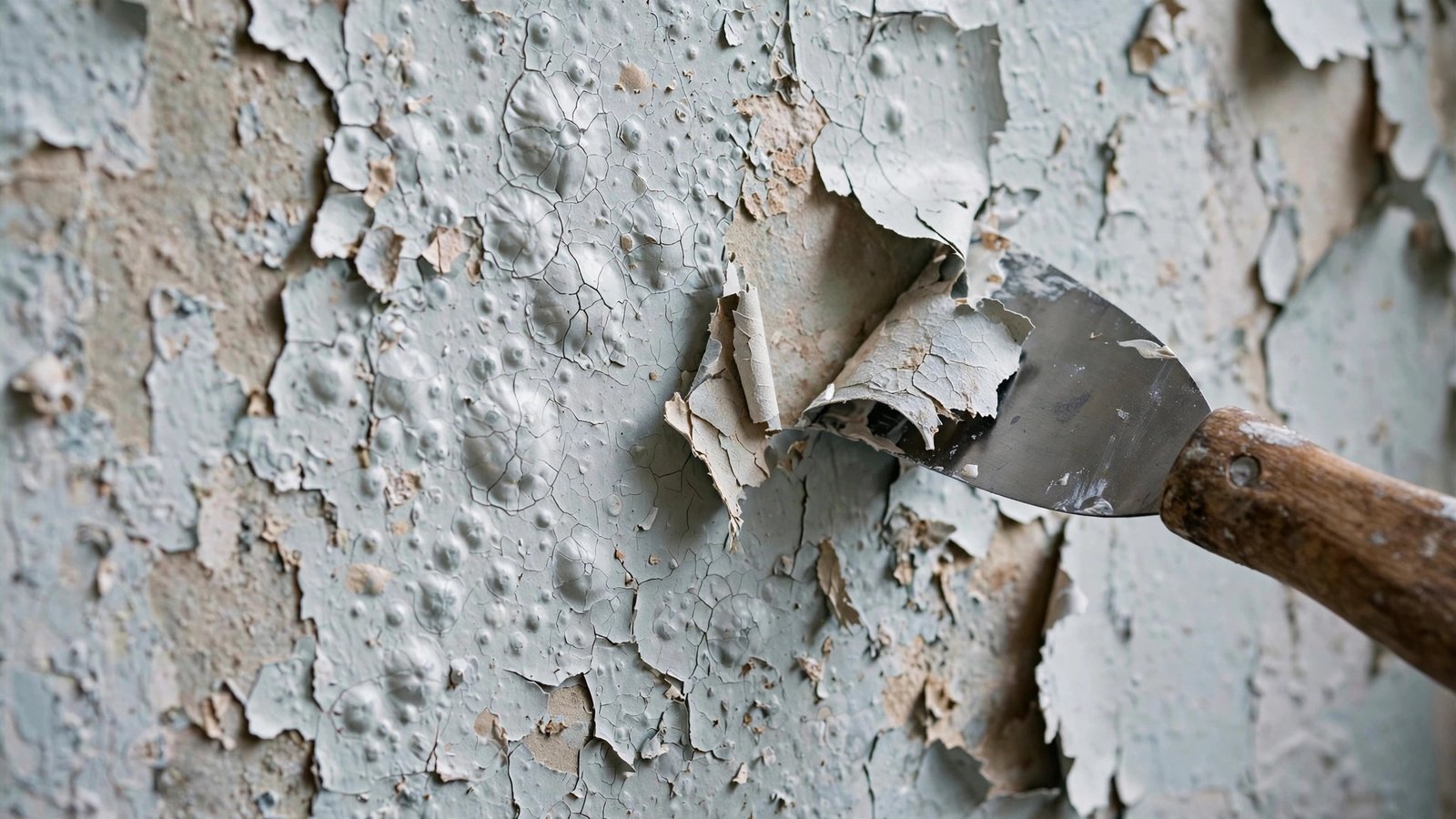
Nothing is more deflating than admiring a fresh paint job one week and finding bubbles, blisters, and peeling sheets the next. Paint that fails within a month is not bad luck — it is a symptom. Paint adheres well when the surface is clean, dry, sound, and properly primed; skip any one of those conditions and the coating lets go. The frustrating part is that the cause is almost always preventable, and the fix is almost always the same unglamorous prep work people skip. Here is why new paint bubbles and peels so fast, how to diagnose your specific cause, and how to fix it so the second coat actually lasts.
Cause #1: Moisture Behind or Under the Paint
Moisture is the number one killer of new paint, and it causes both bubbling and peeling. When water gets behind the paint film — from a roof leak, plumbing drip, condensation, or damp drywall — it pushes the coating off the surface as blisters. Bubbles that appear after rain or in bathrooms and kitchens point straight at moisture. Exterior peeling near the ground often means splash-back or poor drainage soaking the siding. Before repainting, find and fix the water source: a blistered spot will just blister again if the wall is still getting wet. Let the surface dry thoroughly — use a moisture meter on suspect drywall, and do not paint exterior surfaces within 24 to 48 hours of rain. Paint is not waterproofing; it is a coating that assumes a dry surface underneath.
Cause #2: Painting Over a Dirty or Glossy Surface
Paint needs something to grip, and grease, dust, soap residue, or a slick glossy finish gives it nothing. Kitchen walls coated in cooking grease, bathroom walls with hairspray buildup, and exterior siding with mildew or chalky old paint are classic failures. The fix is washing: scrub interior walls with a TSP substitute or degreasing cleaner, rinse, and let dry. Outside, pressure-wash the siding and let it dry for several days. Glossy surfaces need dulling — a light sanding with 120-grit paper or a liquid deglosser gives the new coat the microscopic texture it needs to bite. This Old House’s paint preparation guide shows how little sanding it actually takes to transform adhesion. Skipping the wash is the most common reason DIY paint jobs peel while professional ones do not.
Cause #3: The Wrong Paint Over the Old Paint
Not all paints get along. The classic failure is latex paint applied directly over old oil-based paint without primer — it looks fine for a few weeks, then peels off in sheets because it never bonded. Test first: rub the old paint with a cotton ball soaked in rubbing alcohol. If color comes off, it is latex; if not, it is oil-based. Latex over oil needs an oil-based or shellac primer first, no exceptions. Similarly, painting over wallpaper paste residue, calcimine-coated plaster in old houses, or fresh joint compound without primer all lead to peeling. When in doubt, prime. A quality bonding primer costs a fraction of a repaint and eliminates nearly every compatibility failure. The paint store staff can confirm your plan if you bring a chip of the old surface.
Cause #4: Painting in the Wrong Conditions
Paint is chemistry, and chemistry cares about temperature and humidity. Painting below 50°F (or above 90°F), in direct hot sun, or when rain is coming within the day’s drying window all cause failures. Cold paint gets thick and does not level or bond; hot sun dries the surface before the paint underneath cures, trapping solvents that later push up as bubbles; humidity slows drying and can cause blistering. Latex paint is especially fussy — it needs to form a continuous film as the water evaporates, and that process fails in damp or cold air. Check the can: it lists a temperature range and a rain-free window. Morning painting on a mild, dry day with the surface in shade is the sweet spot. Rushing a coat before the previous one cures causes the same bubbling, so respect the recoat time on the label.
How to Fix Blistered and Peeling Paint Properly
The repair is methodical, not difficult. First, scrape off everything loose with a putty knife or paint scraper — and be ruthless, because paint that is barely hanging on will peel later and take your new coat with it. Feather-sand the edges of the remaining sound paint so there is no ridge. Wash the bare spots, let them dry, and fix the underlying cause (the leak, the grease, the glossy surface). Spot-prime every bare area with the right primer — do not skip this, since paint applied directly to bare wood or drywall absorbs unevenly and peels. Then apply two topcoats, not one thick one; thin coats cure properly while a single heavy coat skins over and traps problems underneath. The troubleshooting guides from Sherwin-Williams detail these repairs for each failure type if you want a second opinion on your diagnosis.
Preventing It Next Time: The Prep Checklist
Every lasting paint job follows the same sequence: fix moisture problems, clean the surface, dull glossy finishes, repair cracks and holes, spot-prime bare areas, and paint in the right weather. Buy decent paint — the price difference between contractor-grade and premium is small compared to the labor of repainting, and premium paints have better adhesion resins. Do not thin the paint unless the can says to; thinned paint loses hiding power and bond strength. Keep a wet edge while rolling so you do not lap-mark, and never paint over a previous coat that is still tacky. It feels slow, but prep is roughly 80 percent of a paint job’s durability. For more room-by-room walkthroughs, browse our home improvement guides.
Paint that bubbles and peels within a month almost always failed for one of four reasons: moisture behind the film, a dirty or glossy surface with nothing to grip, incompatible paint applied over old oil-based coatings without primer, or painting in bad weather. Scrape everything loose, fix the underlying cause, spot-prime the bare spots, and apply two thin topcoats — and the second paint job will outlast the first by years.
Conclusion
New paint bubbling and peeling within a month is frustrating, but it is also diagnostic — the failure pattern tells you exactly what went wrong. Track down the moisture, clean and dull the surface, match your paint and primer to what is already on the wall, and paint in the right conditions. Do the prep properly the second time and the paint will stick for a decade instead of a month. Still unsure what caused your failure? Meet our team or send us photos of the problem and we will help you diagnose it.
Frequently Asked Questions
Can I just paint over peeling paint?
No. New paint bonds to whatever is underneath it — if that layer is peeling, the new coat peels with it. Scrape off everything loose, feather-sand the edges, prime the bare spots, then repaint. There is no shortcut around removing failed paint.
Why do paint bubbles appear only in the bathroom?
Bathrooms combine the two biggest paint killers: moisture and poor ventilation. Steam gets behind the film and pushes it off. Use a bathroom-rated paint, run the exhaust fan during and after showers, and make sure the drywall was primed before the topcoat.
How can I tell if old paint is oil-based?
Rub it with a cotton ball soaked in rubbing alcohol. If paint color transfers to the cotton, it is latex (water-based). If nothing comes off, it is oil-based or alkyd, and latex paint needs a bonding primer over it.
Is primer really necessary on previously painted walls?
On sound, clean, previously painted walls in good condition, a quality paint-and-primer-in-one can work. But on bare spots, repairs, glossy surfaces, stains, or when switching paint types, a dedicated primer is essential — it is cheap insurance against peeling.
How long should I wait between coats?
Follow the can’s recoat time — typically 2 to 4 hours for latex in good conditions, longer in humidity or cold. Recoating too soon traps moisture and causes bubbling; waiting too long between coats (days in dusty conditions) can hurt adhesion, so wipe the surface if it sat overnight.
Leave a Reply