
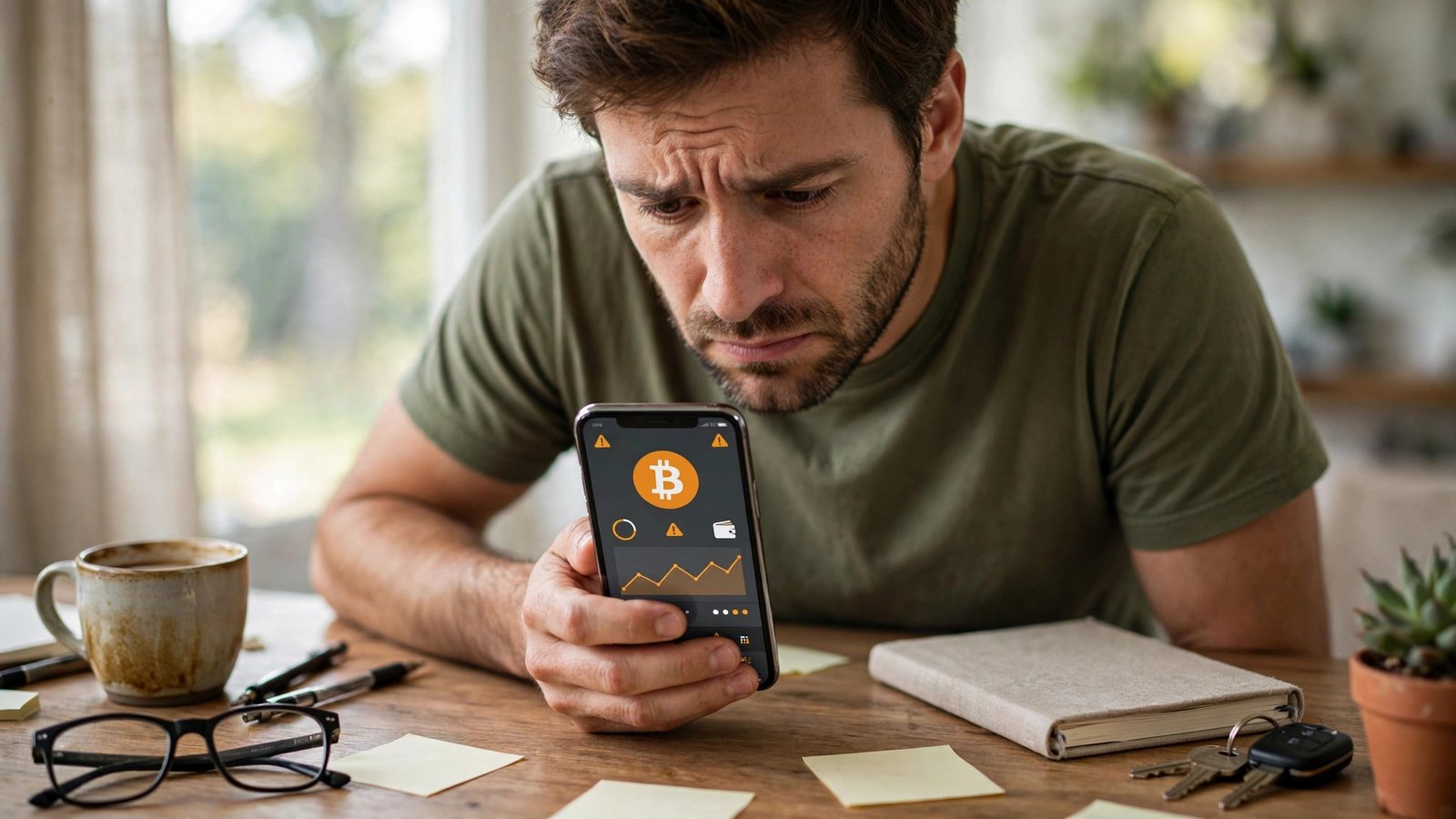
Your stomach drops: the Bitcoin you just sent went to the wrong address. Maybe you pasted an old address, mistyped a character, or sent it on the wrong network. Before despair sets in, know this: Bitcoin transactions are irreversible by design, but “wrong address” covers several very different situations — and a few of them are recoverable. Here is how to assess what happened and what to try, in order.
First, Don’t Panic: Assess Exactly What Happened
Your first job is diagnosis, not action. Open a Bitcoin block explorer, paste the transaction ID from your wallet or exchange, and confirm the details: the destination address, the amount, and whether the transaction has confirmations. Screenshot everything, including the full transaction details page. Then compare the destination character by character against the address you intended, paying special attention to the beginning and end where typos hide. Write down exactly what went wrong — wrong address entirely, one character off, wrong network, or an exchange deposit address you do not recognize.
Next, determine who controls the destination. Is it an address in your own wallet? An exchange’s deposit address? A completely unknown address? Or — critically — an address on a different network, like BTC sent toward a Bitcoin Cash address? The answer decides everything that follows. Most “wrong address” cases fall into a handful of patterns, each with its own odds. Knowing your pattern keeps you from wasting hope — or money — on impossible recoveries.
When Recovery Is Possible (the Lucky Scenarios)
The best scenario: you sent Bitcoin to another address you own — an old wallet or a different account on the same exchange. The coins are safe; you just need to access that wallet or account. Check old wallet apps, exchange sub-accounts, and any paper wallets. The second-best scenario: you sent to an exchange’s deposit address, yours or someone you know. Contact the exchange’s support immediately with the transaction ID — exchanges can sometimes credit misdirected deposits, though policies vary and fees may apply.
A third recoverable case: cross-chain confusion between compatible address formats. Bitcoin and Bitcoin Cash share address formats, so BTC sent to a BCH address (or vice versa) can often be recovered by importing the private key into a wallet supporting the other chain. Similarly, BTC sent to a wrapped-BTC contract address is sometimes recoverable. These require careful technical steps — do not improvise; follow reputable guides or get help. The Bitcoin.org FAQ explains how addresses and transactions actually work.
When the Bitcoin Is Almost Certainly Gone
Here is the hard truth: if you sent Bitcoin to a random, valid address controlled by a stranger — a typo that happened to be a real address, or an address from a scammer — the coins are almost certainly gone. Bitcoin has no chargebacks, no customer service, and no central authority to appeal to. The recipient may never even know the coins arrived. Address-poisoning scams exploit exactly this irreversibility, which is why verification matters so much.
Burn addresses — where coins are provably unspendable — are equally final. And beware the second scam: anyone who contacts you claiming they can recover your Bitcoin for an upfront fee is lying. Recovery scams specifically target people in your situation; the FTC warns that no legitimate service can reverse a confirmed blockchain transaction. Paying a “recovery expert” just doubles your loss. Accepting the loss quickly, painful as it is, beats funding scammers.
What to Try Right Now: Your Action Checklist
Work through these steps immediately. One: confirm the transaction on a block explorer and document the TXID, addresses, and amounts. Two: if the destination belongs to an exchange — yours or a known one — open a support ticket within the hour with all documentation; time matters. Three: if it is your own old address, locate that wallet and its recovery phrase. Four: if it is a cross-chain format issue, research the specific recovery path before touching anything — wrong moves can complicate recovery.
Five: if the coins went to a stranger’s address, expect nothing — but you can watch the address in case the funds ever move to an identifiable exchange. Six: report the incident if a scam was involved, and review how it happened so it never repeats. Throughout, do not install random “recovery tools” or share your seed phrase with anyone offering help. Your private keys are never part of legitimate recovery.
How to Never Let This Happen Again
Prevention is a short checklist that eliminates nearly all of these incidents. Always send a test transaction first — $10–$20 — and confirm receipt before the full amount. Verify the first six and last six characters of every address on the sending device’s screen; clipboard malware that swaps addresses is real and common. Use QR codes or copy-paste rather than typing, and never trust an address from a chat message, email, or screenshot without regenerating it live from the recipient’s wallet.
Add structural defenses: enable withdrawal allowlists on exchanges so funds can only go to pre-approved addresses, use a hardware wallet whose screen shows the true destination, and slow down — nearly every wrong-address story involves rushing. The few dollars in test-transaction fees are the cheapest insurance in crypto. For more safety walkthroughs, explore our crypto guides, meet the team, or ask us before your next big transfer.
A Bitcoin transaction can’t be reversed — but “wrong address” has several meanings, and some are recoverable. Diagnose the exact situation first, act fast on exchange and own-wallet cases, and never pay anyone who promises to reverse the blockchain.
Conclusion
Sending Bitcoin to the wrong address ranges from a minor scare to a permanent loss, and the difference is almost entirely in the details: whose address received it, and how fast you act. Work the checklist, contact exchanges immediately when relevant, ignore every recovery scammer, and rebuild your process around test transactions and address verification. The Bitcoin network did exactly what it was designed to do — the lesson is to design your habits with the same care. Slow down, verify twice, test small, and you will likely never need this guide again.
Frequently Asked Questions
Can miners reverse a Bitcoin transaction?
No. Once confirmed, a transaction is permanent. Unconfirmed transactions can occasionally be replaced by the sender before confirmation, but this is unreliable — and impossible once the network confirms it.
I sent BTC to an Ethereum address. Can I get it back?
If the address is one you control on Ethereum (same private key), importing the key into a Bitcoin wallet may recover it, since address formats overlap. If it is someone else’s exchange deposit address, contact that exchange immediately.
How long do I have to act?
For exchange-related cases, hours matter — contact support immediately. For transactions to strangers, speed does not change the outcome. For unconfirmed transactions, every minute counts.
Will the recipient return my Bitcoin?
Almost never, and you usually cannot contact them — do not count on it. Large identifiable recipients like exchanges sometimes have formal processes; individuals do not.
Are Bitcoin transactions truly irreversible?
Yes, by design. Irreversibility is what makes Bitcoin censorship-resistant — the same property that protects you from frozen funds means no one can undo your mistakes either.
Leave a Reply