
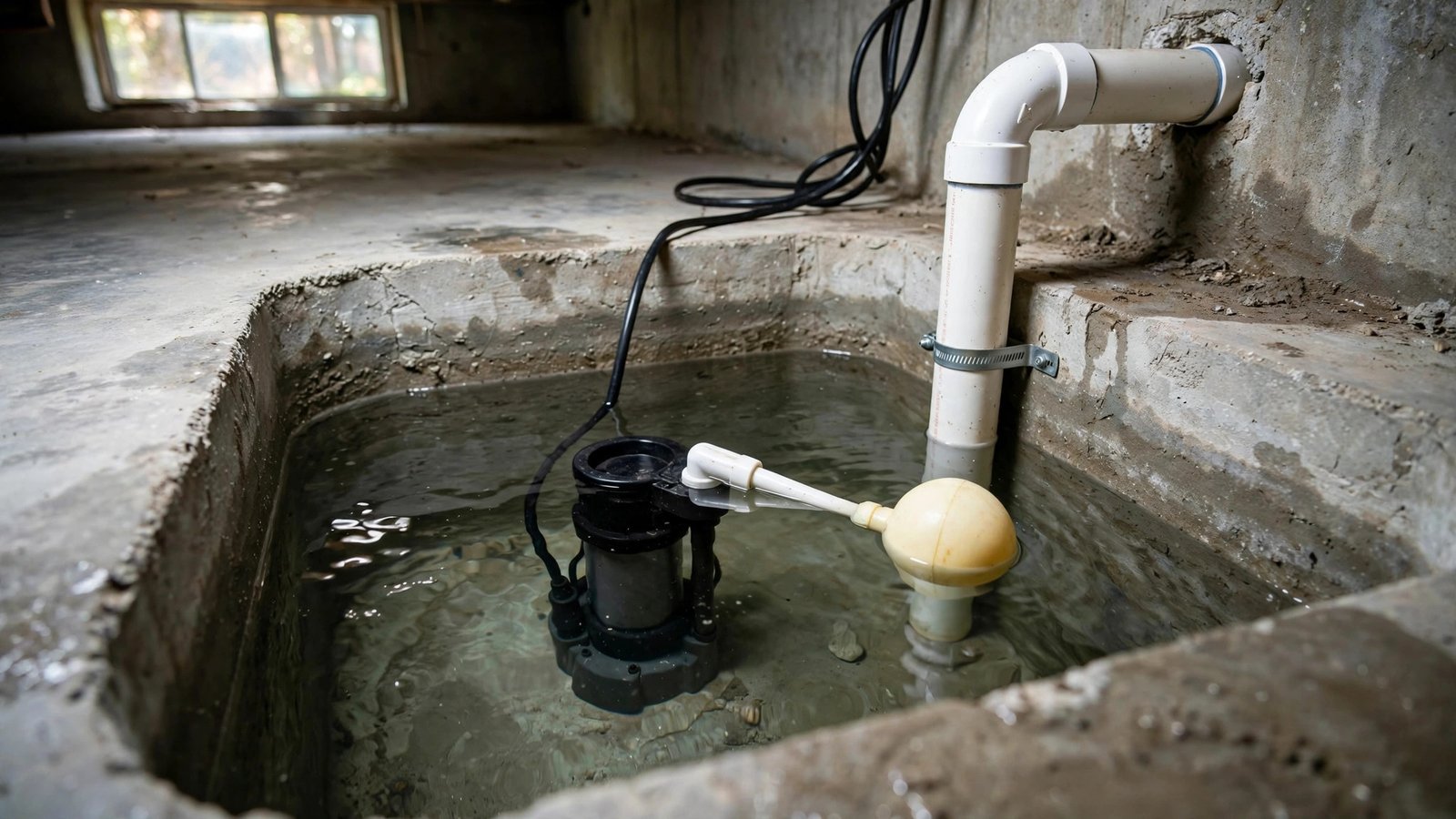
It has not rained in a week, the yard is dry, but your sump pump keeps cycling on every few minutes like it is fighting a flood. A sump pump that runs constantly when it is not raining is telling you something — and it is not always an emergency, but it is never something to ignore. Constant cycling wears out the motor years early, runs up your electric bill, and can mask a real problem until the pump dies during an actual storm. The causes range from a stuck float switch you can fix in ten minutes to a high water table that needs a professional solution. Here is how to diagnose each one.
How a Sump Pump Should Normally Behave
Understanding normal helps you spot abnormal. A healthy sump pump sits idle in its pit until groundwater rises to the float switch’s trigger level, then pumps the pit down and shuts off — typically running a few times a day during wet seasons and rarely or never during dry spells. Each cycle should last long enough to actually empty the pit, usually 10 to 20 seconds of pumping. Short-cycling — turning on and off every minute or two without moving much water — is the classic sign something is wrong. Before diagnosing, watch one full cycle: does the pit actually empty? Does the pump shut off crisply, or does it stutter? Those observations point straight at the cause.
Cause #1: A High Water Table or Underground Spring
Sometimes the pump is doing exactly what it was installed to do. If your home sits over a high water table, near a spring, or at the bottom of a slope, groundwater can feed the pit continuously even in dry weather. This is common in spring when snowmelt and saturated soil keep the water table elevated for weeks. Check with neighbors — if their pumps are also running, it is the water table, not your equipment. You cannot fix geology, but you can manage it: make sure the pump is appropriately sized, consider a backup pump or battery system since the primary is working hard, and extend the discharge line well away from the foundation so pumped water does not just seep back into the pit. If the pit fills from the sides faster than one pump can handle, a second pump or a larger pit may be needed — that is a job for a waterproofing contractor.
Cause #2: A Stuck or Misadjusted Float Switch
The float switch is the most common culprit and the easiest fix. Tethered floats can get tangled on the pit wall, the pump cord, or the discharge pipe, keeping the pump switched on even after the water drops. Vertical floats can stick in the “up” position from mineral buildup or debris. Open the pit cover and watch the float through a cycle — if it does not drop freely as the water falls, you have found it. Untangle the tether, clean off any crusty buildup, and make sure the float has clear travel in both directions. While you are in there, check that the switch’s on/off range is not set too tight; some switches can be adjusted so the pump runs longer per cycle instead of short-cycling. The sump pump troubleshooting guides from Family Handyman show the common float types and their adjustments.
Cause #3: A Failed Check Valve Lets Water Flow Back
Every sump discharge line needs a check valve — a one-way fitting that keeps pumped water from draining back into the pit when the pump shuts off. When the check valve fails or was never installed, each cycle ends with a column of water in the discharge pipe flowing right back down, refilling the pit and triggering the pump again within minutes. The telltale sign: the pit refills almost immediately after the pump stops, and you might hear water gurgling back down the pipe. Check valves are cheap (under $20) and install in minutes on the discharge pipe above the pit. Make sure the arrow on the valve points away from the pump. This single fix resolves a surprising number of “mystery” constant-running cases, and it is worth checking even if you suspect another cause. The sump pump maintenance walkthrough from This Old House shows exactly where the valve sits and how to test it.
Cause #4: Discharge Line Problems
Where the water goes matters as much as how it gets there. If the discharge line is clogged, frozen, crushed, or too short, water returns to the foundation and straight back into the pit — an endless loop. Walk the discharge line’s full path outside: it should slope away from the house and release water at least 10 to 20 feet from the foundation, ideally downhill. In winter, the exposed end can freeze shut; a larger-diameter pipe or a freeze-relief tee prevents this. Underground discharge lines can clog with sediment or roots over the years. If the line terminates right beside the foundation, extending it with inexpensive corrugated pipe often breaks the cycle immediately. Also check that the line is not discharging onto a neighbor’s property or into a municipal storm drain where prohibited — local codes vary.
Why Constant Running Kills Pumps Early
Sump pumps are built for intermittent duty, not continuous operation. The motor’s worst enemy is heat, and constant cycling — especially short-cycling — never lets it cool properly. A pump rated for 10 to 15 years of normal service can die in two or three years of constant running. Beyond the replacement cost, a burned-out pump fails exactly when you need it most: during the heavy storm that finally overwhelms the system. If your pump runs constantly for weeks, plan for earlier replacement and seriously consider a backup system — either a battery backup pump or a water-powered backup — so a primary failure does not become a flooded basement. Watch for warning signs of a dying pump: new noises, longer run times to empty the pit, or a hot motor housing. For more basement protection strategies, see our home improvement guides.
A sump pump running constantly without rain usually means one of four things: a high water table feeding the pit, a stuck or tangled float switch, a failed check valve letting water drain back down, or a discharge line that returns water to the foundation. Check the float and check valve first — both are cheap, fast fixes — then walk the discharge line, and call a waterproofing pro if the water table itself is the problem.
Conclusion
A constantly running sump pump is a symptom worth diagnosing, not background noise to ignore. Work through the likely causes in order: float switch, check valve, discharge line, then water table. The first three are inexpensive DIY fixes; a genuine high-water-table problem needs professional waterproofing help and a robust backup system. Either way, do not let constant cycling quietly kill your pump before the next big storm. Noticing other basement moisture issues? Meet our team or send us your questions.
Frequently Asked Questions
Is it bad for a sump pump to run constantly?
Yes. Sump pumps are designed for intermittent use, and constant cycling overheats the motor and can cut its lifespan from 10-15 years down to just a few. It also wastes electricity and usually signals a problem worth fixing.
How do I know if my check valve is bad?
Watch the pit right after the pump shuts off. If water immediately flows back down the discharge pipe and the pit refills within minutes, the check valve has failed or is missing. You may also hear gurgling from the pipe after each cycle.
Can a sump pump run in winter without rain?
Yes — snowmelt and a high winter water table can keep a pit filling for weeks. Also check that the discharge line’s outdoor end has not frozen shut, which traps water in the system and causes constant cycling.
How far should the discharge line go from the house?
At least 10 to 20 feet from the foundation, discharging downhill away from the house. Lines that end right beside the foundation create a loop where pumped water seeps straight back into the pit.
Should I get a backup sump pump?
If your primary pump runs constantly or your basement has flooded before, yes. A battery backup pump protects you during power outages — which often accompany the storms that cause flooding — and covers you if the primary pump burns out.
Leave a Reply