Denzel Washington: What a $300 Million Career Actually Looks Like
First, the Figure
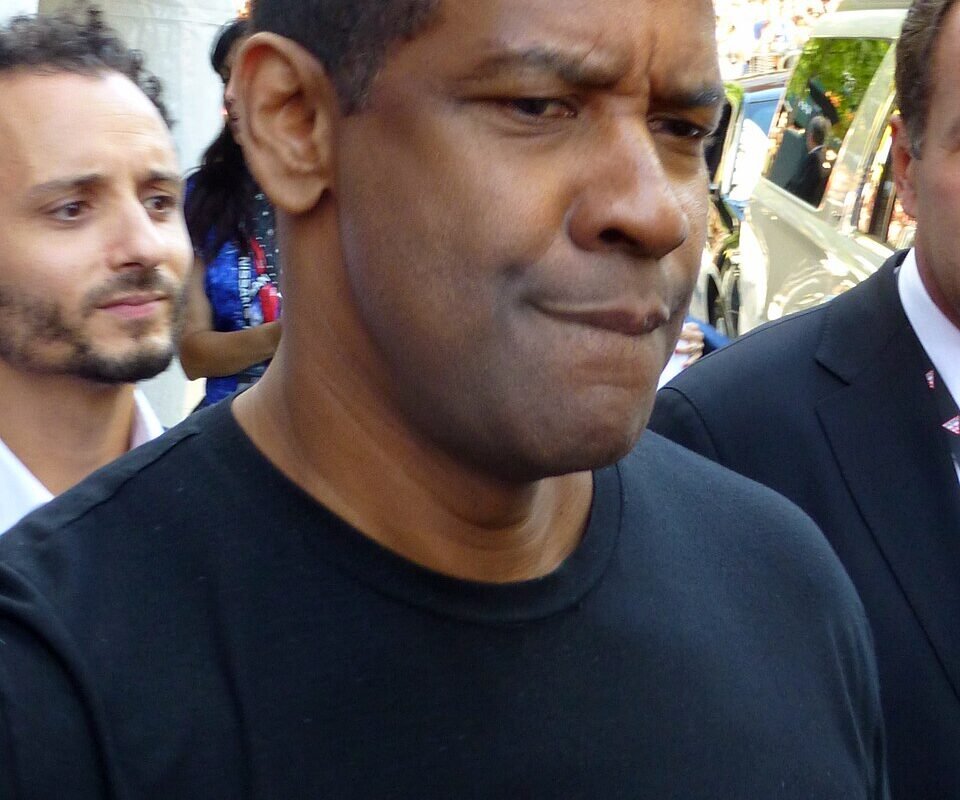
Celebrity Net Worth estimates Denzel Washington’s fortune at $300 million, and Parade reports the same figure in its 2026 coverage. Washington built the money across forty years of leading roles, a long stretch as one of Hollywood’s most reliable box office draws, salaries that reached a reported $20 million per production in his peak years, and producing work through his own company. This report adopts the $300 million figure with its source attached and prints the surrounding range below.
Trackers outside the named sources run from about $280 million to about $350 million, and this report records that range without adopting any point inside it. Forbes publishes no wealth total for Washington; its 2025 entertainment coverage estimated his earnings at $38 million for the year, and earnings measure a year, not a lifetime balance. A reported fee of roughly $35 million for Highest 2 Lowest in 2025 counts as salary in the same way. Celebrity Net Worth’s own page also collects his major reported salaries across eleven productions and deals, totaling $238.5 million in compensation, and that arithmetic explains how a $300 million lifetime estimate arises: four decades of top-tier fees, minus taxes, costs and spending, plus property and producing income.
The Houses
Property reporting gives the fortune a physical address. Washington and his wife Pauletta hold a residence in Beverly Park, Los Angeles, running to roughly 29,000 to 30,000 square feet across two lots, which reporting says they bought in the 1990s from studio executive Michael Eisner at a reported price close to $6.5 million. In April 2022 he bought a condominium in Century City, Los Angeles, for a reported $10.9 million. Purchase prices describe transactions at a moment in time, not current values and not wealth itself, and this report labels them accordingly.
The Rise, Year by Year
1982 — St. Elsewhere
Washington joined the hospital drama St. Elsewhere in 1982 and played Dr. Phillip Chandler across six seasons. The series gave him a national audience and steady years to develop, and casting directors began moving him toward leading screen roles before the decade ended.
1987 — Cry Freedom
Cry Freedom cast him as South African activist Steve Biko and brought his first Academy Award nomination. The performance announced a dramatic lead of unusual gravity, and directors including Spike Lee and Edward Zwick built projects around him in the years that followed.
1989 — Glory
Glory cast him as an escaped enslaved man serving in a Union regiment, and the performance won him the Academy Award for Best Supporting Actor. The Oscar, at 35, moved him into the small group of actors who could open serious productions on their names alone.
1992 — Malcolm X
Spike Lee directed him as Malcolm X in a performance critics rank among the finest of the century, and it earned him a Best Actor nomination. Washington prepared for a year, studying speeches and recordings, and the role fixed his public identity as an actor who carried historical weight without strain.
1993 — Philadelphia
Philadelphia paired him with Tom Hanks in a courtroom drama about discrimination, and readers tracing that production should read Tom Hanks’s net worth profile, because the two leads shared a picture that changed how mainstream audiences discussed its subject. Washington played the lawyer who takes the case, and the production became one of the defining dramas of its decade.
1995 — Crimson Tide and Devil in a Blue Dress
Crimson Tide placed him opposite Gene Hackman in a submarine thriller that earned strongly, and Devil in a Blue Dress cast him as detective Easy Rawlins in a period noir his own company produced. The pairing of a commercial hit and a personal production in one year set the template for his career: studio leads paid the fees, and his company pursued the material he valued.
1999 — The Hurricane
The Hurricane cast him as boxer Rubin Carter, who fought a murder conviction for two decades, and the performance won him a Golden Globe and another Oscar nomination. He trained as a boxer for the role, continuing the preparation discipline that runs through his whole record.
2001 — Training Day
Training Day cast him as corrupt detective Alonzo Harris and won him the Academy Award for Best Actor. The win made him the second Black actor to take the lead award, and the performance’s menace expanded the range studios offered him afterward; villains and antiheroes joined the heroes in his casting column.
2007 — American Gangster
Ridley Scott directed him as Frank Lucas in American Gangster, a major commercial success that paired him with Russell Crowe. The production confirmed his box office standing fifteen years after Malcolm X, a longevity few leading men sustain.
2010 — Fences on Broadway and The Book of Eli
Washington headlined August Wilson’s Fences on Broadway in 2010 and won the Tony Award for Best Actor in a Play. The Book of Eli arrived the same year and added another solo-led commercial success. Stage work pays a fraction of his screen fees, and he returns to it on a regular cycle anyway, a pattern colleagues cite as the clearest sign of his priorities.
2012 — Flight
Flight cast him as a pilot who lands a failing aircraft and then faces investigation, and the performance earned another Oscar nomination. The production cost little by his standards and earned strongly, and it reminded studios that his name alone could carry an adult drama to profit.
2014 — The Equalizer
The Equalizer launched his first franchise, reuniting him with Training Day director Antoine Fuqua. Two sequels followed, in 2018 and 2023, and the trilogy gave his sixties a commercial anchor that matched the dramatic work running beside it.
2016 — Fences
Washington directed and starred in Fences, adapting the Wilson play he had performed on stage, and the production earned him another Best Actor nomination while Viola Davis won an Oscar for her performance. The credit matters doubly in his record: it proved his directing could carry major material, and it honored a playwright whose work he champions.
2021 — The Tragedy of Macbeth
Joel Coen cast him as Macbeth in a stark black-and-white adaptation, and the performance earned his ninth acting Oscar nomination. At 66 he played the role as a man near the end of his ambitions, and critics treated the casting as a summation of his career’s themes.
2024 — Gladiator II
Ridley Scott cast him in Gladiator II as a former enslaved man turned power broker in Rome, and Washington’s performance drew some of the production’s strongest reviews. The role placed him inside one of the year’s biggest releases and extended his run of major credits into his seventieth year.
2025 — Highest 2 Lowest, Othello and the Honors
Highest 2 Lowest reunited him with Spike Lee for a fifth production together and drew a reported fee near $35 million, which this report counts as salary. He also played Othello on Broadway from February to June 2025. In January 2025 he received the Presidential Medal of Freedom, and in May 2025 the Cannes festival presented him with an honorary Palme d’Or. Few careers collect a Medal of Freedom, a Cannes honor and a Broadway Shakespeare run inside six months.
The economics follow the honors. Washington never anchored a superhero franchise and rarely took sequels before The Equalizer, yet his fee held at the industry’s top tier for three decades because his name reliably opened adult dramas worldwide. Celebrity Net Worth converts that reliability into its $300 million estimate.
Beginnings
Records list his birth as 28 December 1954 in Mount Vernon, New York. His father, Denzel Hayes Washington Sr., served as a Pentecostal minister and worked for the city water department and a beauty supply company; his mother, Lennis “Lynne” Washington, née Lowe, owned and ran a beauty parlor in Mount Vernon. The family lived in Mount Vernon through his early years, and he attended schools there and, after his parents’ divorce when he turned fourteen, a military academy upstate and a school in Florida.
He studied journalism and drama at Fordham University and graduated in 1977, then won a scholarship to the American Conservatory Theater in San Francisco. He left the conservatory after a year as professional work arrived, first in theatre and television productions, and by 1982 St. Elsewhere had given him his platform. His father died in 1991; his mother died in 2021, at 97.
One institution from those years still anchors his giving. Washington attended the Boys & Girls Club in Mount Vernon as a youngster, and he credits the club with steering him toward school and away from the streets that claimed several of his friends. He later served as a national spokesperson for the organization for more than two decades and funded a major renovation of the Mount Vernon clubhouse. The connection runs through his whole public record: he returns to Mount Vernon, he funds the club, and he tells its story whenever interviewers ask how a minister’s son from a small city reached Fordham.
The Private Side
Washington married Pauletta Pearson on 25 June 1983, and the marriage continues into its fifth decade. The couple met in 1977 on the set of the television production Wilma, in which both performed. In 1995 they renewed their vows in a ceremony Archbishop Desmond Tutu officiated, in South Africa. Pauletta Washington trained as a classical pianist and acts in her own right, and both partners credit their faith and their church life as the marriage’s foundation in the interviews they give together.
The couple share four children. John David Washington, born 28 July 1984, played professional football before he built an acting career of his own. Katia Washington, born 27 November 1986, works in production. Twins Olivia Washington and Malcolm Washington arrived on 10 April 1991; Olivia acts, and Malcolm directs. Washington keeps no verified personal Instagram account, and this report prints no handle for him. He speaks about money rarely, gives substantial sums to his alma mater, his church and the Boys & Girls Clubs, where he served as a national spokesperson, and treats philanthropy as a duty rather than a publicity line.
The Reporting Record
| The Reporting Record | Details |
|---|---|
| Born | 28 December 1954, Mount Vernon, New York |
| Age | 71 |
| Height | 6 ft 1 in (1.85 m) |
| Weight | No reliable published figure exists |
| Net Worth | $300 million (Celebrity Net Worth) |
| Wife | Pauletta Washington, née Pearson, married 25 June 1983 |
| Children | John David (b. 28 July 1984), Katia (b. 27 November 1986), and twins Olivia and Malcolm (b. 10 April 1991) |
| Parents | Denzel Hayes Washington Sr. (d. 1991) and Lennis “Lynne” Washington, née Lowe (d. 2021) |
| Movies and TV Shows | St. Elsewhere, Glory, Malcolm X, Philadelphia, The Hurricane, Training Day, American Gangster, Fences, The Equalizer, Gladiator II, Highest 2 Lowest |
| House | Beverly Park residence (bought in the 1990s, reported price close to $6.5 million); Century City condominium (April 2022, reported $10.9 million) |
| No verified personal account |
What It All Adds Up To
Celebrity Net Worth credits Washington with $300 million, outside trackers suggest $280 million to $350 million, and the documented salary history supports a figure in that territory: $238.5 million in reported compensation across eleven major productions and deals alone, before producing income and property. The disagreement among trackers concerns the remainder after taxes and forty years of spending, not the scale of the earnings.
At 71, he holds two Academy Awards, a Tony, a Presidential Medal of Freedom and an honorary Palme d’Or, and he still commands top fees and Broadway stages in the same season. The reporting record shows a fortune built the slow way, one leading role at a time, by an actor who never let the market hurry him.
Filed under: Net Worth