
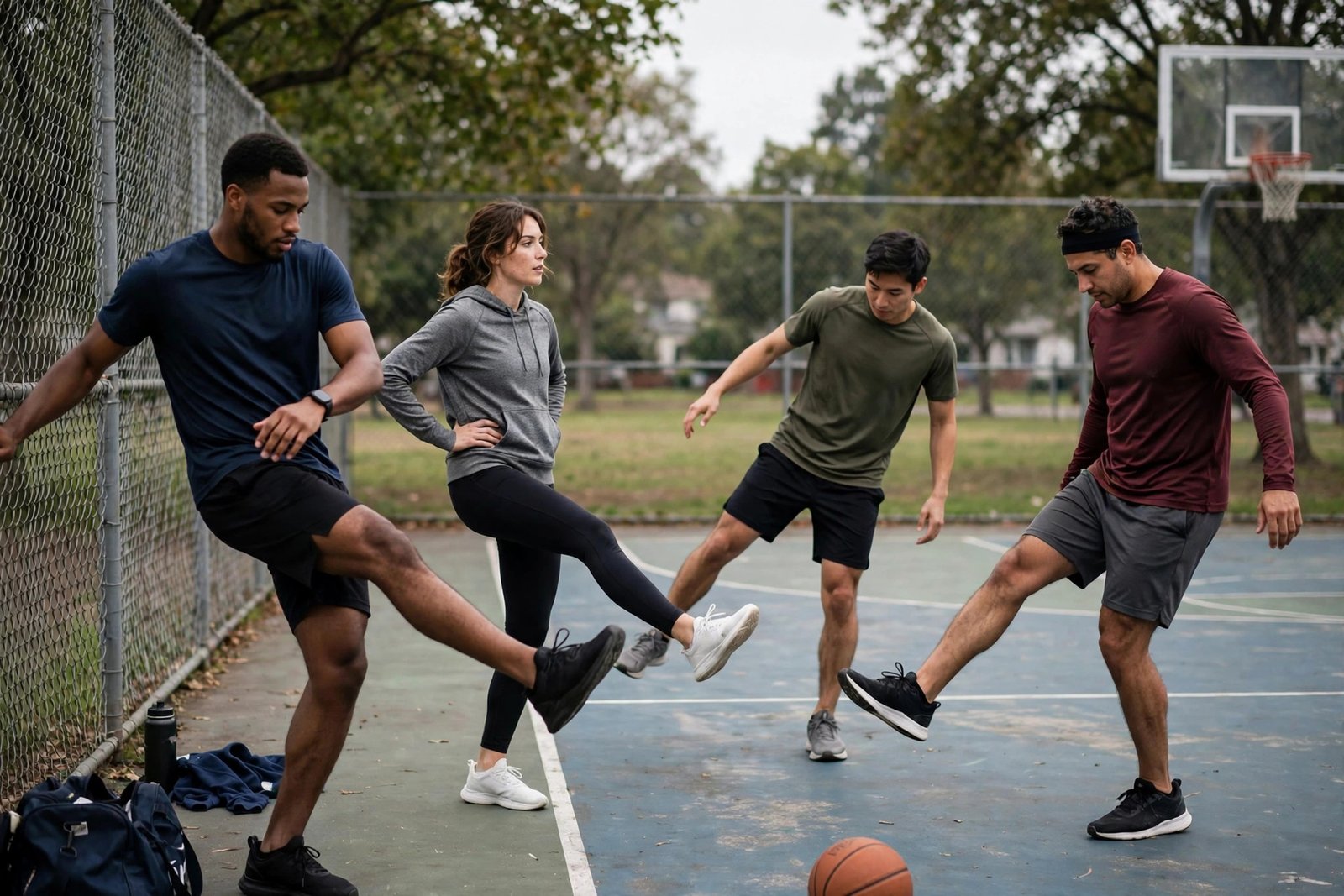
You show up for pickup basketball, do a couple of toe-touches, and start playing — then wonder why your hamstring barked on the first fast break and your jumper feels stiff for the first ten minutes. Most pickup players warm up wrong: either not at all, or with the static stretching (holding stretches for 30 seconds) that research now shows can temporarily reduce power and doesn’t prevent injuries. The proper pre-pickup routine is dynamic — movement-based, basketball-specific, and done in about 10 minutes. Here’s exactly what to do before you check the ball.
Why Static Stretching Before Basketball Backfires
For decades, athletes were taught to hold static stretches before playing. Sports science has largely reversed this: prolonged static stretching (holds over 30–60 seconds) before explosive activity temporarily decreases muscle power, sprint speed, and jump height — the exact qualities basketball demands. It also doesn’t warm the muscles the way movement does; a stretched-but-cold muscle is still a cold muscle.
Static stretching isn’t villainous — it has real value for flexibility, just after activity, not before. The pre-game job is raising muscle temperature, activating the nervous system, lubricating joints, and rehearsing basketball movement patterns. Dynamic stretching — controlled movements through full range of motion — does all four simultaneously. Save the long holds for after the run, when muscles are warm and the flexibility gains actually stick. The American College of Sports Medicine’s flexibility guidelines reflect this dynamic-before, static-after consensus.
The 10-Minute Pickup Warmup Routine
Do this sequence courtside before every run — no equipment needed, about 10 minutes:
Minutes 0–2: Raise the temperature. Easy jogging around the court, then progressive: jog a lap, run the second lap a bit harder, finish with 3–4 short accelerations (not sprints — build-ups to 80 percent). You should feel warm and slightly breathy. Minutes 2–5: Dynamic leg work (down the court and back for each): walking lunges with a twist, leg swings front-to-back (10 each leg, holding the wall), lateral leg swings (10 each), high knees (down and back), butt kicks (down and back). These open the hips and activate the exact muscles basketball uses.
Minutes 5–8: Basketball-specific movement. Defensive slides down and back (low stance, active hands), backpedals, carioca/grapevine steps (hip mobility for change of direction), and 5–6 progressive vertical jumps (start small, build to near-max — priming the nervous system for rebounding). Minutes 8–10: Shooting warmup. Start close — form shooting from 5 feet, 10 makes — then move out progressively: free throws, mid-range, threes. This isn’t just feel; it’s neuromuscular rehearsal that makes your first-game jumper fall instead of clank.
The Key Areas Pickup Players Neglect
Ankles: Basketball’s most-sprained joint gets zero warmup from most players. Add ankle circles (10 each direction per foot) and calf raises (15 reps) to your routine — warmed-up ankles with activated calves resist the roll that ends pickup seasons. Consider this non-negotiable if you’ve sprained an ankle before; previously sprained ankles re-sprain at high rates without proper warmup and strengthening.
Hips: Tight hips from desk sitting are the hidden epidemic in adult pickup games — they limit defensive stance depth, reduce first-step explosiveness, and shift load to the knees and back. The walking lunges, leg swings, and carioca in the routine specifically target this, but chronically tight players should add 90/90 hip stretches and deep squat holds to their daily life, not just pre-game. Shoulders and wrists: arm circles (forward and backward, 10 each) and wrist rotations take 30 seconds and prepare the shooting mechanism. The Hospital for Special Surgery’s basketball injury prevention guide details warmup protocols targeting these vulnerable areas.
Game-Day Adjustments and Common Mistakes
Adjust for conditions. Cold outdoor courts: extend the warmup to 12–15 minutes — cold muscles need more time, and asphalt is unforgiving. Wear layers you can shed. Back-to-back games: between games, keep moving lightly (walk, easy shots) rather than sitting and stiffening — the second game’s first five minutes injure more players than the first game’s. Tight schedule: if you only have 5 minutes, prioritize the jog, leg swings, lunges, and progressive jumps — the highest-value movements.
Common mistakes to avoid: static stretching marathons before tip (save for after), going from zero to full sprint in the first possession (the classic hamstring pull), skipping the warmup because “it’s just pickup” (pickup intensity is real — nobody jogs a fast break), and warming up then sitting for 20 minutes waiting for a court (warmup expires — redo a quick 3-minute version before playing). Treat the warmup as part of the game, not an optional prelude.
After the Run: The Cool-Down That Matters
What you do after pickup affects tomorrow more than the warmup does. Spend 5 minutes: easy walking or shooting around (don’t stop abruptly — gradual cool-down aids recovery), then static stretching while muscles are warm — now’s the time for those 30-second holds: hamstrings, quads, hip flexors, calves, each 2×30 seconds. This is when flexibility gains actually occur.
Hydrate, eat some protein within a couple of hours, and note any tweaks — the ankle that felt “a little funny” deserves attention (ice, assessment) before next week’s run, not after it becomes a real sprain. The players who last for decades in pickup basketball aren’t the most athletic — they’re the ones with the boring habits: warm up dynamically, cool down properly, and respect the small warning signs.
The proper way to stretch before pickup basketball is dynamic, not static: 10 minutes of jogging, leg swings, walking lunges, defensive slides, carioca, progressive jumps, and close-range shooting warmup. Save static holds for after the game. Warm the ankles and hips specifically, extend the routine on cold days, and never go from zero to full sprint in the first possession.
Conclusion
Pickup basketball deserves a real warmup — 10 minutes of dynamic movement that raises your temperature, opens your hips, primes your jumper, and protects your ankles. Ditch the pre-game static stretching (save it for after), adjust for cold courts and back-to-back games, and cool down properly. The best ability in pickup basketball is availability, and availability starts before tip-off. For more basketball training guidance, browse our sports section, meet our team, or ask your training questions.
Frequently Asked Questions
Should I stretch before playing basketball?
Yes — but dynamically, not statically. Do movement-based warmups (leg swings, lunges, slides, progressive jumps) before playing. Save static stretching (holding positions 30+ seconds) for after the game, when it improves flexibility without reducing power.
How long should a basketball warmup take?
About 10 minutes: 2 minutes of jogging/build-ups, 3 minutes of dynamic leg work, 3 minutes of basketball-specific movement (slides, backpedals, jumps), and 2 minutes of progressive shooting. Extend to 12–15 minutes on cold outdoor courts.
Why do my legs feel heavy at the start of pickup games?
Skipped or insufficient warmup — your cardiovascular system and muscles need several minutes of progressive activity to reach game readiness. The jogging and build-up portion of the warmup specifically eliminates the heavy-legs first five minutes.
What’s the best stretch for basketball ankle injury prevention?
Ankle circles and calf raises as warmup, plus the dynamic routine overall. Previously sprained ankles benefit most — they re-sprain at high rates without proper warmup. Consider balance-board work and strengthening if you have a sprain history.
Can I warm up after sitting out between pickup games?
Yes — and you should. Do a quick 3-minute version (jog, leg swings, a few jumps, some shots) before re-entering. Muscles stiffen quickly when you sit; the second game’s opening minutes injure more players than the first game’s.
Leave a Reply